Why a treadmill routine had to work all at once
A continuous shot changes what a music video can hide. There are no cuts to skip a stumble, conceal a late move, or reset the performers’ positions. The camera keeps recording, so every part of the routine—and the space between the band members—has to hold together from beginning to end.
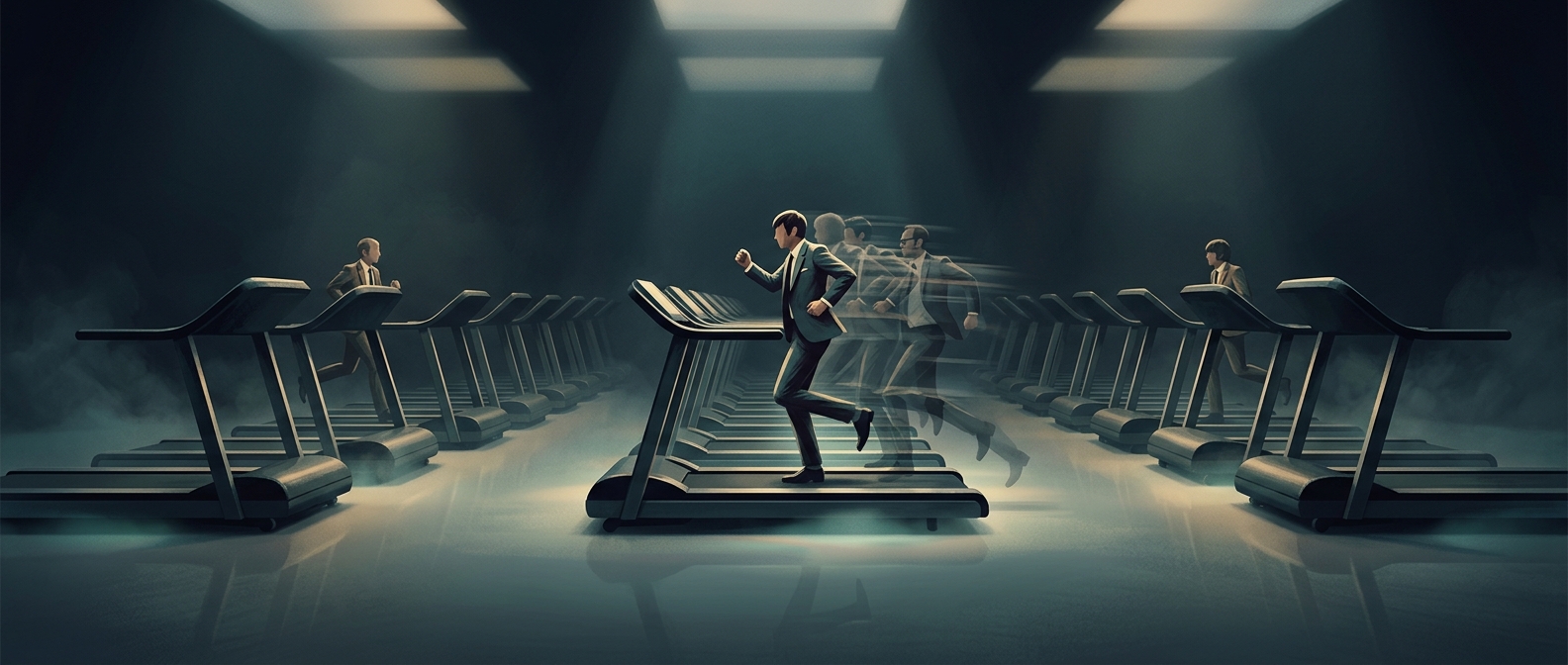
That made the treadmills more than props. Their moving belts gave the choreography a fixed, unforgiving rhythm: a performer who mistimed a step could lose balance or drift out of position, while a missed move could throw off the next sequence. Because the camera was also recording the entire performance, a small error near the finish could spoil minutes of work.
Rehearsal had to solve the whole chain
The challenge was not simply memorizing individual tricks. Each move had to connect safely and reliably to the next, with performers coordinating their timing while staying aware of the machines beneath them. The camera’s uninterrupted view meant the routine also had to remain readable as a complete picture, not just work for the people doing it.
That is why the finished video’s apparent ease is a little deceptive. What looks spontaneous is the visible result of a tightly rehearsed sequence, and the repeated attempts were part of finding one run in which every link held. The unbroken take makes the achievement legible: viewers can watch the choreography succeed without a cut quietly doing the hard work for it.