How a Small Online Dispute Becomes a Flame War
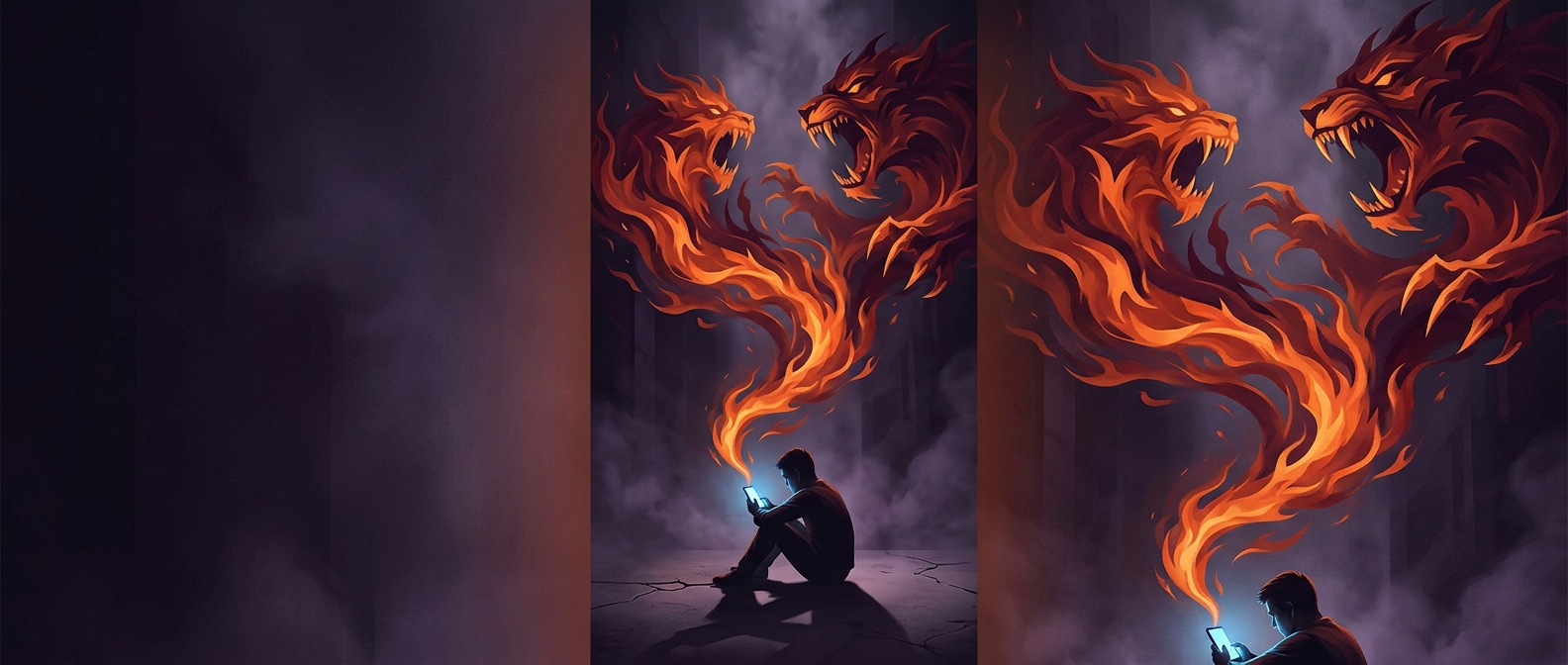
A flame war is an exchange of increasingly hostile messages, often sparked by a disagreement that would be manageable face to face. Online, the usual signals that help people judge one another—tone of voice, facial expression, a pause to cool off—are missing. A blunt sentence can read as contempt, while a delayed or terse reply can seem deliberate. People respond not only to what was meant, but to what they think the other person meant.
Why the Exchange Keeps Escalating
Written replies also create a record that participants can revisit, quote, and answer line by line. That makes it easy to focus on the sharpest phrase rather than the original point. Each person may feel they are defending themselves, while the other sees another attack. The argument shifts from “Is this claim right?” to “What kind of person would say that?”—a move from disputing an idea to judging someone’s character.
The screen can lower the immediate social cost of being rude: there is no face-to-face reaction to interrupt an insult or make its impact visible. At the same time, an audience can turn the exchange into a performance. Participants may keep replying to avoid looking as if they have lost, even when the discussion is no longer changing anyone’s mind.
The Point Where It Stops Being About the Issue
Once personal attacks take over, each new message becomes evidence for the other side’s worst interpretation. The original disagreement may be small, but the accumulated history makes backing down feel like conceding more than the point at hand. A pause, a clarifying question, or moving the conversation somewhere less public can break that cycle by restoring context and lowering the pressure to answer instantly.