How a Live Broadcast Became Film
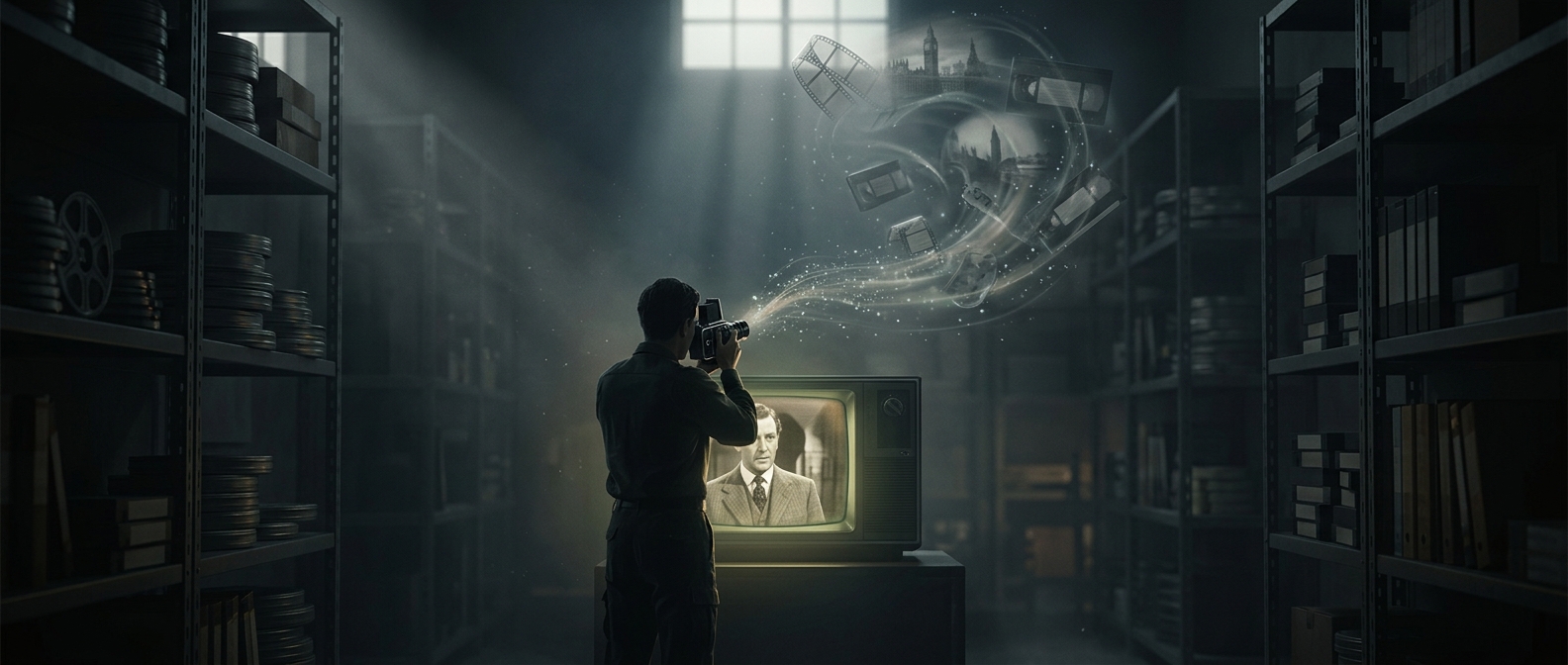
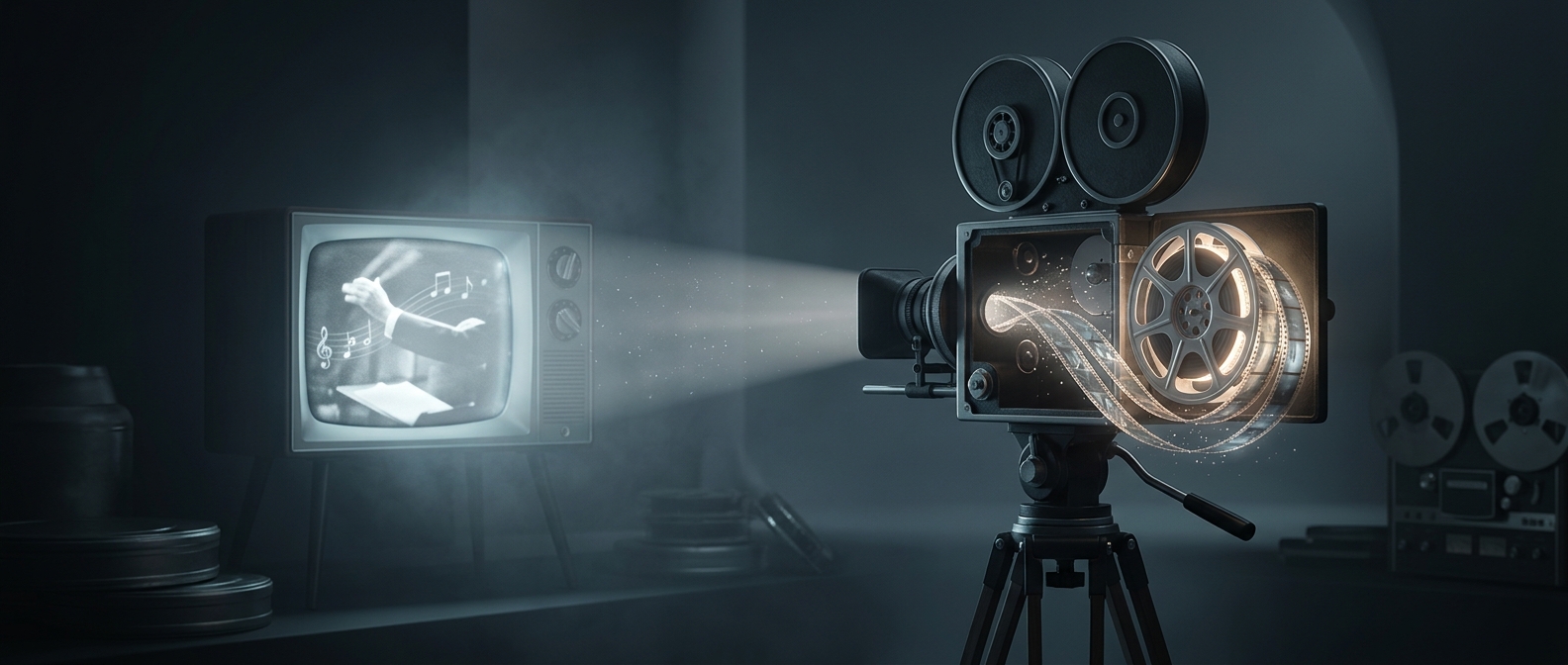
Before practical videotape, a television network had no easy way to save a live program as a reusable recording. One workaround was to aim a film camera at a television monitor and record the picture as it appeared on the screen. The resulting film was called a kinescope—a film copy of a television broadcast, rather than a recording made directly from the camera’s original signal.
The picture on the monitor was produced by a cathode-ray tube, or CRT: an electron beam swept across the screen in rapidly refreshed lines. The film camera had to capture that changing image without producing an unusable pattern of dark bands or flicker. Even when the timing was managed, the process added limitations: the camera recorded the glow and texture of the screen, not the cleaner signal that had been sent to broadcast.
A Practical Copy, With Visible Costs
Kinescopes made live television portable and repeatable. Once the film was processed, a program could be shown again or sent elsewhere for later broadcast. That mattered when a live performance needed to reach viewers who could not watch it at its original time.
But every stage took a toll. The television image was already limited; filming it introduced another generation of contrast and detail loss. Screen flicker, uneven exposure, and slight movement could make the picture look unstable or washed out. The recording preserved what happened, but not with the sharpness or steadiness of a modern direct video copy.
Why the Rough Image Matters
Kinescopes were a bridge between television’s live beginnings and reliable electronic recording. Their imperfections are also evidence of the method: viewers are seeing a film camera’s record of a glowing screen, not the broadcast itself. For many early programs, that extra step was the difference between a performance vanishing after transmission and surviving at all.