When automatic actions become tasks
Most of the time, familiar actions run with little conscious supervision. You walk without planning each muscle movement, and your breathing continues while your attention is elsewhere. Under stress, pain, fatigue, or close self-monitoring, attention can turn inward. A movement that normally unfolds as a whole may start to feel like a series of steps to check and manage.
Breathing is an easy example: once you begin monitoring each inhale, it can feel as though you must keep it going deliberately. The breath has not stopped being automatic; your attention has shifted toward a process that usually stays outside awareness. That shift can make ordinary sensations feel unusually prominent—and sometimes less natural.
Why attention changes the experience
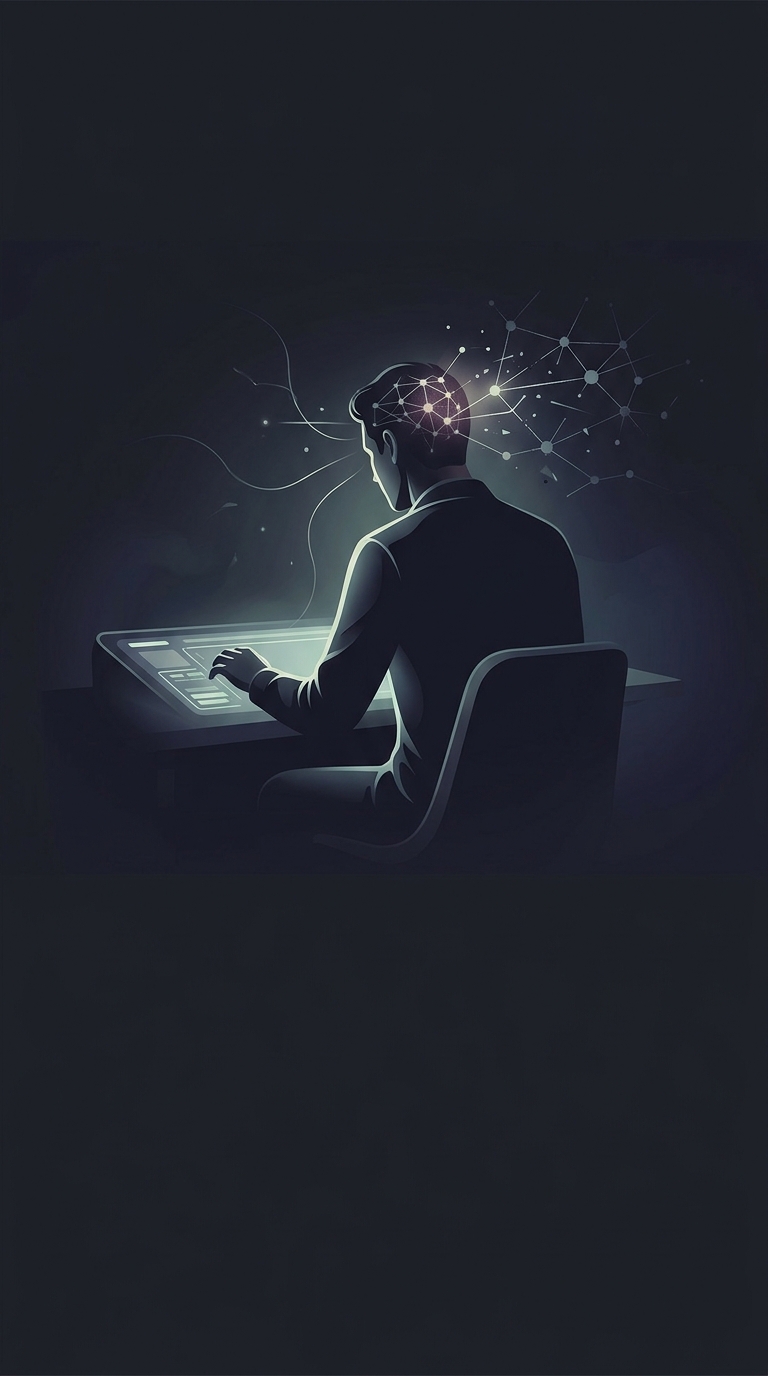
The brain does more than receive signals from the body. It sorts them, compares them with expectations, and decides which deserve attention. When you are worried about a sensation or responsible for keeping a task on track, the brain may keep checking for changes. Each check makes the sensation more noticeable, giving you more reason to check again.
This feedback loop can make the body seem like something to operate rather than the familiar source of action. It does not mean that the body has literally changed or that a sensation is imaginary. It means that attention and effort are shaping how bodily signals feel in the moment.
That is why a tight jaw, a racing pulse, or a consciously managed breath can become harder to ignore the more closely you supervise it. Sometimes the first step toward feeling natural again is not more control, but shifting attention back to the activity around you.