Why your abdomen can feel different in the air
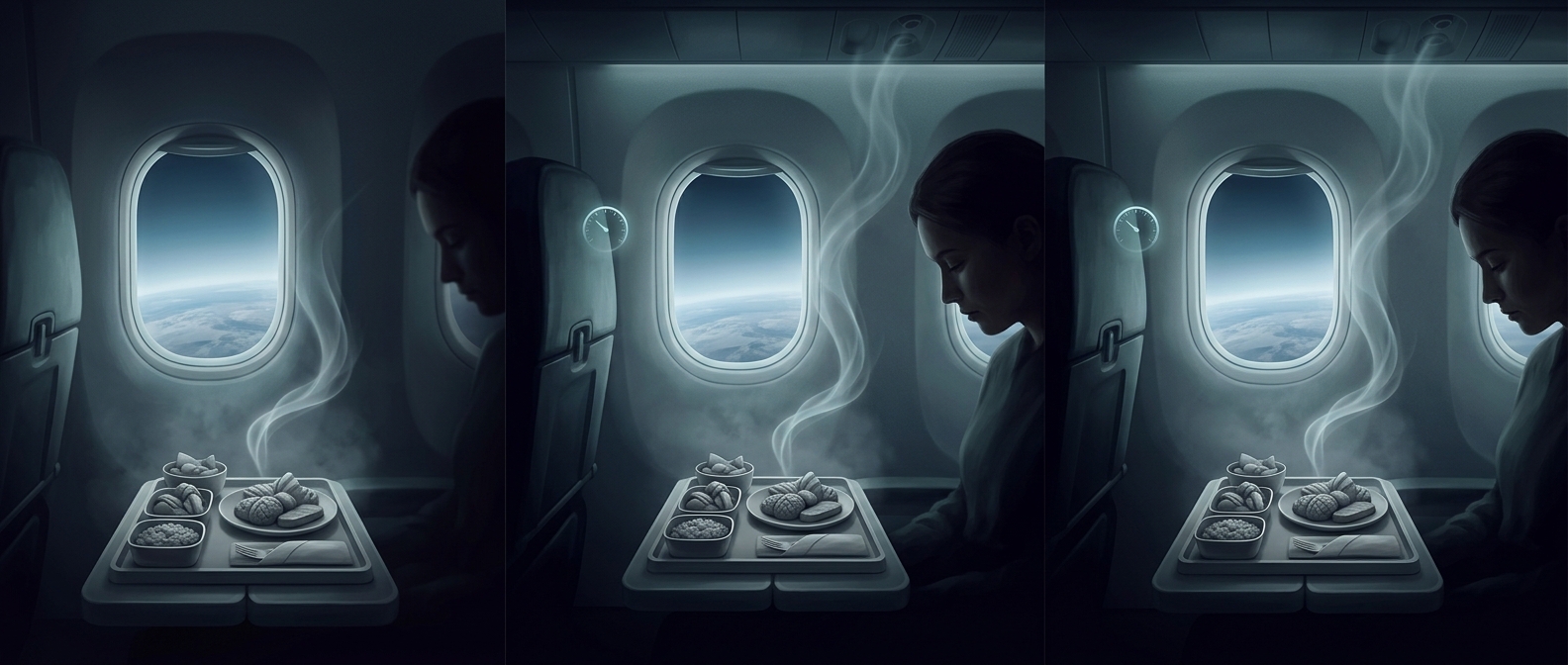
An airplane cabin is pressurized, but its air pressure is usually lower than at sea level. As the plane climbs, that drop lets gas in the digestive tract expand—much as a sealed bag puffs up when pressure around it falls. The change does not create new gas; it increases the volume of gas already there, which can stretch the gut and make it feel tight or uncomfortable. The effect may ease as cabin pressure rises again during descent.
A long flight adds other sources of discomfort
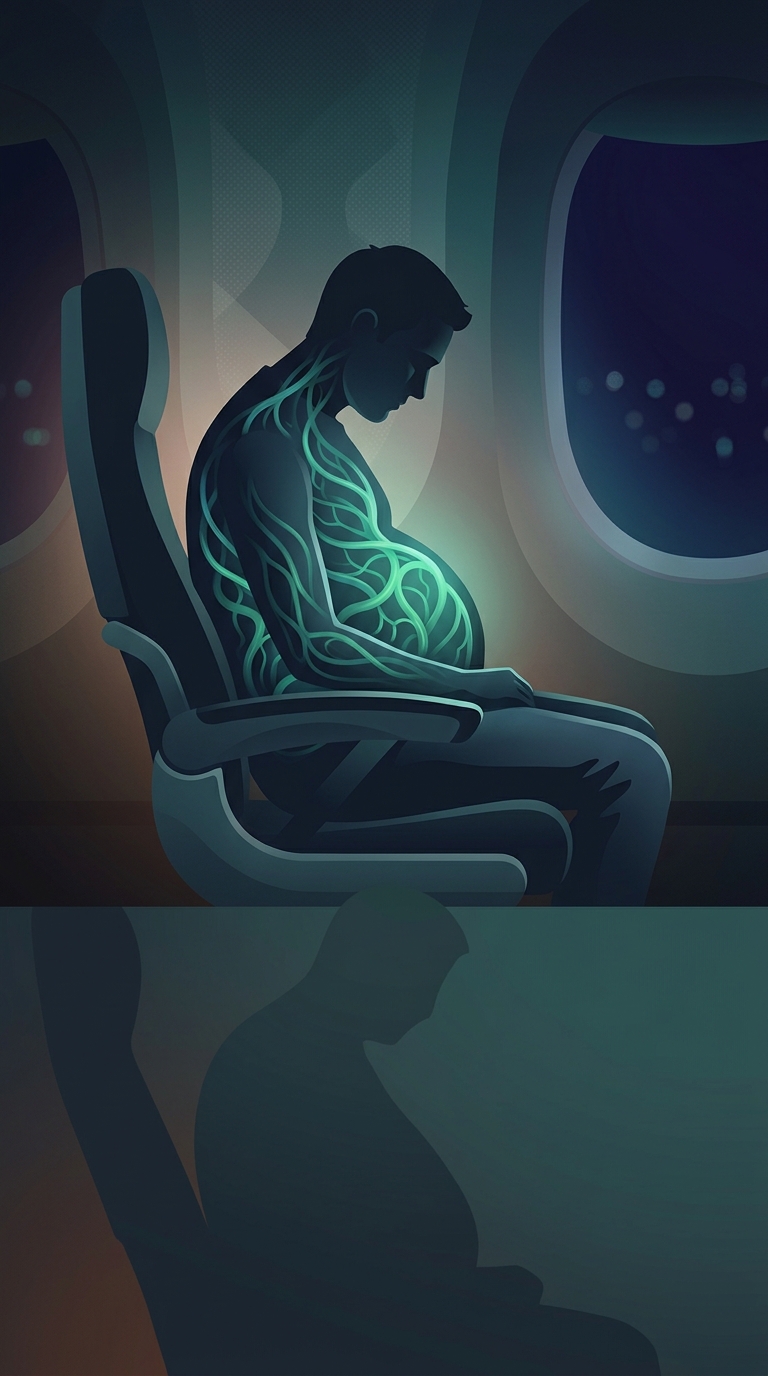
Gas is a normal part of digestion. It can come from swallowed air or from gut bacteria breaking down food. A long stretch of sitting also means fewer chances to move around, and travel routines can disrupt usual eating and bathroom habits. Those factors do not affect everyone in the same way, but they can make pressure-related fullness more noticeable.
The result is a familiar mismatch: the cabin’s pressure change is modest, yet a small increase in gas volume can feel significant when it is trapped in a confined, sensitive stretch of intestine. That is why bloating may build during a flight even when a traveler has not eaten an unusually large meal.