Turning a Game Table Into a Soundscape
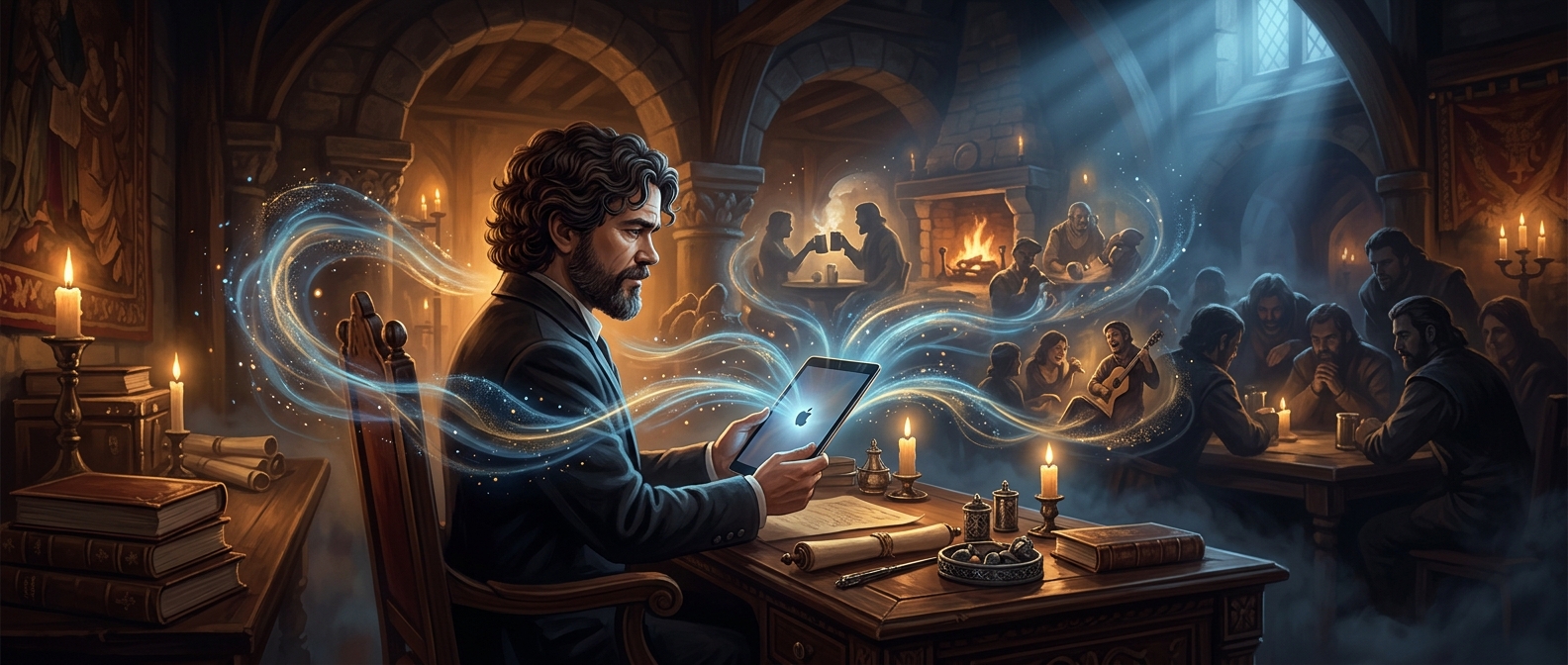
At a tabletop role-playing game, the action is built from spoken descriptions rather than a finished set. When a game master adds sound, the cue has to arrive while the scene is unfolding: a tavern murmur can make a room feel crowded, while a few drops of water can suggest that the characters have entered a different, quieter place.
A tablet makes those cues playable in the moment. Instead of searching through files or relying on someone else to trigger each effect, Mercer can keep selected sounds within reach and start one with a tap. The soundboard is less like a soundtrack running on its own and more like a small instrument: its operator chooses when to bring a sound in, and when to let it stop.
Why Timing Matters
A cue can change how a scene feels without changing what happens in the game. Background ambience gives players and viewers a sense of place; a distinct sound can draw attention to a new event. But a cue that overlaps dialogue or lands at the wrong moment can compete with the scene rather than support it. The game master must therefore divide attention between running the story and operating the sound.
Curating the board helps reduce that friction. A prepared set of relevant sounds is easier to use than a large library that must be searched during play. The result is a modest but revealing production choice: the soundscape is performed alongside the story, one timely tap at a time.