Why a balloon makes sharp clicks
When wet skin moves across taut rubber, the two surfaces do not slide smoothly. They catch briefly, then slip free. Each release sends a tiny vibration through the balloon; repeated quickly, those vibrations can sound like a series of dry clicks. The balloon’s stretched membrane acts as a resonator, shaping the sound and making the pulses especially noticeable.
Water helps create the right kind of contact, but the sound depends on how firmly and quickly the hands move, as well as the balloon’s tension. Small changes can turn clicks into squeaks or lower, raspier notes.
The dolphin connection—and its limit
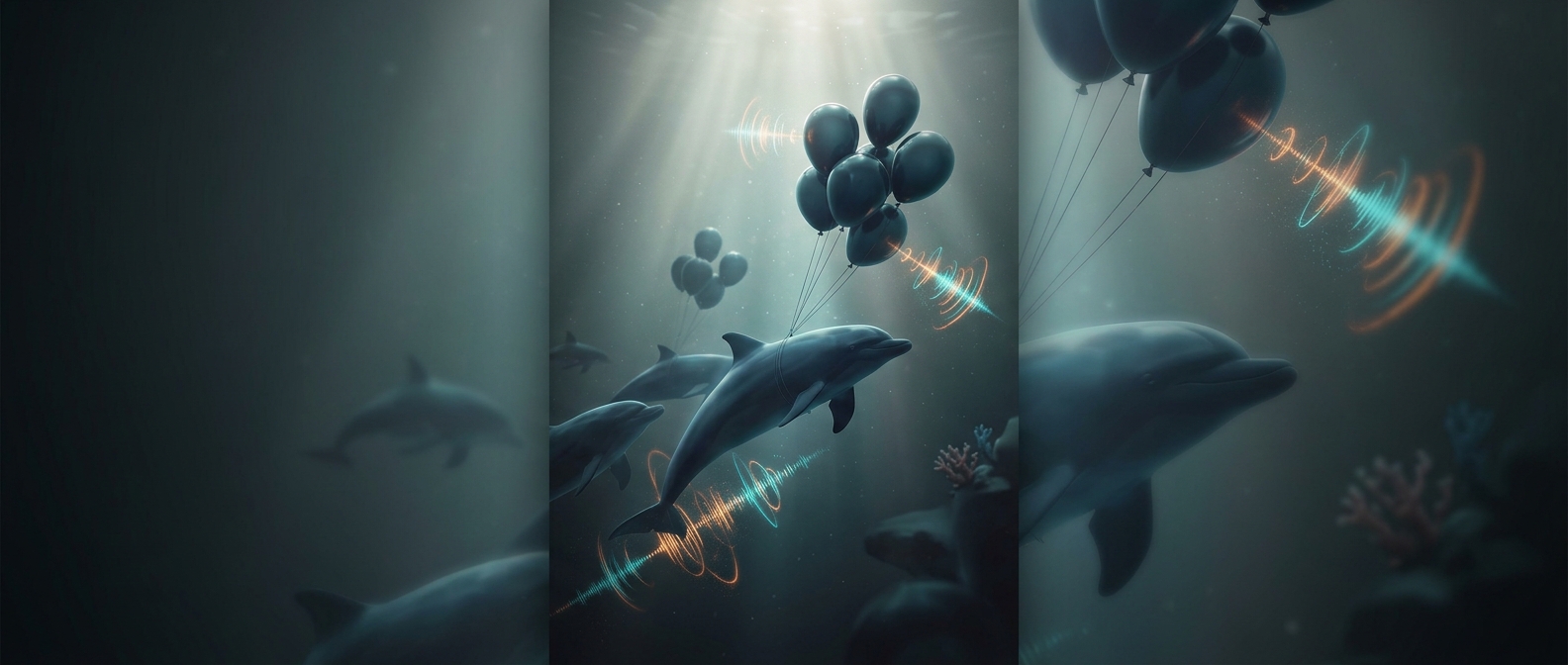
Dolphins produce sonar clicks with specialized structures in their nasal passages. Those clicks travel through the melon, a mass of fatty tissue in the forehead that helps focus sound into a beam. The returning echoes help the animal detect objects and judge their distance and shape.
A rubbed balloon imitates the rapid, click-like quality to our ears, but it does not reproduce the dolphin’s sound-making anatomy or focused sonar beam. The resemblance comes from a simple physical trick: a surface repeatedly catching and releasing can turn motion into a train of sharp pulses.