How a pug snort becomes a monster’s roar
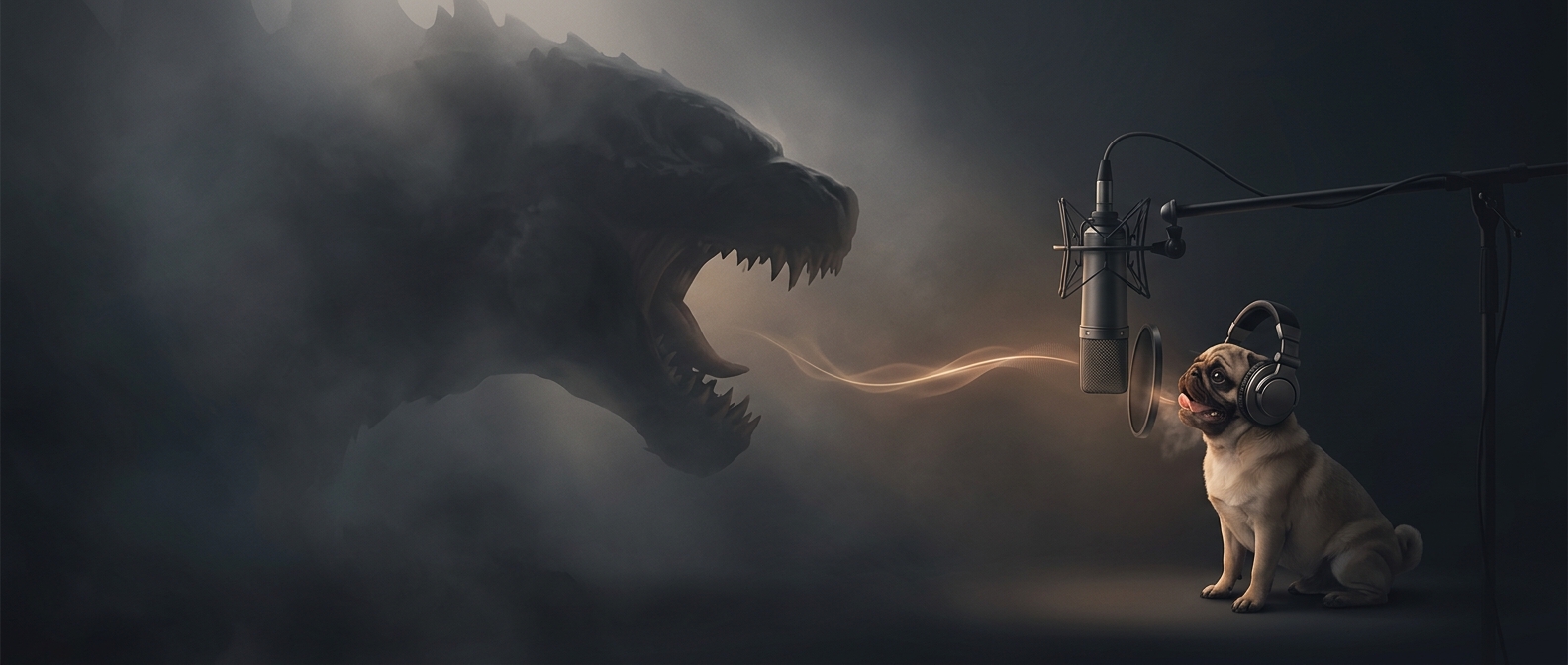
A snort is already a noisy, irregular sound: air pushes through a narrow airway, producing a burst that is part breath and part rough vibration. That makes it useful raw material for a creature effect. A sound designer can record the pug’s short inhalations and exhales, then lower their pitch so the familiar, high, nasal sound seems heavier and more threatening.
Lowering pitch changes the sound’s perceived size. The tiny, close-up burst becomes a deeper rumble, while its uneven texture keeps it from sounding like a smooth musical note. That roughness can suggest a living animal straining to breathe rather than a machine producing a steady hum.
Why use an ordinary animal sound?
A made-up monster noise can feel artificial if it is too clean or predictable. A real snort contains small fluctuations in timing and volume that are difficult to reproduce by simply recording a person imitating a growl. The sound designer can preserve those accidental details while transforming the pitch, then combine the result with other recordings if the creature needs more weight or complexity.
The trick also shows how little a sound has to resemble its source once it is removed from context. In a film, viewers see a huge creature and hear a low, distorted breath; they do not see the small dog that supplied the original texture. The same congested snort that makes a pug recognizable up close can, after processing, make an unseen beast seem to loom just beyond the frame.