Why mirror-maze corridors seem to continue
A mirror maze depends on a mismatch between what the eye sees and what the room contains. A mirror sends light from one direction back toward the viewer, so it can show a reflected passage where no passage exists. But an exposed glass edge or seam gives away the trick: it marks the boundary between the real corridor and its reflection.
Turning seams into structure
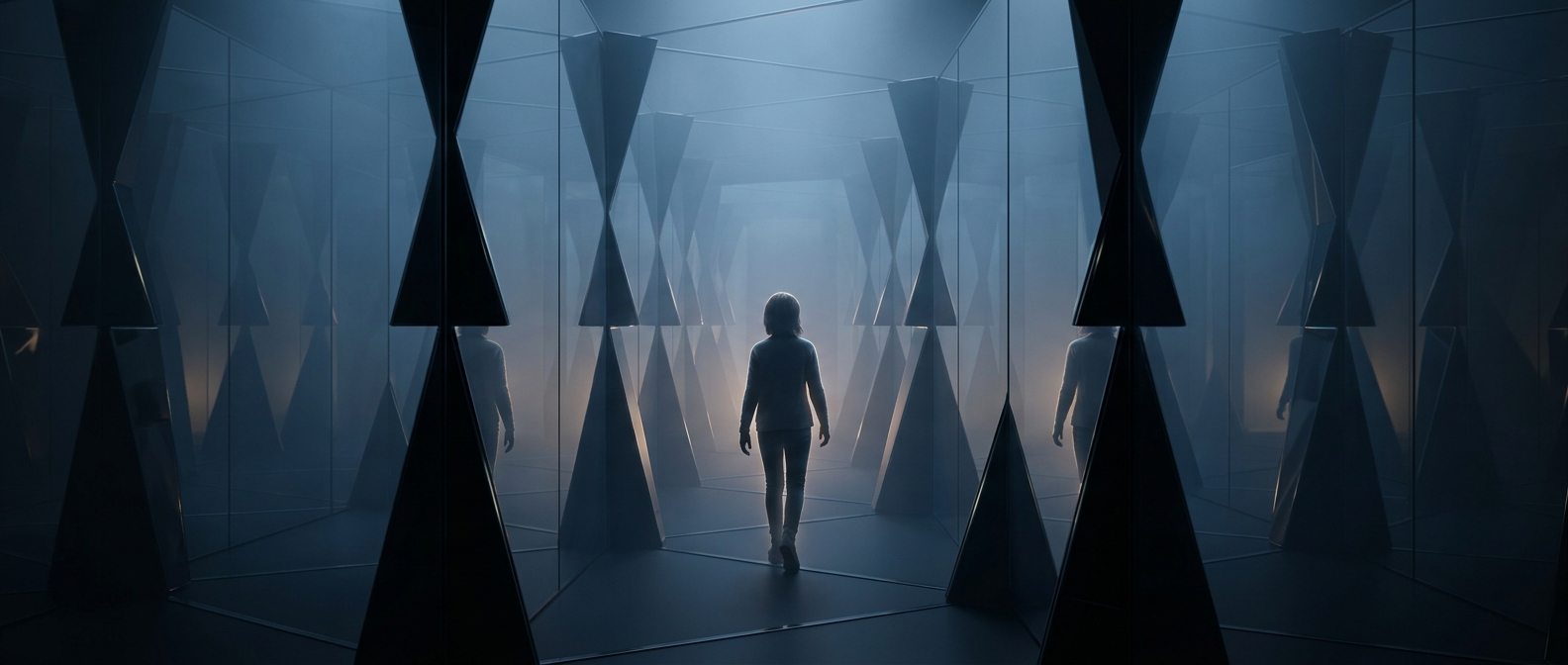
The maze’s 60-degree triangular grid helps put those boundaries where they are least noticeable. The glass panels meet in a repeating angled pattern, while support pillars sit at key junctions. From a visitor’s viewpoint, a pillar can cover the edge of a panel or the narrow gap between panels. Instead of seeing a line that says “mirror,” the visitor sees what appears to be an ordinary obstruction in the corridor.
That placement matters because reflections are convincing only when their borders are hard to locate. If a glass edge remains visible, the eye can use it to separate the reflected image from the actual room. Conceal the edge, and the reflected corridor appears to carry on behind the pillar—or to open into a space that is not there.
The pillar as camouflage
The supports do double duty: they hold the maze’s structure together and disguise the geometry that makes the reflections possible. The result is not simply a room full of mirrors, but a carefully arranged set of sightlines. A visitor can be looking at a real pillar and a reflected passage at once, with the pillar helping hide the very glass that creates the illusion.