How a city’s burial grounds moved south
As San Francisco grew, its cemeteries occupied land that city leaders increasingly wanted for homes, businesses, and streets. The city restricted burials and pushed for existing burial grounds to close. Cemeteries did not simply vanish: many remains and graves were relocated beyond the city limits, to the small community that became Colma.
The shift turned a municipal land-use decision into a lasting feature of the landscape. Colma’s location made it a practical destination: close enough to serve San Francisco, but outside the city’s jurisdiction. Over time, cemetery operators established large grounds there, and the surrounding town developed to support them.
A town shaped by what it cares for
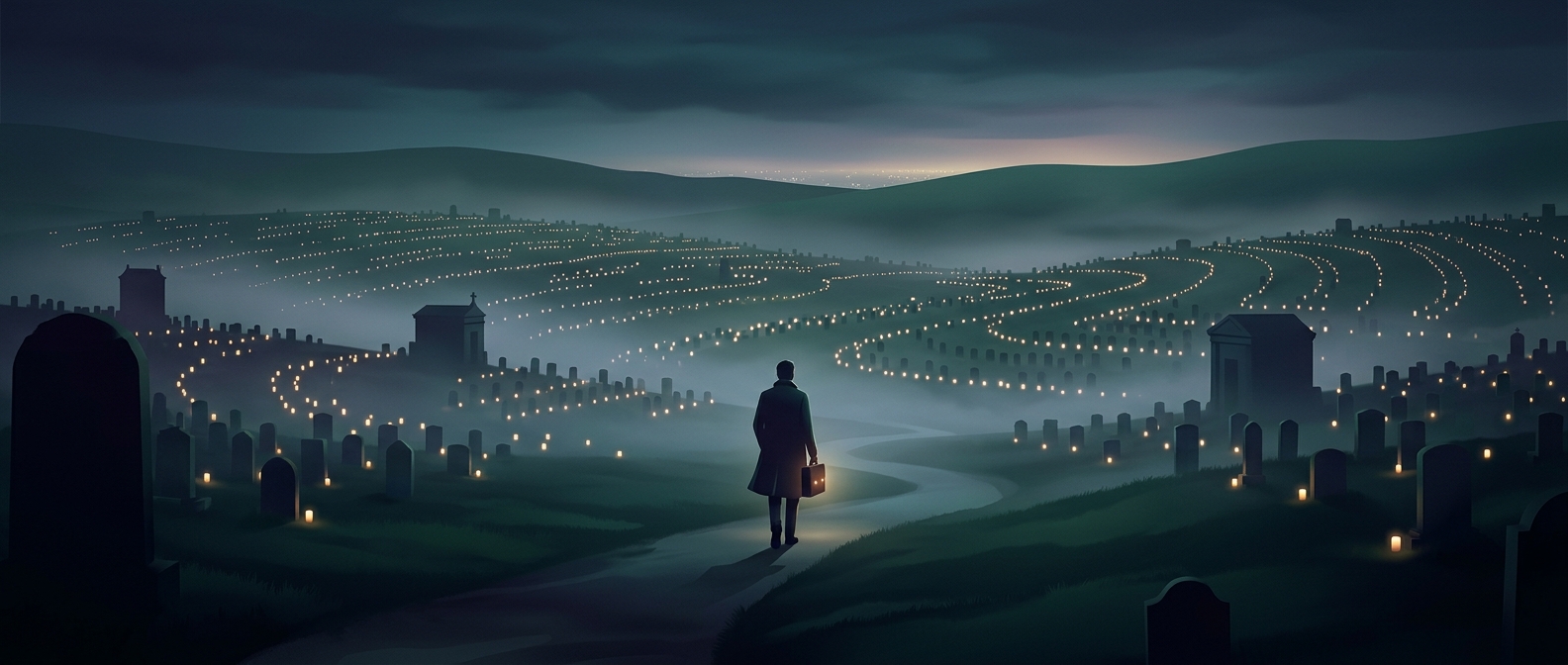
Colma’s cemeteries are not just rows of graves. They are managed landscapes, with roads, trees, monuments, and groundskeeping that can make them feel like quiet parks. Funeral homes and cemetery work also became part of the local economy, tying the town’s daily life to the needs of the dead as well as the living.
That history explains the striking population imbalance: the cemetery population reflects generations of burials, while the living population is counted among a comparatively small number of residents. Colma’s unusual scale is the physical afterlife of San Francisco’s effort to reclaim burial land for a growing city.