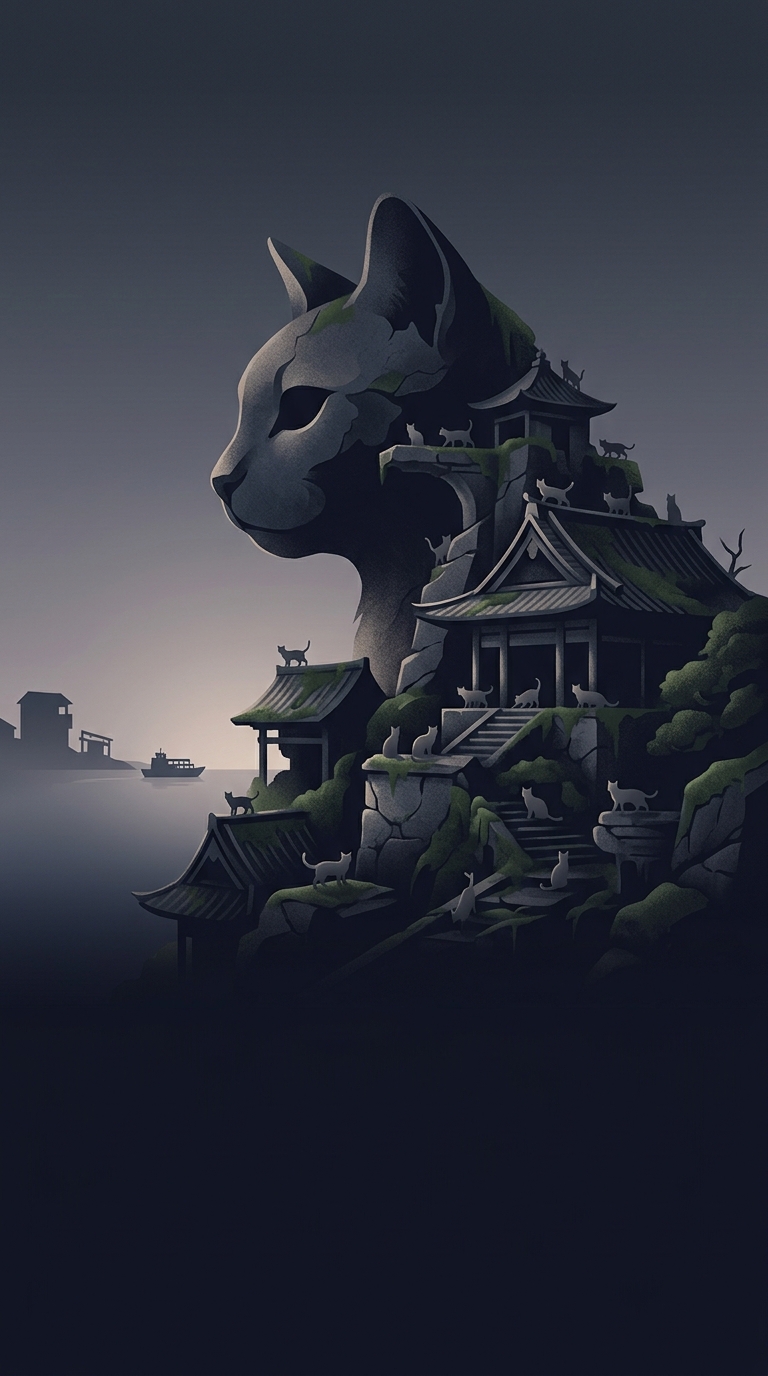
How Tashirojima’s cats became part of island life
Tashirojima’s cat population has roots in work, not tourism. Islanders once raised silkworms, whose cocoons supplied silk, and mice could damage the crop. Cats were useful pest hunters, so people brought them to the island and allowed them to roam around farms and settlements.
That practical role helped give cats a place in local culture. Over time, they came to be treated as auspicious animals—symbols associated with good fortune—rather than merely as workers. A small cat shrine on the island reflects that relationship. It does not mean the cats literally govern the island; it marks a tradition built around their presence.
A shrinking human community changed the balance
As younger residents moved away, Tashirojima’s population aged and dwindled. The cats, meanwhile, continued to live and reproduce outdoors. With fewer people on the island, the contrast became striking: visitors may encounter cats around paths and buildings while human life is concentrated in a much smaller community.
The island is sometimes nicknamed “Cat Island,” but it is still a place where people live, not a feline theme park. Its unusual reputation grows out of two histories meeting: an old agricultural need for cats and the long decline of a small island population. That is why the cats’ presence feels less like an attraction added for visitors and more like a visible trace of how Tashirojima has changed.