A zipper is a small, movable target
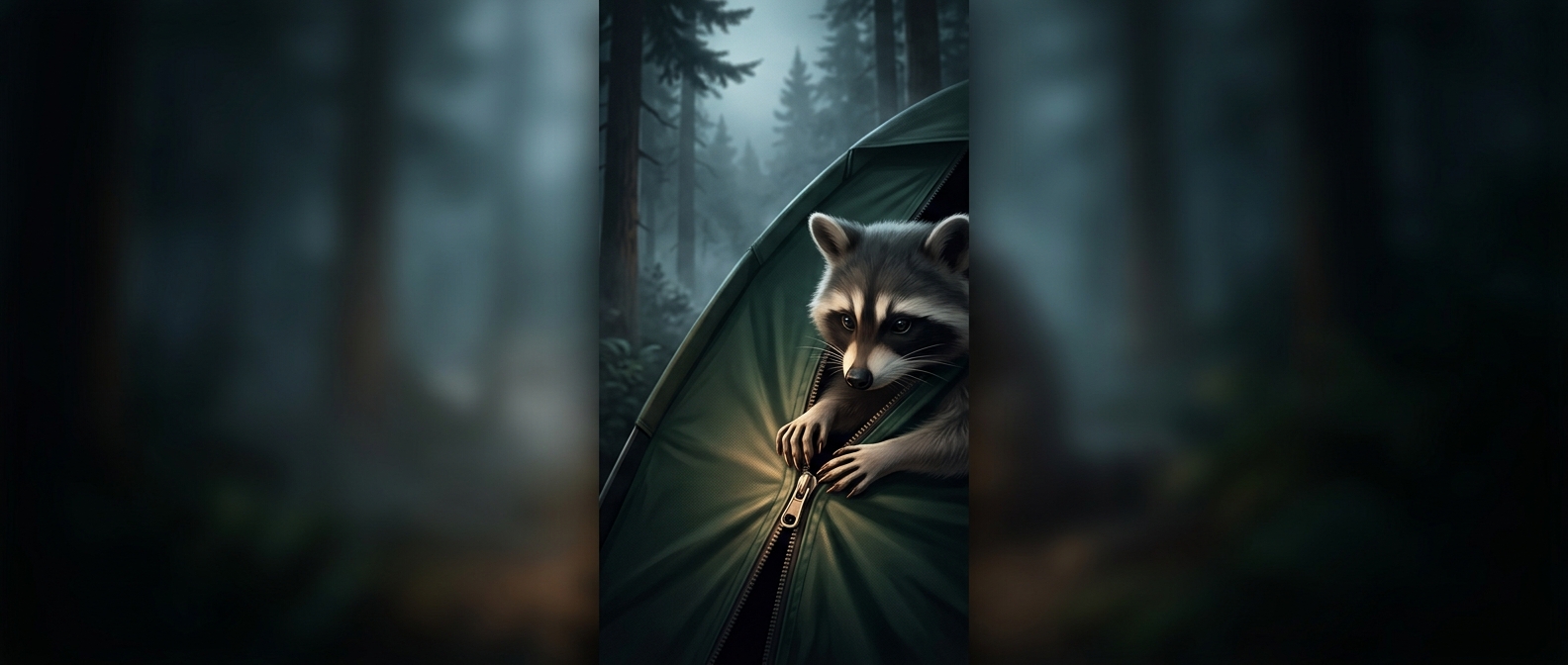
A tent zipper closes fabric by guiding two rows of teeth together. It is secure against weather and insects, but it is not a lock: a zipper pull can move if something catches or nudges it. Raccoons have sensitive, dexterous forepaws, which help them explore objects and handle food. A dangling pull or loop can give a curious animal something to paw at—and, in some cases, move far enough to open a gap.
Smell can bring them to the tent
The zipper is only part of the problem. Food, wrappers, toiletries, and cooking gear can leave odors that attract wildlife to a campsite. Once a raccoon investigates the tent, a loose zipper pull may become another object to test. Getting inside can mean torn packaging, scattered belongings, or damage to the tent, even if the animal is looking for food rather than trying to enter for its own sake.
Make the tent less rewarding to investigate
Keep food and scented items in appropriate animal-resistant storage rather than inside the sleeping area, and clean up food scraps promptly. When you leave the tent, close the zipper fully and tuck away dangling pulls or cords. These steps do not make fabric impenetrable, but they reduce both the smells that draw raccoons close and the easy footholds that can turn a visit into a rummage.