Why a Shelter Becomes Harder to Build in the Dark
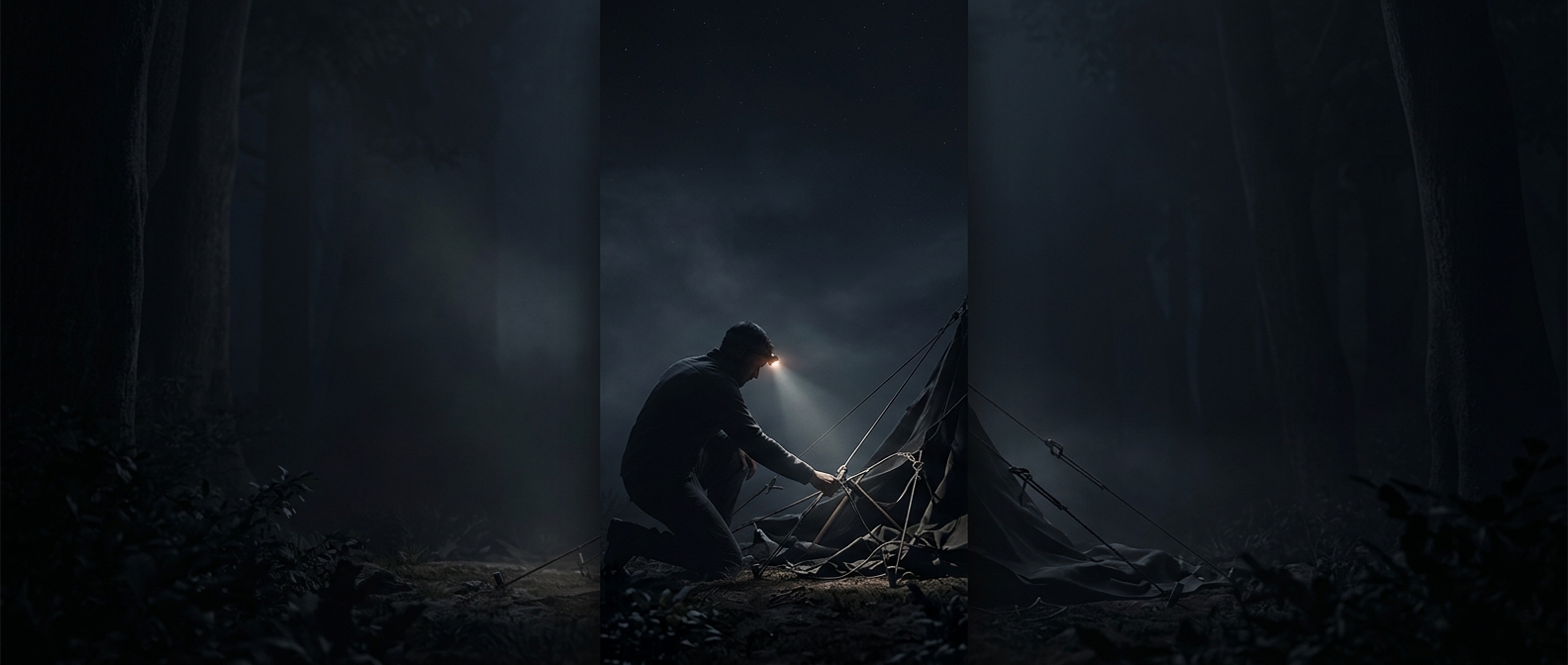
A pole sleeve is a fabric channel that guides a support pole across a shelter. In daylight, you can see where the opening is, keep the pole aimed along the channel, and spot a twist or snag. Without that visual feedback, a pole tip can press against the fabric instead of entering the sleeve—or catch on a seam partway through. The pole may bend, making it harder to tell whether it is following the intended path or pushing against the shelter wall.
The work also depends on keeping several flexible parts oriented correctly. A sleeve can bunch as the pole advances, and the fabric may need to be held open or smoothed while the pole is fed through. In the dark, each correction takes longer because you have to locate the fabric and pole by touch. Repeatedly pulling back and trying again can turn a straightforward assembly into a slow, frustrating one.
Making the Setup More Manageable
The most useful adjustment is to restore some feedback before assembly begins. A headlamp or other light lets you find sleeve openings and check the pole’s route; laying out the parts first also reduces searching and sorting later. If working without light, moving slowly and using both hands to track the pole and fabric can help prevent a small misalignment from becoming a bigger snag.
The difficulty is a reminder that shelter setup is not just a matter of having the right parts: it also relies on seeing how they fit together. In darkness, a little preparation can save more time than trying to force a pole through by feel alone.