Why a Hidden Nest Can Trigger a Sudden Attack
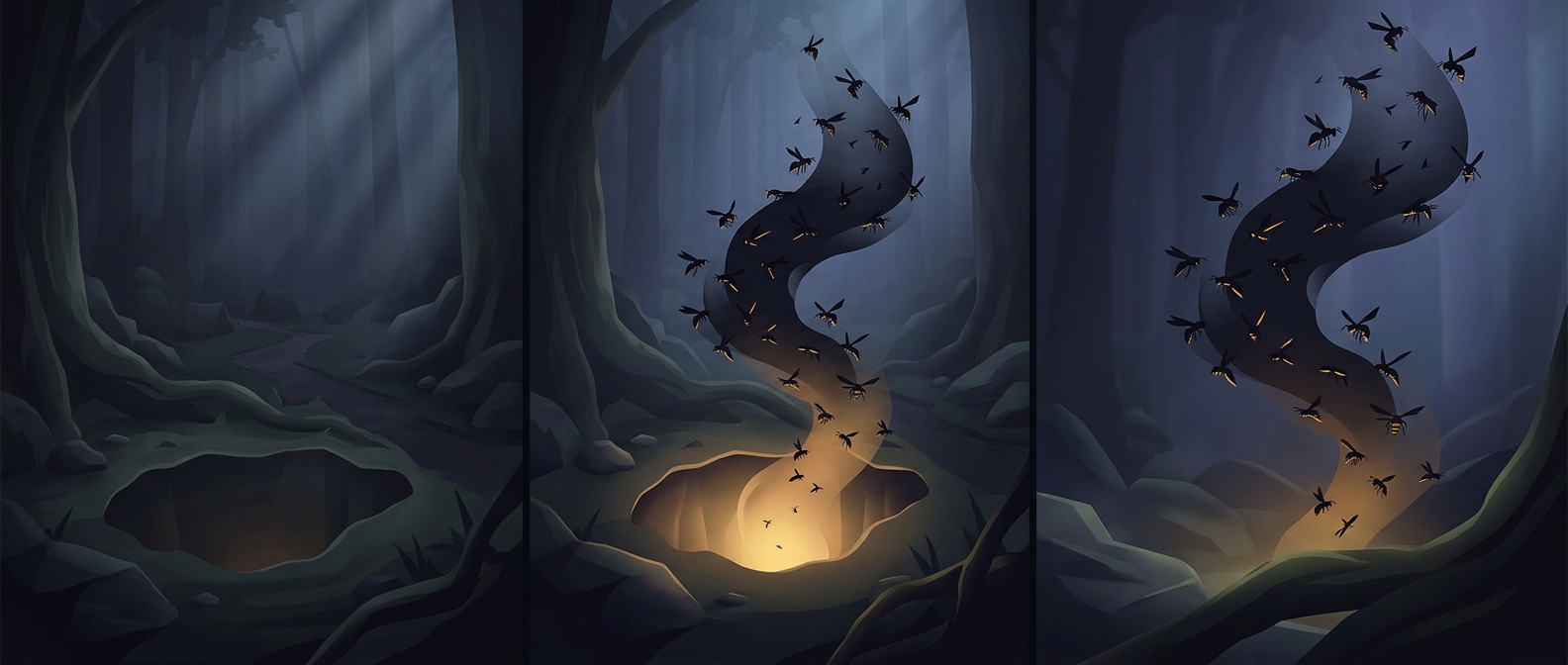
A yellow jacket nest may be tucked into an abandoned burrow, with little more than a small opening visible at ground level. That makes it easy to miss—and easy to disturb with a footstep, lawn mower, or other vibration. The wasps respond not as isolated insects but as colony defenders: workers near the entrance can rush out when the nest is threatened.
How the Warning Spreads
A defender that stings can leave behind alarm chemicals that alert nearby workers. The scent helps turn a single encounter into a group response, especially close to the nest. Wasps may follow a moving person for a short distance; running or swatting can keep the encounter stirred up, while moving away calmly helps reduce further disturbance.
The danger is therefore tied less to a yellow jacket’s presence in the landscape than to proximity to its colony. Away from the nest, these wasps commonly forage for food. At the entrance, however, workers are guarding the brood—the developing young—and the colony’s food stores.
The Practical Clue
In yards and parks, watch for repeated wasp traffic entering and leaving one spot in the ground. Don’t investigate by stepping closer or blocking the opening. A concealed nest entrance can make an ordinary path or patch of grass the colony’s defensive perimeter.