Why a Rainy Campsite Can Still Feel Restorative
Rain changes camping from a landscape experience into a close-up one. Inside a tent, the world contracts to the steady drumming on nylon, the dim light through the fabric, and the small patch of dry space around a sleeping bag. With plans outdoors washed out, there is less to organize or decide. For some campers, that enforced pause—not comfort—is part of the appeal.
A Thin Tent Depends on More Than Its Fabric
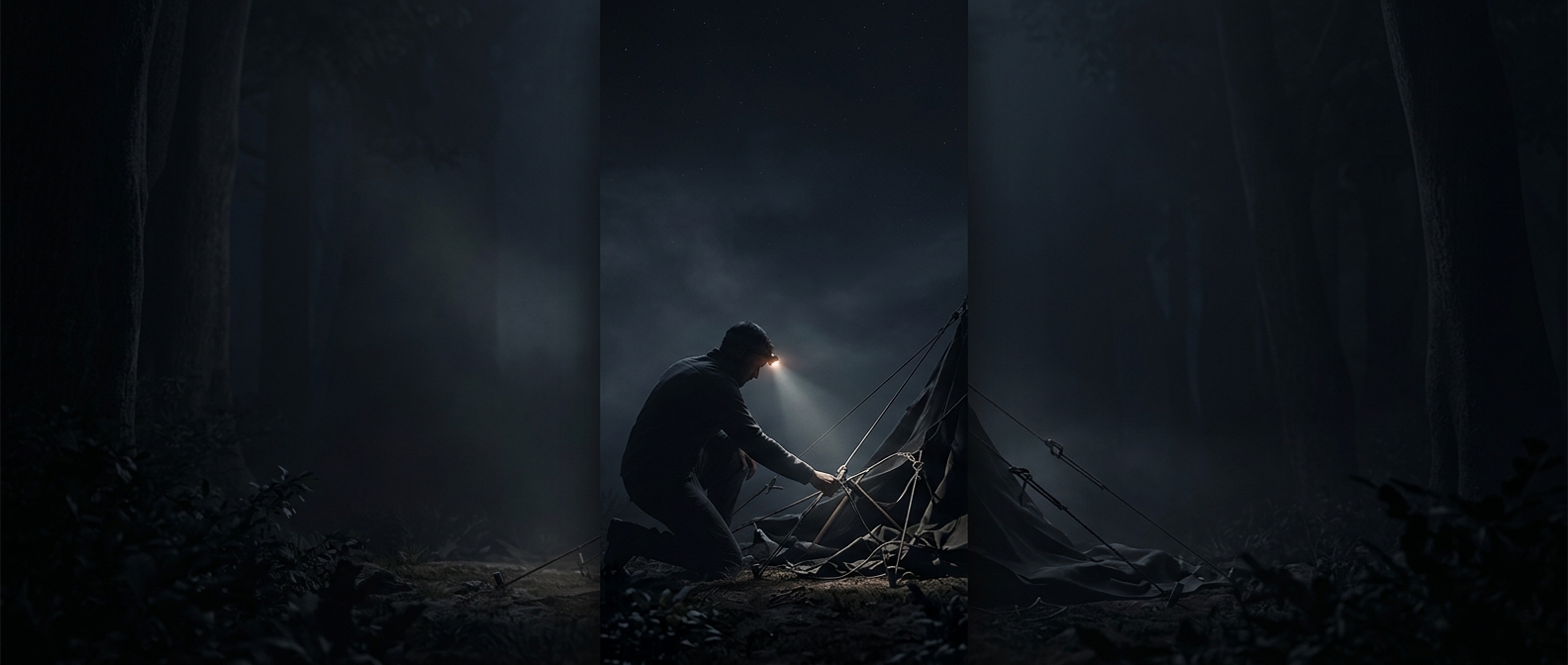
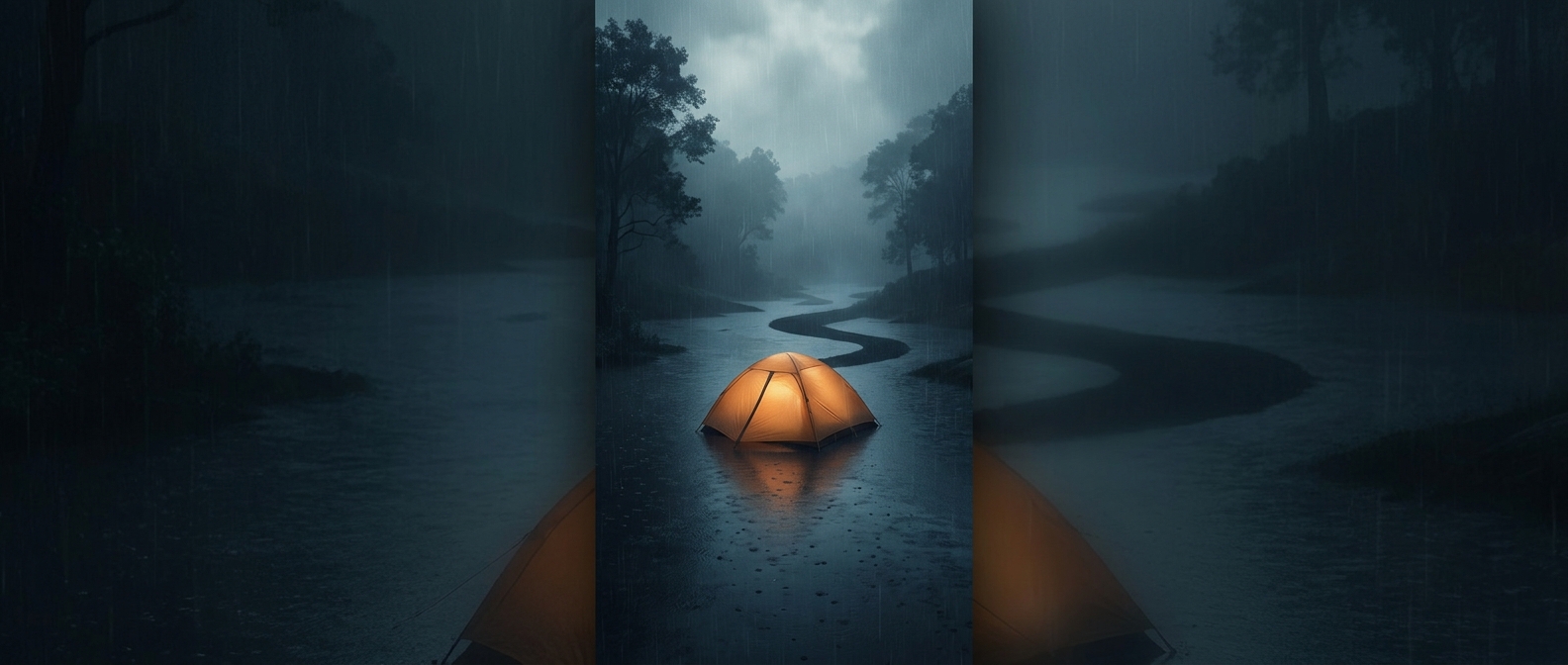
Nylon sheds water when the tent is properly pitched and protected by a rainfly, the outer layer that carries runoff away from the inner tent. The ground matters just as much: a low spot can collect water, and a floor pressed against soaked soil can become damp even if the roof holds. A groundsheet helps, but it cannot turn a tent into a barrier against rising floodwater.
That is why a tent can feel cozy in ordinary rain yet become a poor refuge when a whole park is flooding. Campers need to watch for water pooling or rising and move to safer ground or shelter when conditions warrant. The appeal of being snug inside depends on the weather remaining something to listen to—not a threat to escape.