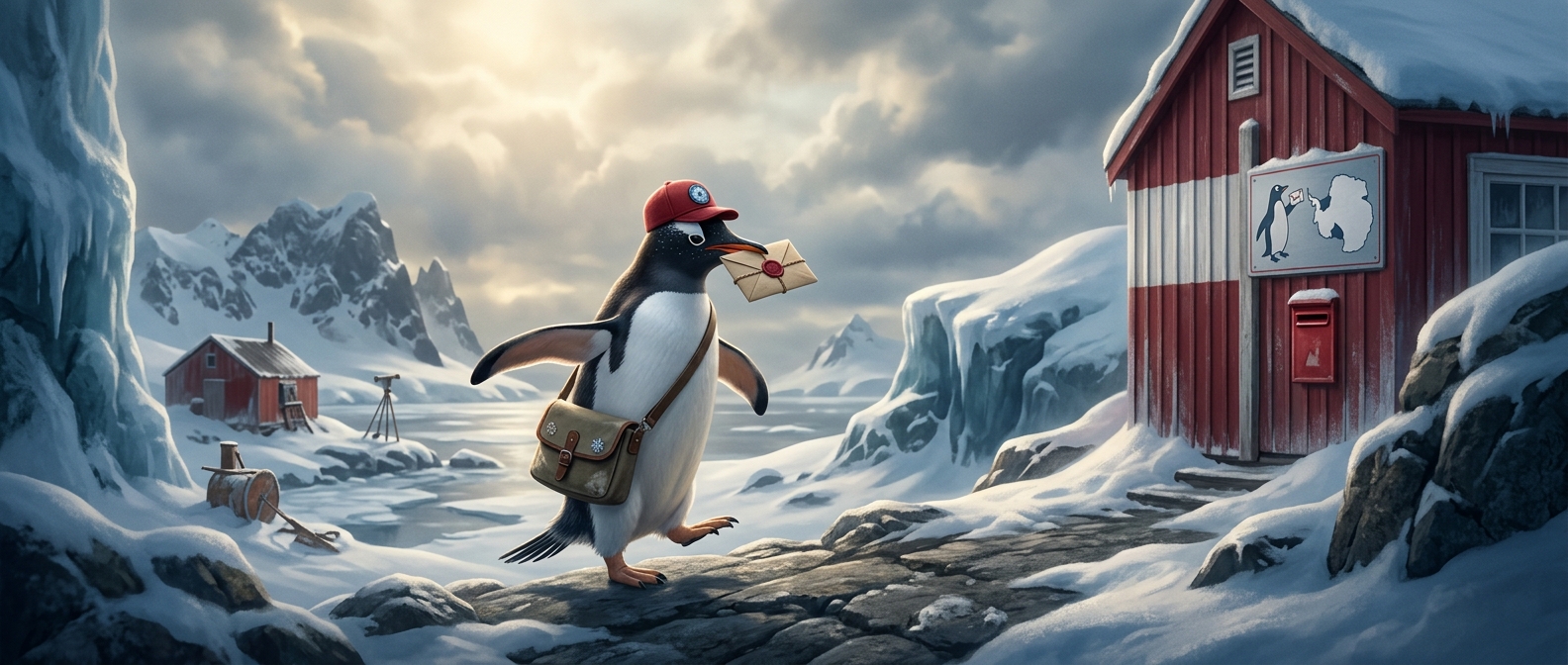
A post office at the edge of a working wildlife site
Goudier Island is not a town with streets, homes and a year-round postal route. Its post office operates during Antarctica’s short summer visitor season, when ships can reach the island and staff can work there. That makes mail a seasonal operation: a postcard written on the island must leave with a vessel, then continue through the ordinary postal system, so its journey depends on transport links rather than a daily local collection.
The work shares the island with a gentoo penguin colony. Staff do not simply serve visitors and then leave wildlife monitoring to someone elsewhere; counting penguins is part of the seasonal work on site. That juxtaposition matters because human activity in Antarctica takes place in a landscape where wildlife is present, not behind the boundaries of a conventional post office or visitor center.
A postcard carries a record of the visit
For visitors, mailing a card turns a brief stop into something that can travel home. For staff, the same season involves handling a large volume of mail while keeping track of the local penguins. The island’s post office is therefore more than a novelty: it is a small example of how Antarctic tourism, practical work and wildlife observation share a tightly limited summer window.