A revenge story with a work shift
In Shenmue, Ryo Hazuki’s search for the man who killed his father does not unfold as a nonstop chain of fights and clues. The game makes time pass, gives characters routines, and sends Ryo through ordinary parts of town. That structure turns a dramatic pursuit into something lived day by day: shops close, people go about their business, and some leads cannot be followed until the right time.
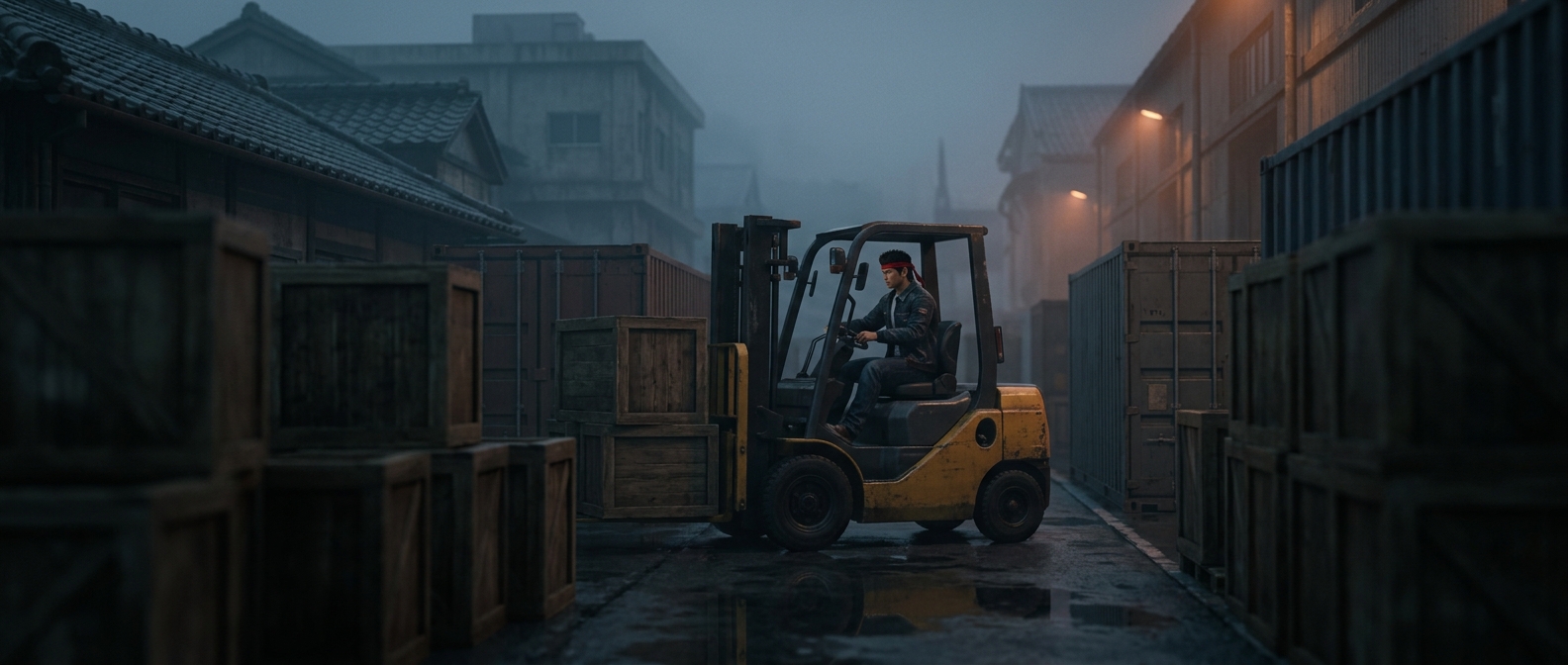
The harbor job makes that everyday rhythm unusually literal. Ryo clocks in, climbs into a forklift, and moves crates around the docks for a shift. Instead of treating travel or waiting as empty gaps between story scenes, the game gives the player a repetitive task to perform while the hours pass.
Why the forklift matters
Driving a forklift is a small, practical loop: steer to a stack of crates, pick one up, and deliver it to the right place. Its pace is a sharp contrast with Ryo’s urgent motive. The player may know exactly what he wants to do next, but the game insists that ordinary obligations and schedules still occupy his day.
That contrast also makes the harbor feel like a workplace rather than a backdrop. Repeated routes turn its lanes and cargo into familiar surroundings, while the shift gives Ryo a reason to be there and a concrete routine within the larger mystery. The job’s memorable oddity is the point: the revenge plot has to share time with the mundane labor of getting through a day.