When the Customer Becomes the Manager
The joke in this setup is also the game’s organizing rule: a customer walks into a pizza shop and is suddenly responsible for keeping it running. There is no hiring process or paycheck to negotiate. The work simply lands on the player, who must turn a stream of orders into completed meals while the shift grows chaotic.
That reversal makes an ordinary service job feel absurdly immediate. Instead of watching a worker handle pressure, the player has to sort it: each order becomes a small task, and the shop’s disorder becomes a problem to manage. The unpaid shift is not background detail; it is part of the premise that makes the situation comic and unfair at once.
Turning Work Into a Challenge
Management games make labor playable by translating it into decisions. A customer’s request becomes a task, time pressure creates urgency, and success is measured by whether the work gets done. In a pizza shop, that structure is easy to grasp because the job has visible steps and a steady flow of demands.
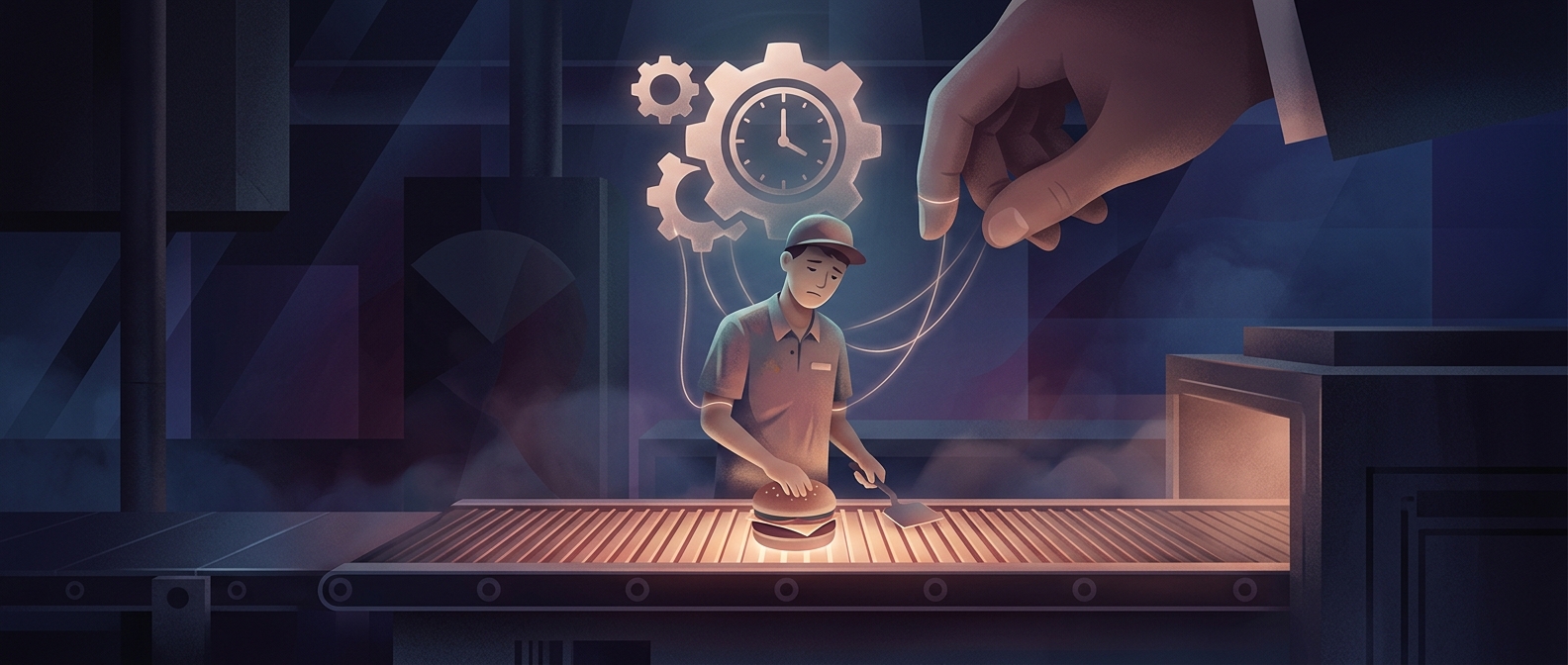
The tradeoff is that the game can make exploitation look like a personal test of efficiency: if the player keeps up, the shift works. That is what gives the scenario its bite. The player is not merely serving food; they have been handed responsibility without the ordinary protections or compensation that should come with the job. The absurd promotion turns a familiar workplace imbalance into a rule the player has to live through.