Why a Foam Blade Has to Give
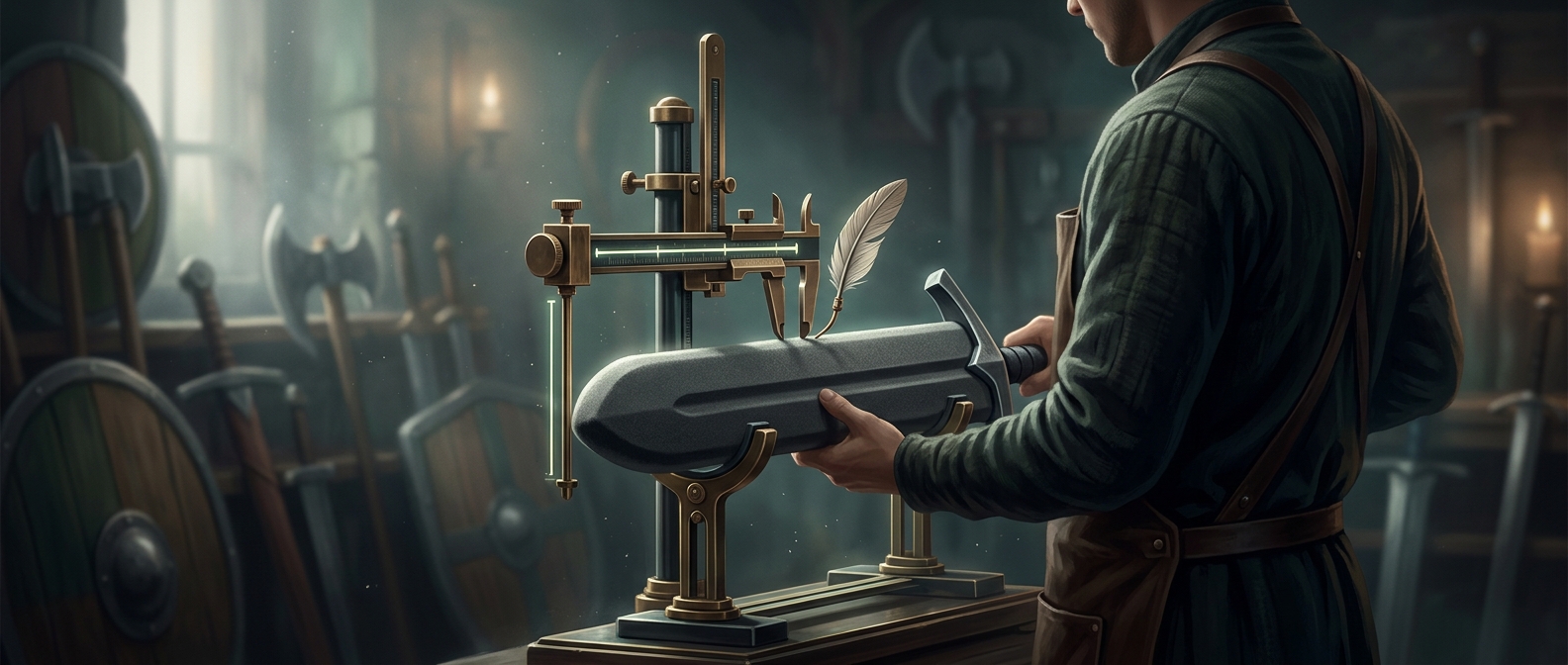
A foam sword can look soft and still hit hard. The key is how much its material yields when pressed: if the foam is too firm, it does not deform much on impact, so more of the blow reaches the person being struck. Compression checks help organizers judge that give rather than relying on appearance alone.
Density—the amount of material packed into a given volume—offers another clue about how a weapon may feel and behave. But density and softness are not interchangeable: the foam’s structure and condition also affect how it compresses. A blade can become less forgiving as it wears, so a safety check is about the weapon as it is used, not just what it is made of.
The Safety Tradeoff
The weapon needs to be soft enough to cushion contact while remaining usable as a sword in play. If it collapses too easily, it may bend or lose its shape; if it resists compression too much, it can deliver a sharper impact. Organizers’ checks are meant to catch weapons that fall on the too-firm side of that balance.
The practical point is that “foam” is not itself a safety guarantee. What matters is whether the blade gives under pressure when it meets another person.