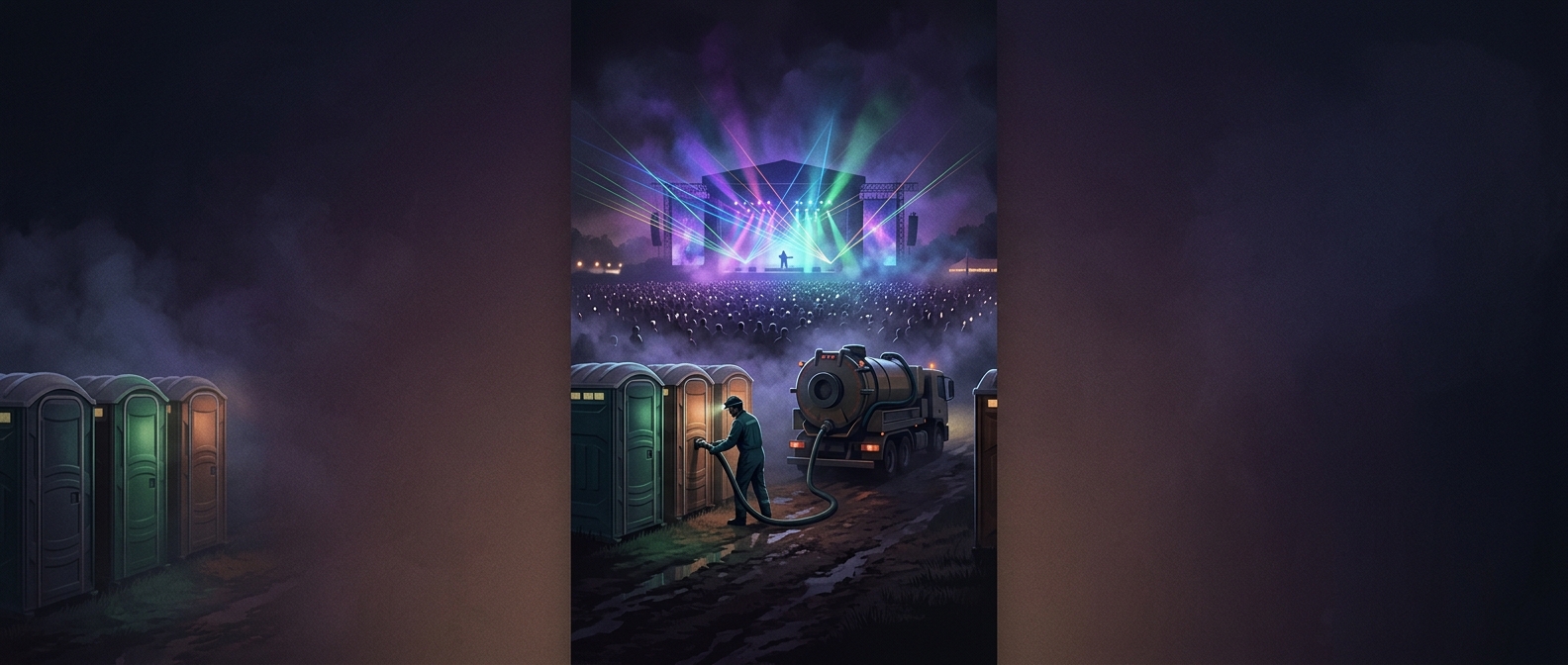
The Headliner Creates a Service Window
A portable toilet is also a small waste-storage unit. As people use it, waste collects in a holding tank beneath the seat; servicing means bringing a vacuum truck close enough to connect a hose and pump that tank out. The truck needs room to maneuver and crews need a safe route between the vehicle and the toilets.
During a headline set, many festivalgoers are gathered at the main stage instead of moving through the grounds. That shift can leave service lanes and toilet areas less crowded, giving crews a brief chance to bring in trucks and work without threading through the busiest foot traffic.
Why Timing Matters
The job is a moving operation, not a quick stop at one unit. A truck must reach each group of toilets, and the units may be spread across a large site. If a route is blocked by people, equipment, or queues, servicing slows down—and a delay at one point can make it harder to reach the next group before the crowd disperses.
Crews therefore work around the festival’s audience flow. The headline act becomes a practical window in the schedule: while attention is concentrated onstage, trucks can reach toilets that would be harder to service during a changeover or a rush between sets. The payoff is ordinary but important: toilets are more likely to be ready when thousands of people leave the stage area and head back across the site.