Why the Time Machine Needed to Move
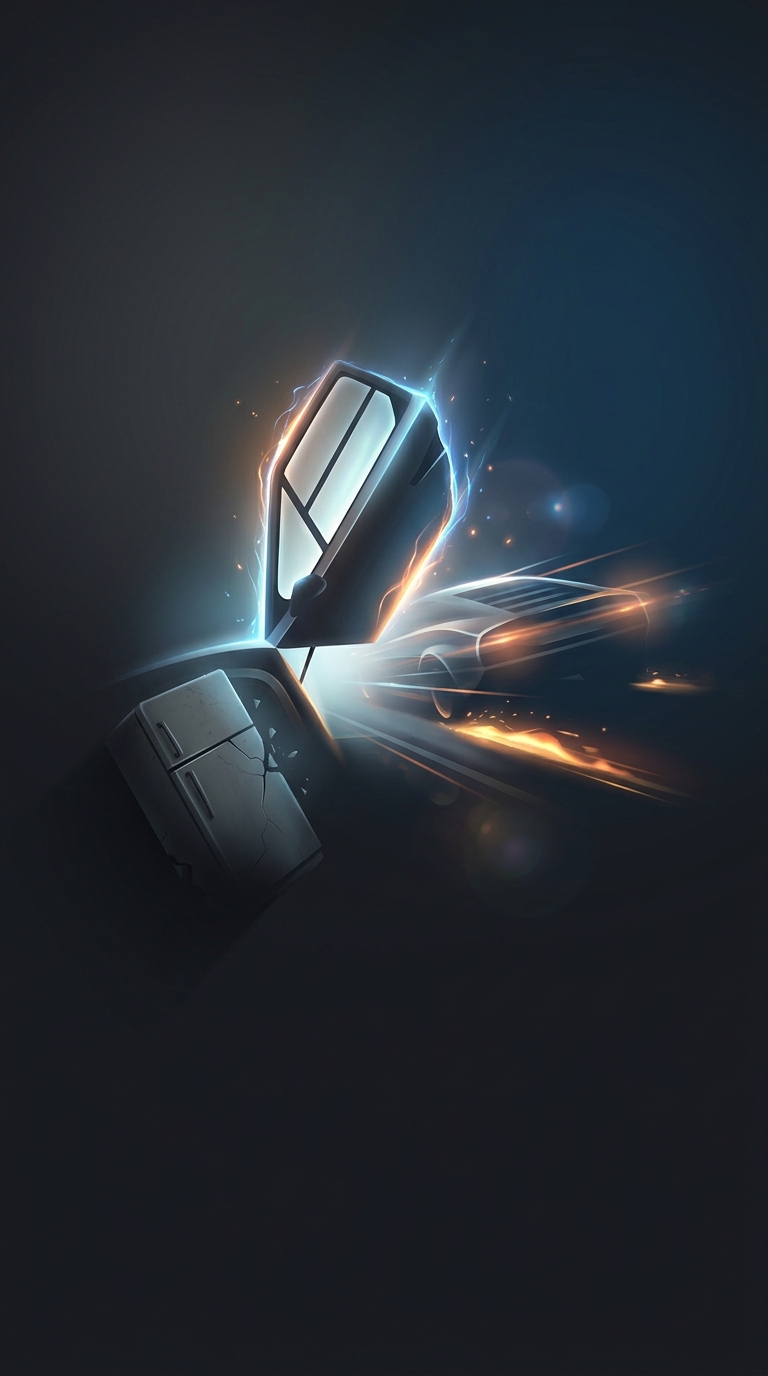
In early versions of Back to the Future, the time machine was a refrigerator. That idea had an obvious practical problem: a refrigerator stays put. The story needed a machine Marty could take onto a road, accelerate to 88 miles per hour, and use to return to his own time. A sports car made the time-travel mechanism part of the action rather than a stationary prop.
The refrigerator also raised a more troubling concern: children might imitate what they saw and climb inside an appliance. Replacing it with a car avoided making a household container look like a place to enter. The change was a safety consideration as well as a storytelling one—not simply a styling upgrade.
Why a DeLorean Made the Idea Click
The DeLorean brought its own visual joke and story logic. Its gull-wing doors—the doors swing upward instead of outward—made the car look unusually futuristic, even though it was a struggling sports car in the film’s 1985 setting. That contrast helped sell Doc Brown’s eccentric invention: a machine that seemed extraordinary but still had to function as a car.
Making the time machine a vehicle also gave the film a built-in obstacle. It needs a road, speed, and precise timing, so every attempt to travel through time becomes a physical problem the characters must solve. The shift from refrigerator to DeLorean turned the machine from something to climb into into something the story could chase, crash, and drive toward its next moment.