Why cinnamon grows back as a curl
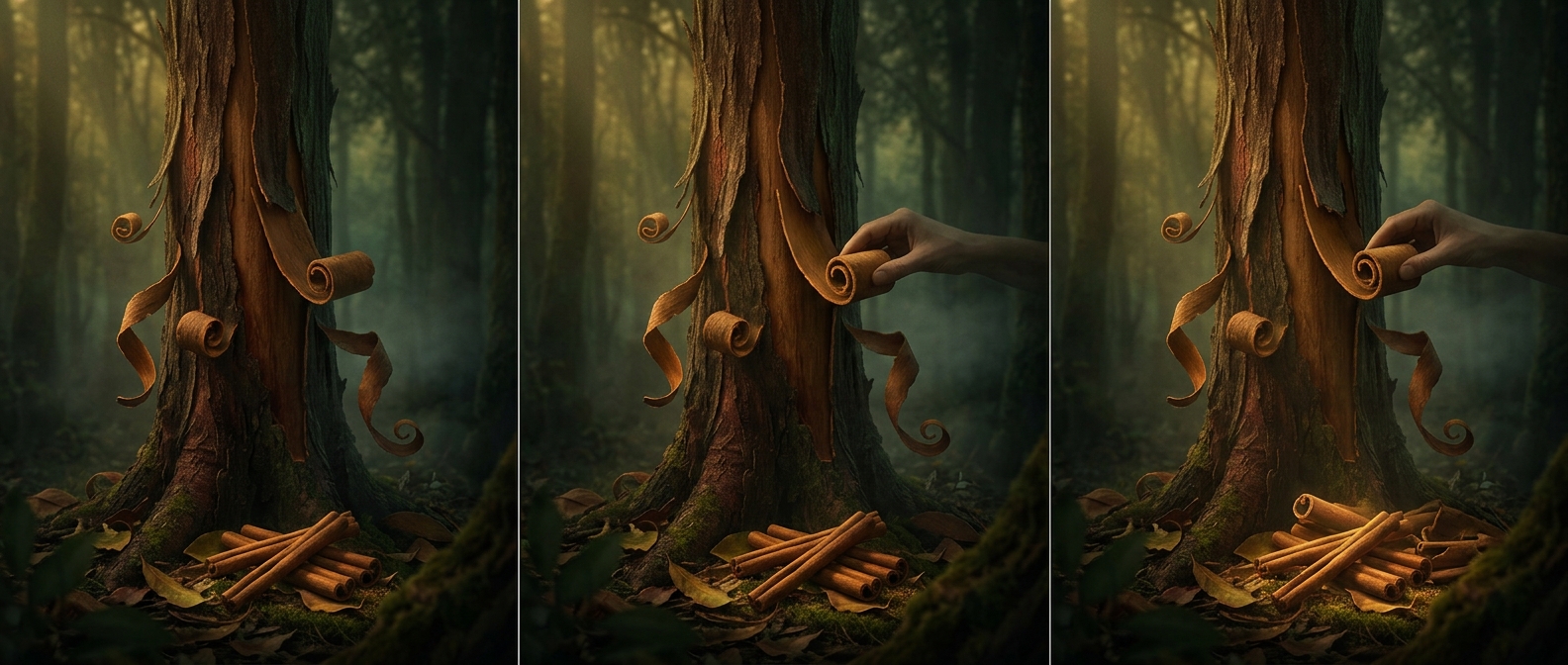
A cinnamon quill is not a piece of trunk shaved into a spiral. Harvesters work with young branches or shoots, removing the rough outer bark and loosening the thin inner layer beneath it. As that layer dries, it contracts and curls. Narrow pieces can be fitted inside one another, forming the layered sticks sold whole.
That sequence makes the harvest a processing job as much as a farming one: the bark has to come away in usable sheets, then be cleaned, trimmed, and dried. A torn or uneven strip may still contribute flavor, but it is less useful as a neat, intact quill.
Why the form matters in the market
Whole quills preserve a visible sign of how the spice was prepared, while ground cinnamon hides the bark’s shape and texture. The familiar stick is therefore both a cooking ingredient and a small piece of processing evidence: its layered construction records the work of separating and rolling the inner bark.
“Cinnamon” can also refer in commerce to bark from different cinnamon-tree species, which can vary in thickness and flavor. So the curled stick is not just an odd natural shape. It is the result of a particular harvest method—and, when sold whole, a form that lets buyers see more of the material they are purchasing.