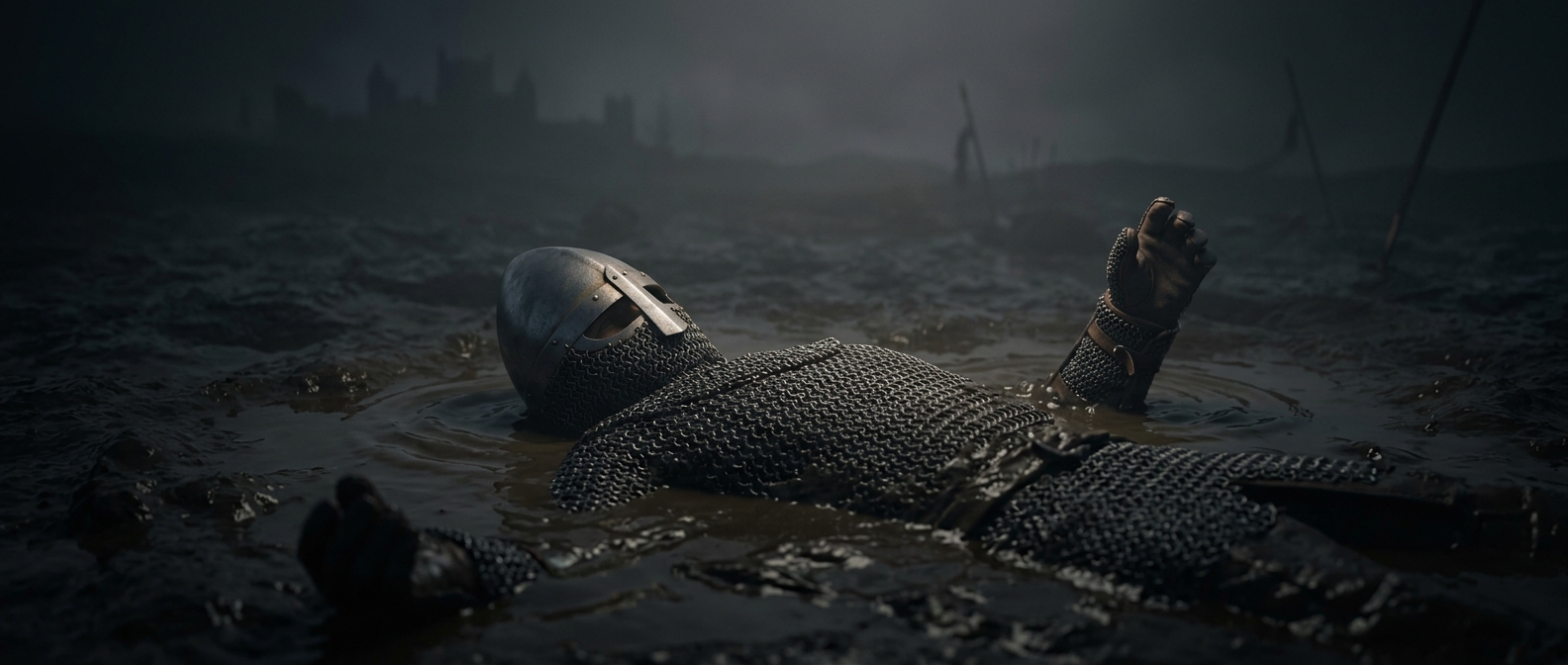
Armor moved with the body—until the body hit the ground
A suit of plate armor was not a single rigid shell. Its overlapping plates were joined so a wearer could bend elbows and knees, while straps and padding kept the metal in place. Much of its weight rested across the body rather than hanging from one point, making it possible for a trained person to walk, fight, and mount a horse in it.
But those advantages depended on being upright and able to move deliberately. After a fall, a knight had to find leverage, bring a knee beneath him, and push against the ground. Mud could make that harder by shifting underfoot or preventing a firm brace. The armor did not make standing up impossible; it made a bad position more costly, especially when the wearer was exhausted or injured.
Why a fall could become dangerous
The danger was not simply that metal was heavy. A fallen fighter might be pinned beneath another person or trapped awkwardly, with limited room to turn and draw a full breath. Pressure on the chest or a position that restricted movement could make breathing difficult; struggling to free himself would consume strength he might need to get back up.
On a battlefield, remaining down also meant being exposed to opponents and unable to defend himself as effectively. Armor could blunt a blow, but it could not restore the leverage, space, or time a fallen person needed. Its protection worked best when the wearer could still control his body—and a fall could take that control away.