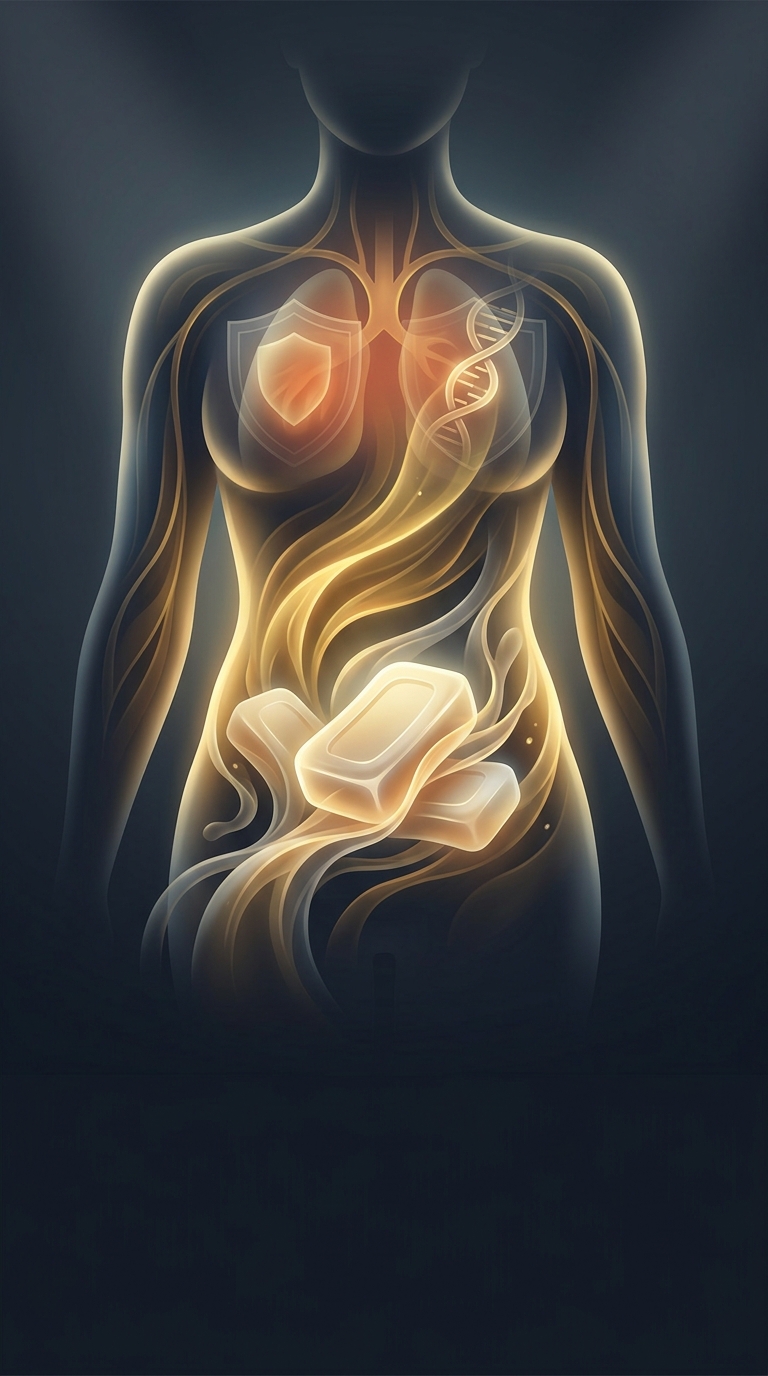
Body fat is working tissue, not spare packaging
Fat stored beneath the skin and around organs is adipose tissue: living tissue made largely of fat-storing cells. It serves as an energy reserve, slows heat loss, and cushions some organs against bumps. These cells also release chemical signals that help regulate appetite, reproduction, and other body processes. That makes body fat biologically useful, though the amount that supports health varies from person to person.
How fat can become soap
The soap-making idea comes from a chemical reaction called saponification. When fats are heated with a strong alkali, such as lye, their molecules break apart and form soap-like salts. In principle, animal fat can supply the fat for this reaction; it is not automatically soap just because it comes from a body.
The distinction matters. The tissue would need to be processed, and lye is caustic enough to cause severe burns. Rendering and making soap are controlled tasks, not a simple or safe emergency use for body fat. The survival image is intriguing, but it describes a chemical possibility rather than a practical hygiene plan.
Useful does not mean unlimited
Body fat can help carry a person through periods without food, but it is not an inexhaustible battery: prolonged energy shortage also affects muscle and essential body functions. Nor does its usefulness mean that every amount is harmless. The point is narrower—and worth remembering when appearance-focused messages treat all fat as waste: adipose tissue has real jobs, even as its amount and distribution matter to health.