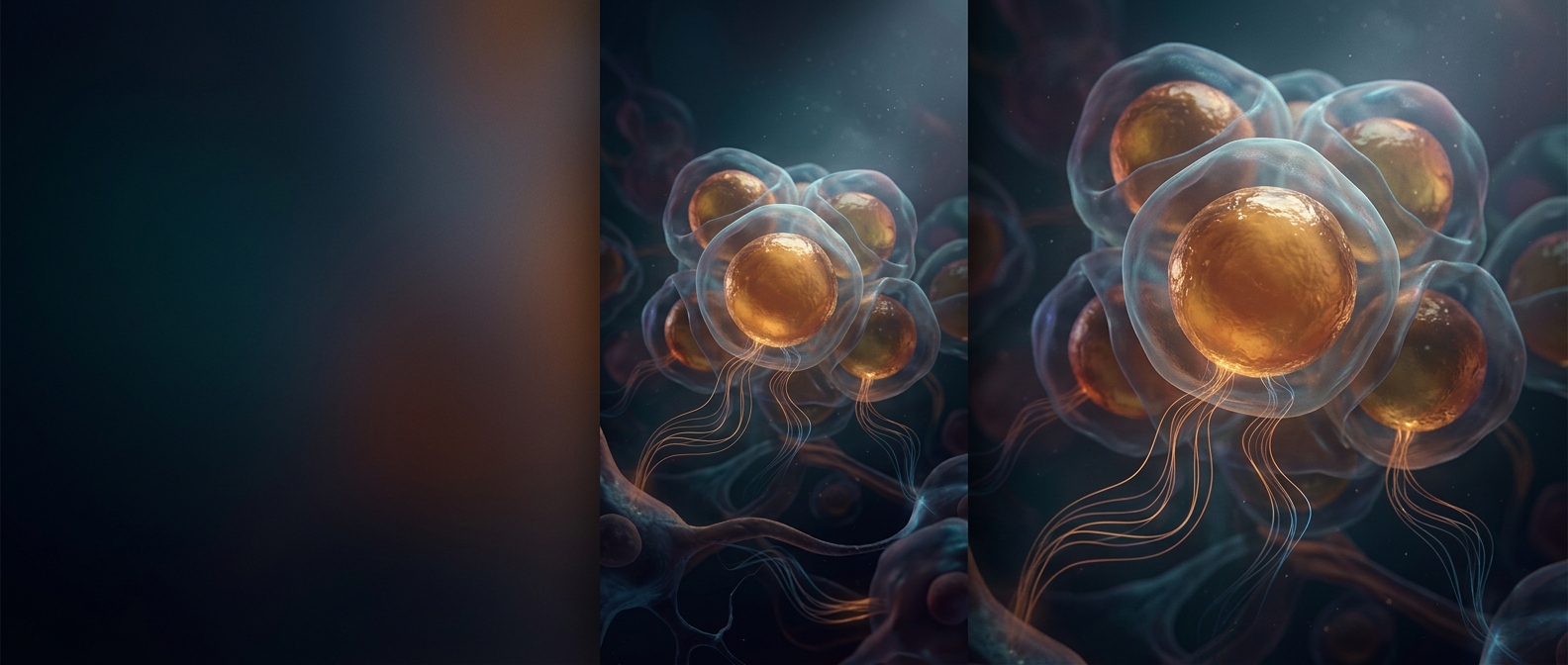
How fat cells turn surplus into a reserve
After a meal, digested fats and carbohydrates supply molecules that can be used for energy or assembled into storage fat. In fat cells, enzymes join fatty acids to a small molecule called glycerol, making a triglyceride: one glycerol backbone carrying three fatty-acid chains. The triglycerides collect in droplets inside the cells.
This arrangement packs substantial chemical energy into little space. Unlike glycogen, the body’s short-term store of glucose, triglyceride is stored with very little associated water. Its fatty-acid chains are also rich in chemical bonds that can yield energy when broken down.
Opening the store when energy is needed
The reserve is not locked away. Between meals or during prolonged activity, hormonal signals prompt fat cells to break triglycerides apart. The released fatty acids travel through the blood to tissues such as muscle, where cells can use them to make energy. Glycerol can be carried to the liver and used in other metabolic processes.
After eating, the balance shifts toward storage: insulin helps tissues take up nutrients and discourages the release of stored fat. Later, as the body needs fuel, that balance can shift toward breakdown. A triglyceride droplet is therefore less like a fixed deposit than a supply bin: its contents are continually stored, released, and used according to the body’s needs.