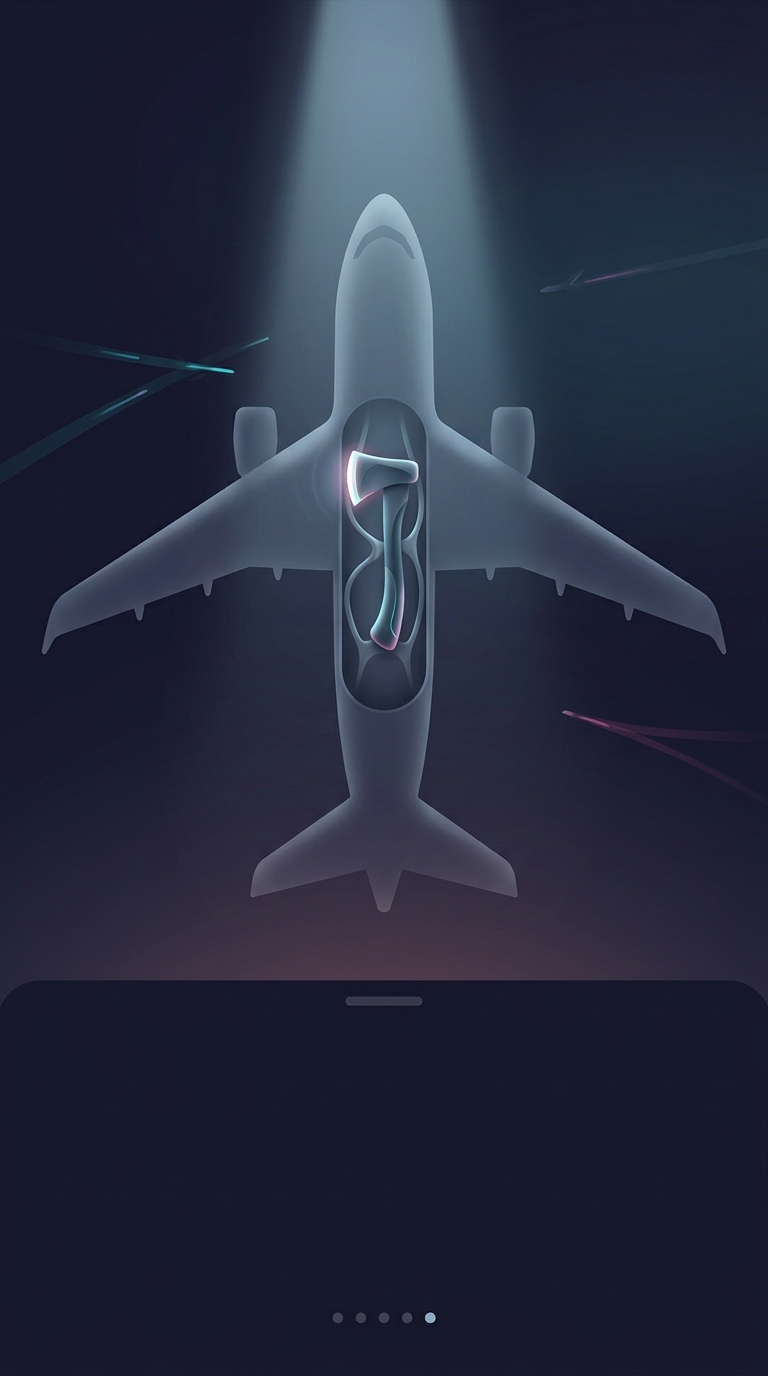
How a Ram Air Turbine Makes Power Without an Engine
A Ram Air Turbine, or RAT, is a small propeller-like device tucked into an aircraft’s fuselage or wing. When deployed, it catches air rushing past the aircraft and spins a generator, a hydraulic pump, or both. It does not burn fuel or restart a jet engine; it takes energy from the aircraft’s forward motion through the air.
That distinction matters during an emergency. Even after an engine stops producing thrust, an airplane can keep moving and gliding, so air still flows over the RAT. The turbine can turn that airflow into a limited supply of electricity or hydraulic pressure—the force transmitted by fluid to move mechanical parts.
A Backup for Essential Controls
Aircraft systems differ, but a RAT is generally designed to support selected essential functions, not restore normal power throughout the airplane. Depending on the design, its output may help operate flight controls, instruments, or communications. Pilots still have to manage a constrained set of systems while they steer toward a landing.
The device typically deploys automatically when the aircraft detects a serious loss of its normal power sources, though the exact trigger and capabilities vary by model. It is a last-resort backup, not a routine response to every engine problem. Many aircraft also have other backup systems, such as batteries or auxiliary power units.
Why It Was Used on the Hudson
On US Airways Flight 1549, both engines lost thrust after the aircraft struck birds, and the RAT deployed. The airplane was still moving through the air, allowing the turbine to supply emergency power while the crew maneuvered toward the Hudson River.
The RAT’s contribution was modest but crucial: it could not replace the engines or make the flight ordinary again. It helped preserve access to vital systems at a moment when the crew had very little time and few options. Its power comes not from the failed engines, but from the airflow the airplane still creates as it flies.