A kick sled turns a shove into a glide
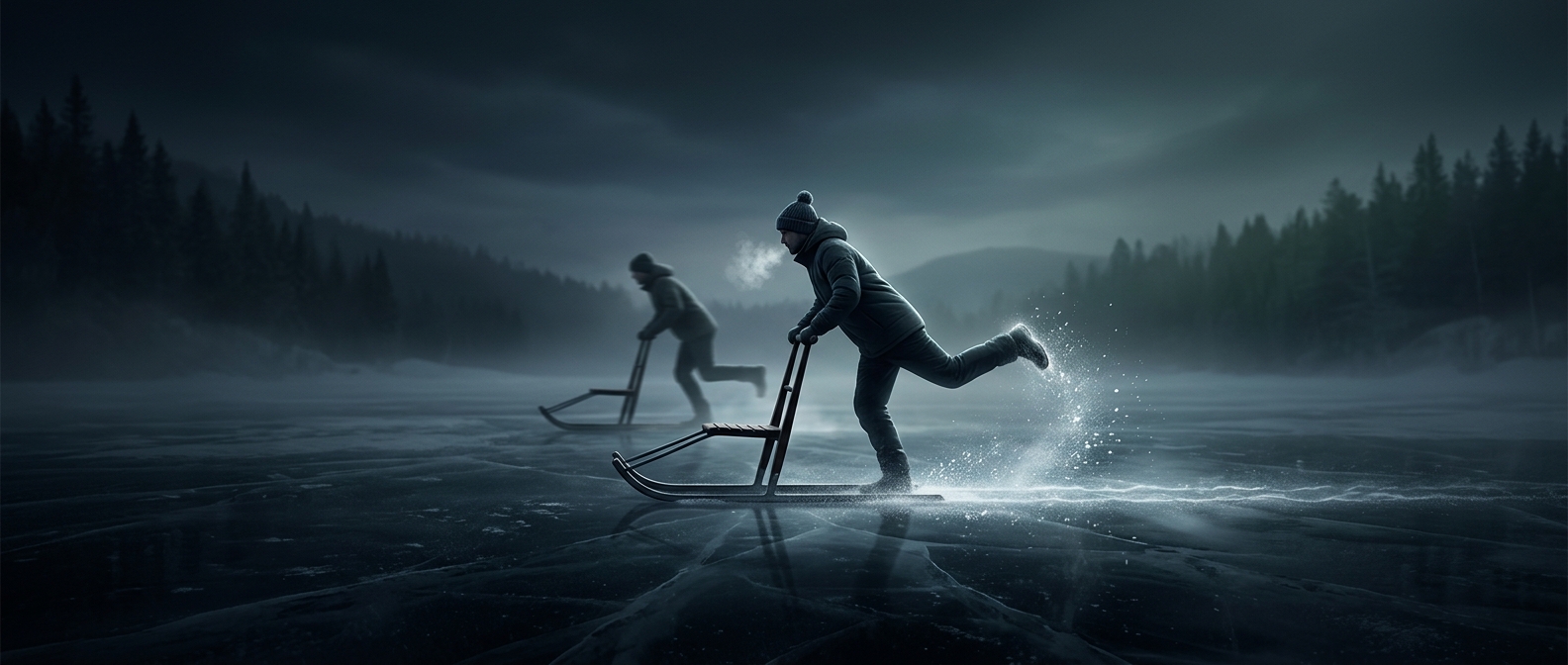
A kick sled has two long runners and a handlebar. The rider stands on one runner, holds the bar for balance, and pushes backward against the ground with the other foot. That backward push drives the sled forward; once the foot lifts, the runners keep it moving while the rider coasts.
Ice makes the cycle practical because it offers little resistance to sliding. The rider does not need to push continuously as with a wheeled scooter on rough ground: a firm kick can carry the sled through a stretch of glide. But the sled still depends on repeated human-powered kicks, especially when it slows or the surface is less slippery.
Balance is part of the propulsion
The rider’s weight stays over the runner while the kicking leg reaches back and returns. The handlebar steadies the body and gives the rider a way to guide the sled. Each kick is a small exchange: one leg holds the rider up, the other pushes, then comes back before the next stroke.
That division of labor is the design’s defining tradeoff. The runners make coasting possible, but there is no engine to maintain speed. On a clear icy path, the rider can alternate effort with glide; the sled’s motion lasts only as long as the kicks—and the low-friction surface—allow.