Why a Musher Stands Behind the Dogs
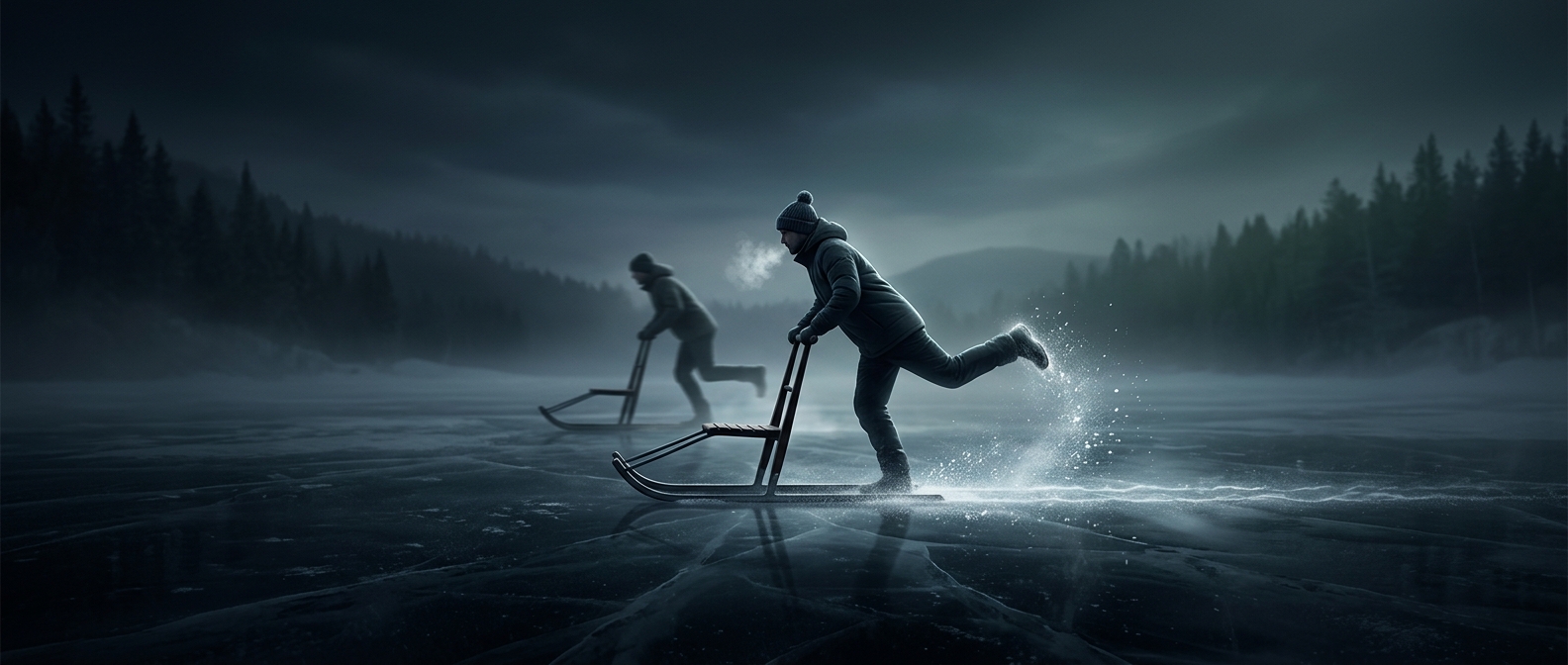
A sled’s long runners do more than keep it gliding over snow: they give the musher a moving platform from which to manage the team. The dogs pull through harnesses attached to a central line, while the musher stands on the rear runners and uses body position and foot controls to influence how the sled moves.
That division of labor matters because a dog team can generate far more forward pull than a person could provide. The musher’s job is to direct that power and keep the sled under control, especially when the trail bends, slopes, or narrows.
Steering and Braking on Snow
Unlike a car, a traditional sled has no steering wheel or tires gripping pavement. The musher steers largely by shifting weight and pressing one runner more firmly into the snow, helping the sled follow a turn. The runners’ edges can bite into packed snow, while their broad undersides slide over it.
To slow down, the musher can press a metal claw or brake into the snow. Many sleds also have a drag mat—a rough, flexible surface that scrapes along the trail when stepped on. It adds resistance, much as dragging a foot slows a sliding object. On a steep or slippery descent, the musher may use these controls continuously rather than simply riding along.
Why the Musher Sometimes Gets Off
Standing on the runners keeps the musher ready to brake and shift weight, but it is not always the most effective position. On a climb, a musher may step off and run beside the sled to reduce the load the dogs must pull. On rough ground, walking can also help steady or guide the sled.
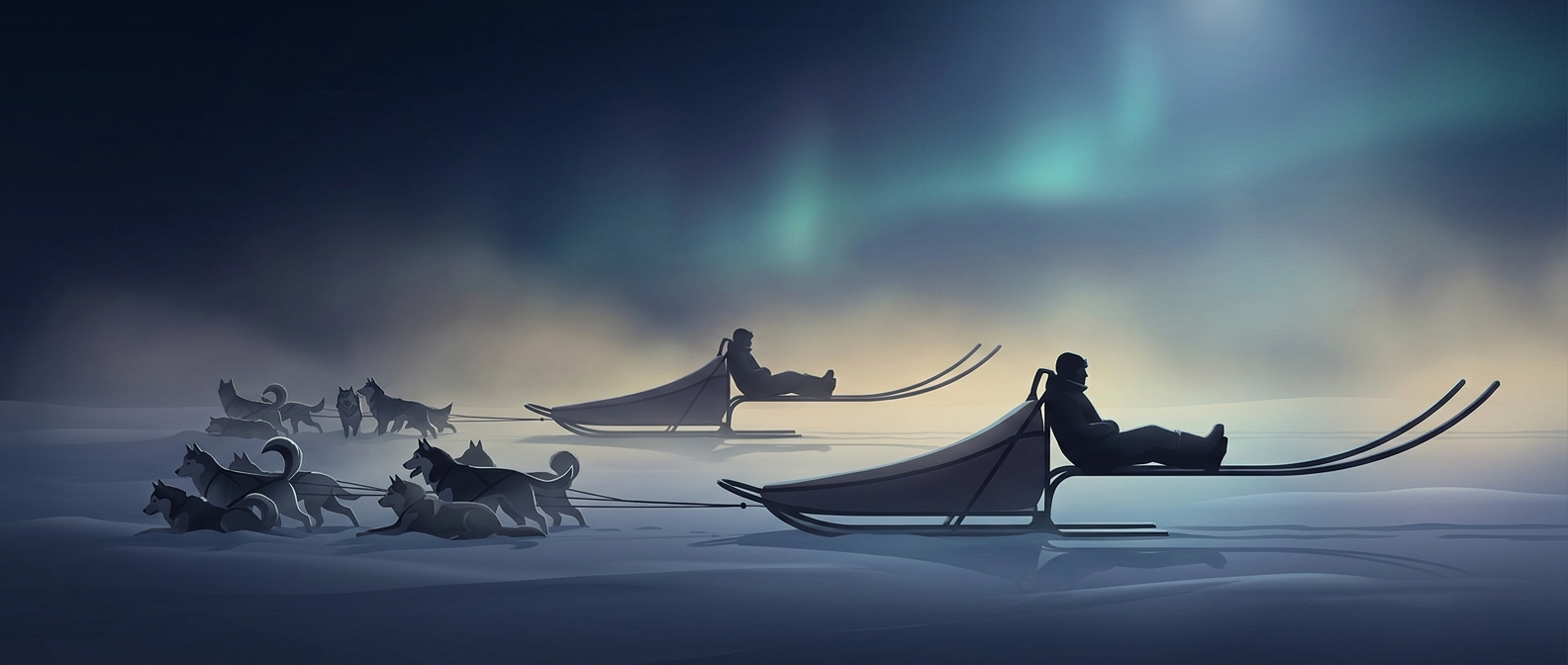
The relaxed silhouette hides a balancing act: the dogs supply the forward force, but the musher must manage speed and direction before that force carries the team into a turn or downhill stretch.