The water carries the load by being pushed aside
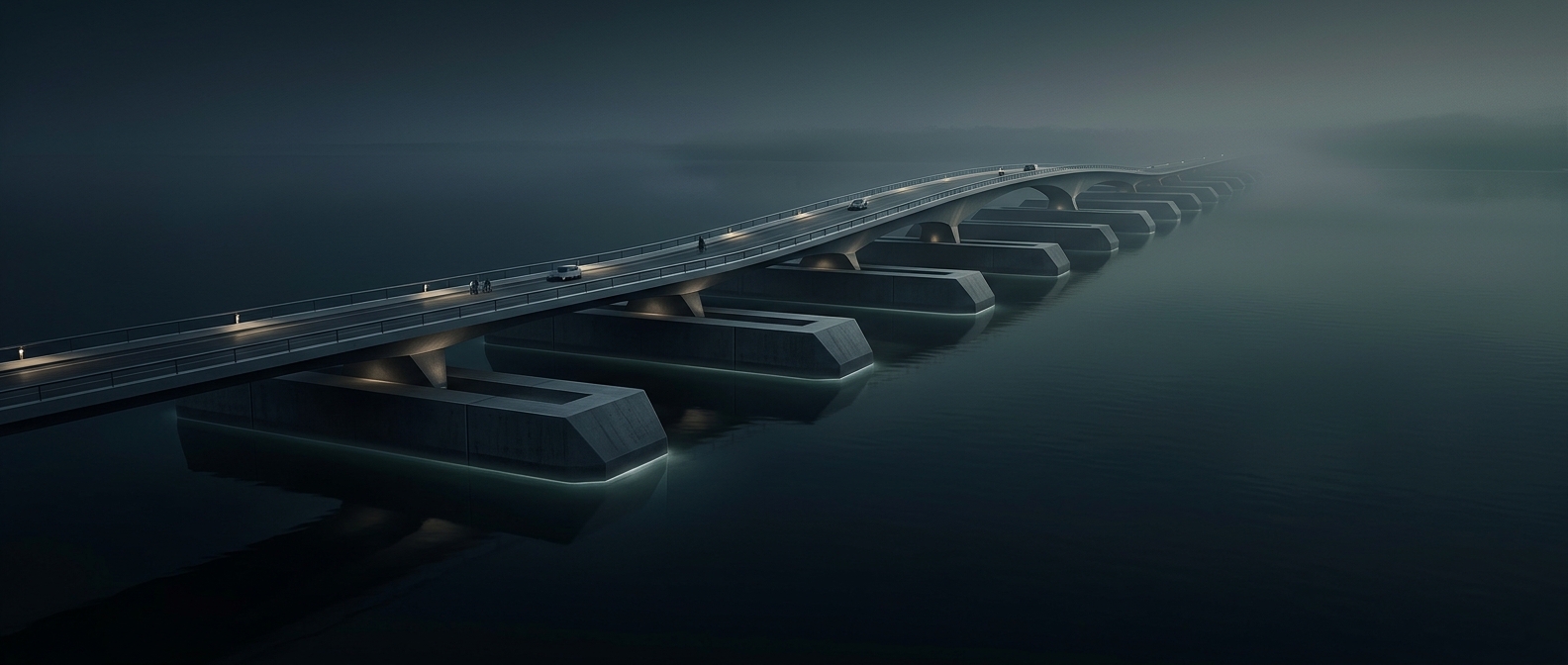
A floating concrete pontoon does not need to be lighter than water in every part. What matters is the average density of the whole structure—concrete, enclosed air, and everything it carries. As the pontoon settles into the water, it pushes water out of the way. The water pushes back upward; when that buoyant force balances the pontoon’s weight, it floats.
Add roadway traffic, and the pontoon sinks a little farther, displacing more water until the upward force balances the added load. Designers leave enough height above the waterline—called freeboard—for that movement, while allowing for changing water levels and waves.
Keeping a floating road steady
Floating is only part of the problem. Pontoons must also resist tipping, twisting, and being driven sideways. Their broad shape helps keep them stable, while connections between sections spread forces along the bridge rather than letting one section carry every bump alone. Anchors restrain the structure’s horizontal movement but must allow it to rise and fall with the water.
The enclosed space is divided into compartments so damage or a leak need not flood the entire pontoon. That safeguard matters because concrete is strong but heavy: if too much of the trapped air is lost, the structure can settle deeper and lose some of its reserve buoyancy.
A roadway that moves with the water
A floating bridge is therefore not a rigid road planted on the bottom. It is a linked structure that flexes and shifts slightly as traffic, wind, waves, and water levels change. Its engineering challenge is to permit that motion without letting it grow uncontrolled—so the highway can ride on the water while still feeling like a continuous route.