A Counterweight Turns a Fall Into a Launch
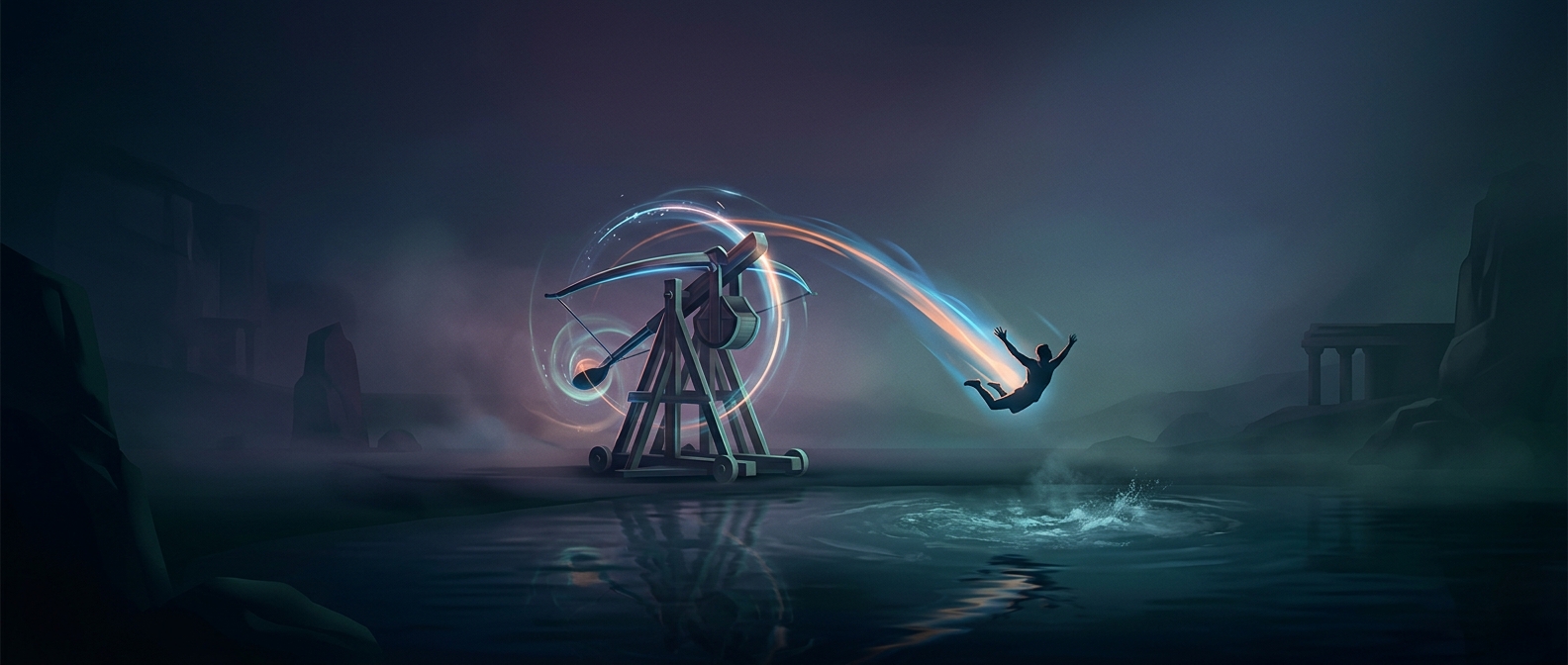
A trebuchet stores energy by lifting a heavy counterweight. When it is released, gravity pulls the weight down, rotating a long arm around a pivot. At the arm’s far end, a sling carries the rider; as the arm swings, the sling opens and sends the rider forward and upward.
The counterweight does not simply toss a person like a stone. The arm and sling shape the motion: the sling lets the passenger gain speed as the arm turns, then releases them along a curved path. The rider remains secured in a harness, while the ride’s design determines the launch arc and where the flight ends.
The Ride Is a Controlled Flight
Making that motion suitable for a person means managing more than the dramatic launch. The structure must withstand the forces of a heavy weight moving on an arm, and the rider’s harness and landing area must work with the planned trajectory. A small change in the release timing or sling geometry can alter the direction and distance of the flight, so the launch is a designed sequence rather than an improvised fling.
That is the engineering tradeoff behind the spectacle: gravity provides the energy, but the machine must constrain how that energy reaches the passenger. The striking part is that the rider experiences a brief flight while remaining attached to the very sling that, in a traditional trebuchet, would carry an inanimate projectile.