How a campaign becomes a shared world
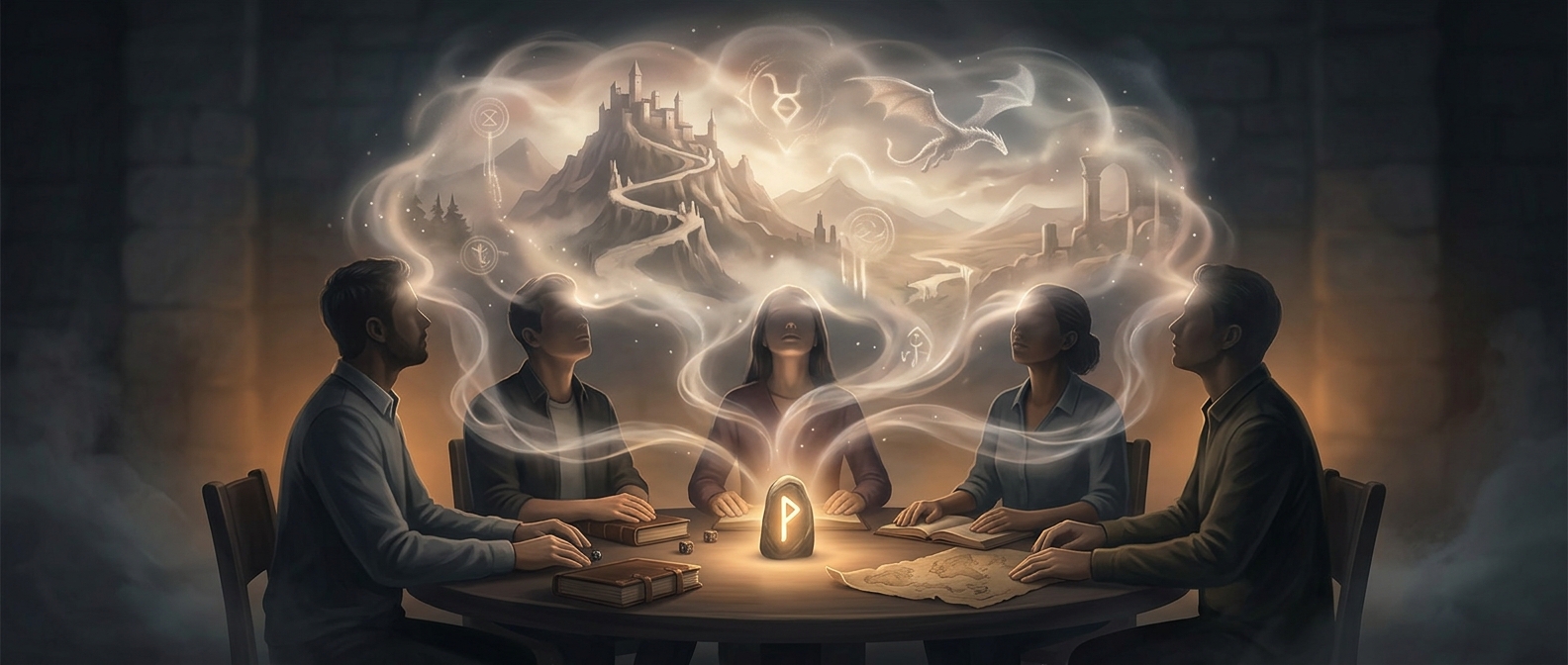
A roleplaying campaign does not need a screen to show a room, a monster, or a distant city. The storyteller supplies those details in words, and each player builds a mental picture from them. That picture is personal: one player may imagine a cramped stone hallway, another a vast underground cavern. What matters is that everyone has enough in common to decide what happens next.
Description and decisions form a loop
The storyteller presents a situation; players say what their characters attempt; then the storyteller describes the consequences. Rules or dice may help decide uncertain outcomes, but they do not provide the scenery. A roll might settle whether a character climbs a wall. The storyteller’s words—and the players’ responses—make that wall part of the scene.
This creates a practical constraint: descriptions must give players useful clues without dictating every detail. If a passage is dark, narrow, or guarded, those facts help shape a choice. The players, in turn, can ask questions or try actions the storyteller did not anticipate. The next description grows from that exchange, rather than from a fixed sequence of images.
Imagination does the work of a set
Because the world is held in conversation, it can change quickly. A failed plan can send the group into an unexpected place; a clever action can make a minor detail suddenly important. The shared world is not just pictured—it is continually negotiated through what the storyteller describes and what the players choose to do.