How a weekend battle gets an economy
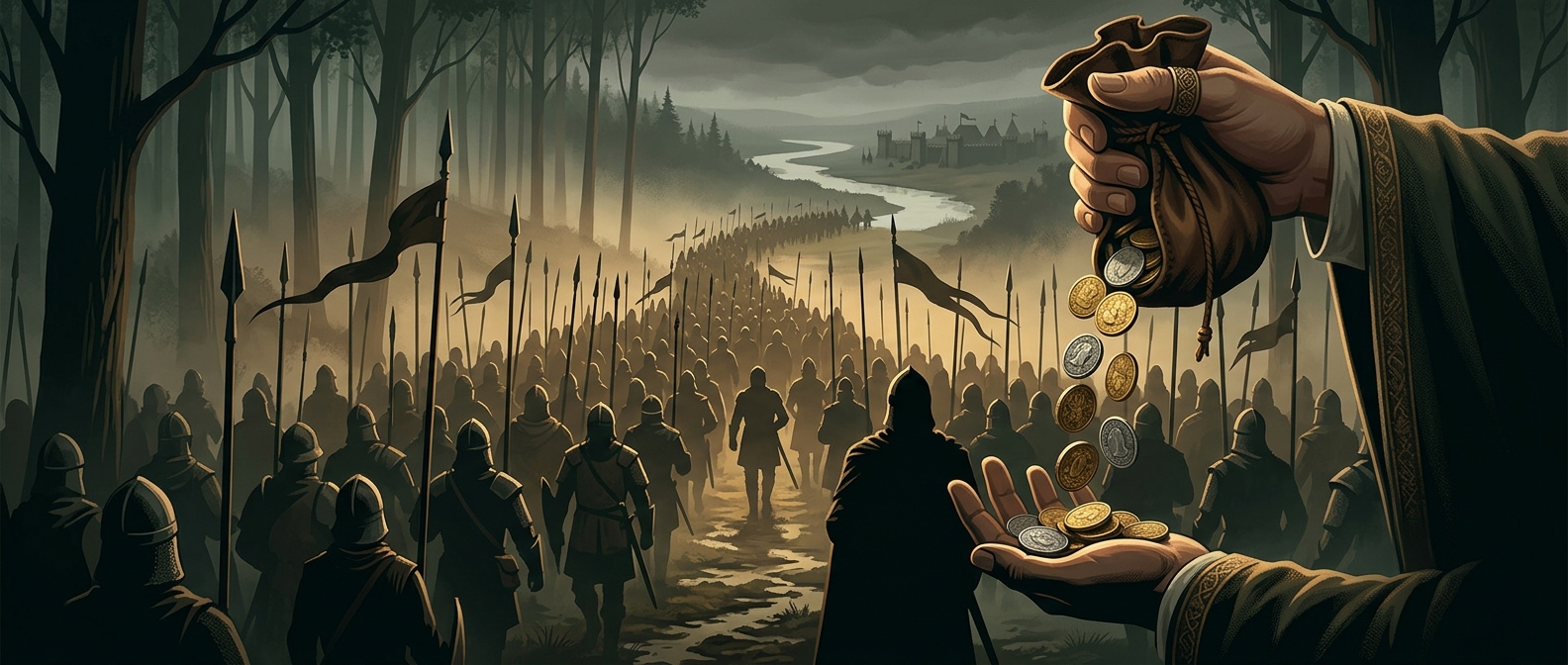
A battle is only the visible endpoint of a longer game. At Bicolline, players can use real money to obtain in-game currency, then spend that currency on assets and services within the fictional world. That gives decisions made away from the battlefield practical weight: a guild’s resources can help it acquire land, pursue trade routes, or recruit other players to fight on its behalf.
The arrangement turns role-play into coordination. A land purchase can establish a claim that other groups must reckon with; a trade route can become something to protect or contest. Hiring mercenaries lets a guild seek additional fighters without requiring every participant to belong to the same group. The value of these choices comes from other players recognizing and responding to them—not from a computer automatically resolving the conflict.
The game continues between events
Paper treaties negotiated during the off-season carry the politics beyond the weekend. They give guild leaders a way to record agreements, alliances, or compromises before the next gathering, so the next battle can reflect relationships built over time. The paper matters because it makes a social commitment visible: players can return to an agreement, argue over its meaning, or decide whether to honor it.
This creates a distinctive design tradeoff. In a conventional strategy game, rules and software can determine who owns a territory or whether a deal is binding. In a live-action role-playing game, the shared fiction depends much more on participants accepting the framework and negotiating with one another. Real-money exchange helps supply the in-game economy, but it cannot by itself create trust, enforce a treaty, or make a route worth fighting over. Those outcomes emerge from the players’ choices—and that is why the war can feel consequential even though it is fictional.