A Safety Signal Can Have Two Meanings at Once
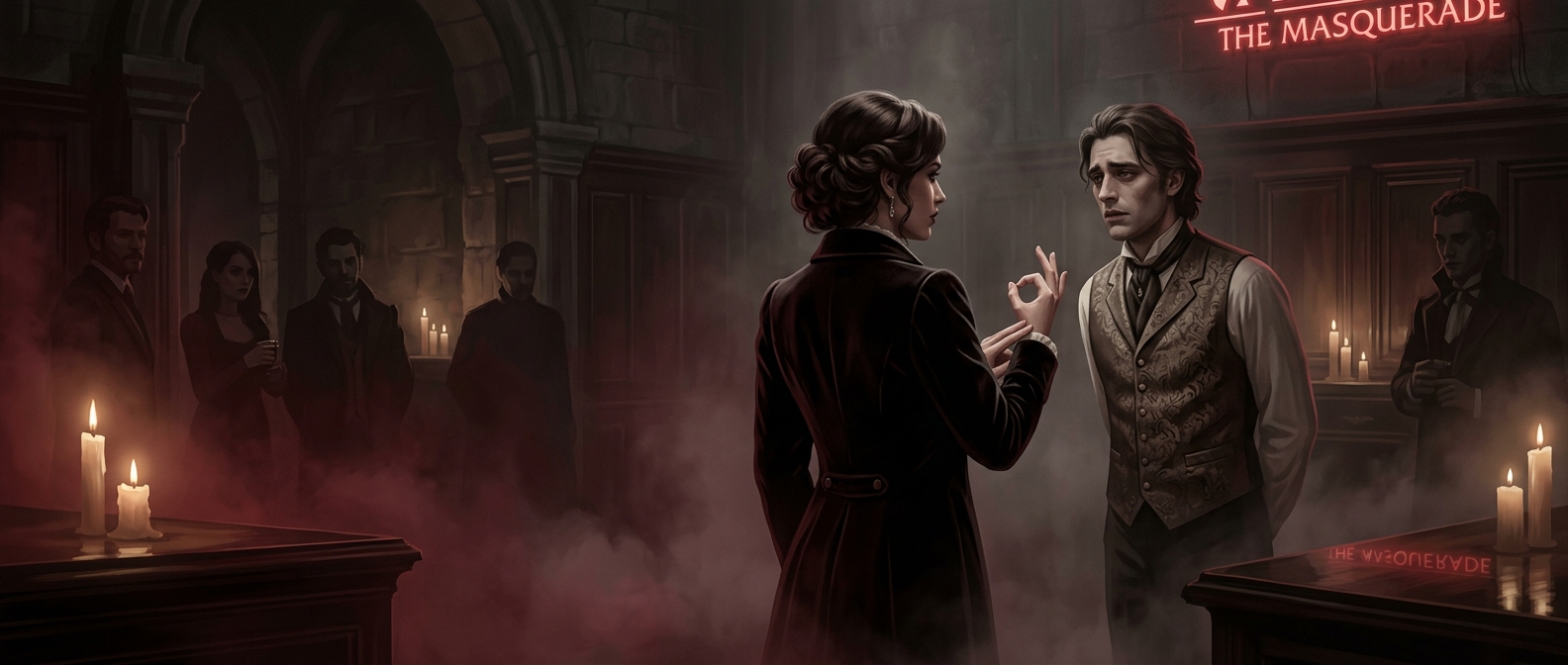
In a vampire live-action role-playing game, a character may be cornered, threatened, or caught in a tense confrontation. The player still needs a way to communicate with the people around them as a person—not as the character—without turning the scene into a discussion about game rules.
That is the job of a small, recognizable gesture. A tap on the crown of the head or an OK sign held low can carry a practical message: check in, ease the intensity, or give someone room. Keeping the gesture subtle lets the scene continue while its participants adjust what is happening.
The Signal Matters Only If Everyone Knows It
A hand sign is not self-explanatory. Players need to know beforehand what a particular gesture means in their game; otherwise, one person may read it as ordinary movement while another expects an immediate response. The same sign can also have different meanings in different groups, so the shared convention matters more than the gesture itself.
Once recognized, the signal gives players a way to change the pace without requiring an in-character explanation. Someone can soften a confrontation, create distance, or check on a fellow player while the characters remain in the scene. That separation is useful in a game built around staying in character, but it does not make the signal a performance: its real-world meaning takes priority.
The result is a quiet control channel running alongside the fiction. A player can ask for a scene to slow down with one gesture, and the next move can change before the tension becomes too much.