Why the brisket needs time after salting
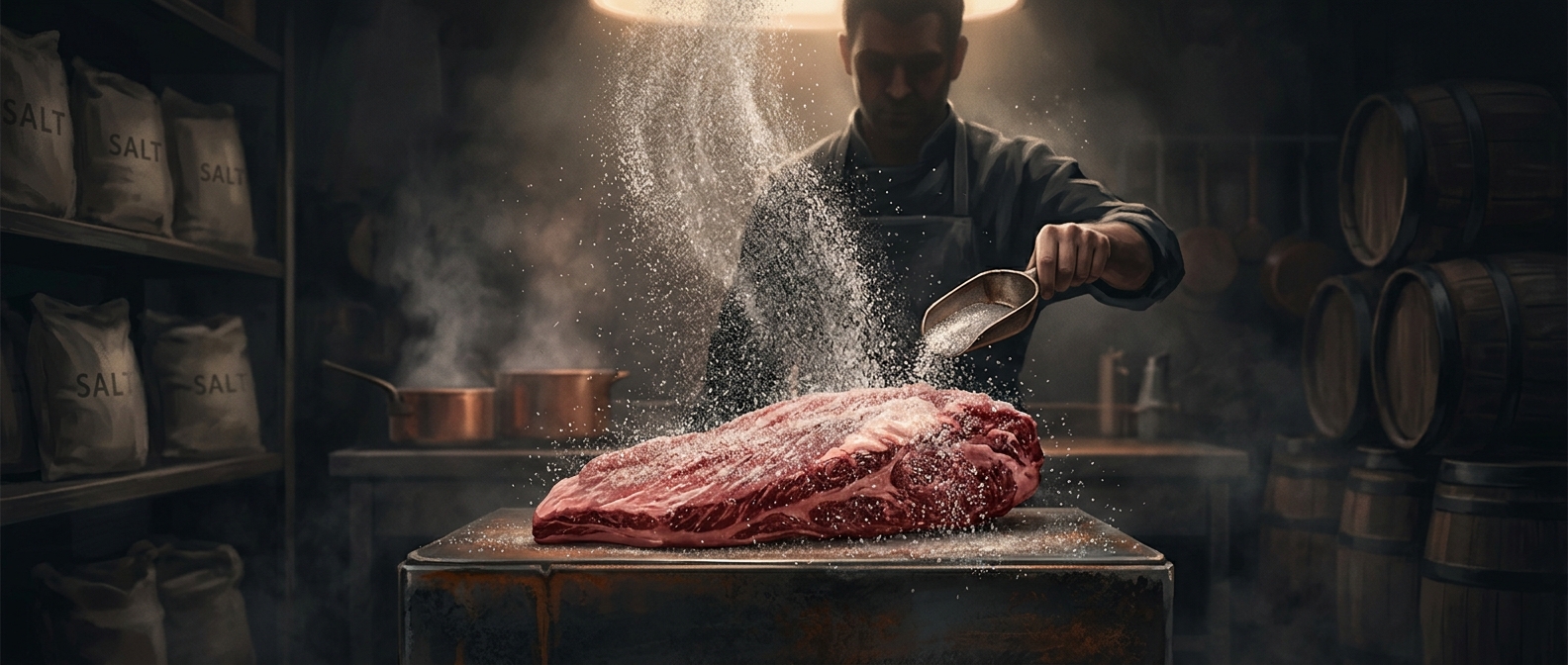
A thick brisket cannot be seasoned evenly in a moment. Salt first draws moisture from the meat; that moisture dissolves some of the salt and spices into a concentrated surface liquid. Given time, salt moves inward, so the flavor reaches beyond the outer edge. Peppercorns and the spice blend contribute a fragrant, assertive crust rather than merely adding heat.
The wait also changes the meat’s texture and flavor. Salt affects how muscle proteins hold water, helping the cooked brisket stay juicy. The crucial work is the slow contact between seasoning and meat—not the darkness itself, which is simply part of how the cut is kept while it rests.
From brisket to a Montreal deli sandwich
Schwartz’s is known for Montreal-style smoked meat, a deli tradition built around seasoned brisket. Curing, smoking, and serving the meat in a sandwich are separate steps: the seasoning develops first, while later cooking makes the firm cut tender enough to slice and eat. The rye is a sturdy, slightly tangy counterpoint to meat whose flavor is concentrated and peppery.
That long pause explains why the deli’s bold flavor cannot be reproduced just by shaking more seasoning over a finished sandwich. The brisket has to absorb the spice before it reaches the counter. It is a small but telling part of the experience: the sandwich’s intensity begins well before the first slice is cut.