The Room Before the Fight Is Part of the Warning
A boss encounter often asks players to switch gears: ordinary exploration gives way to a concentrated test of timing, tactics, and resource use. An empty arena stocked with supplies makes that transition legible before the enemy appears. The player can read the room—there is space for a major confrontation, and the items nearby are likely to matter—without needing a character to announce what is coming.
The warning works because it is also useful. Supplies let players replenish or adjust before committing to the fight, while a save point gives them a place to return if an attempt goes badly. That combination lowers the cost of trying a strategy, learning the boss’s patterns, and trying again. Preparation is not just a pause in the action; it is part of the encounter’s design.
A Checkpoint Can Build Tension and Reduce Friction
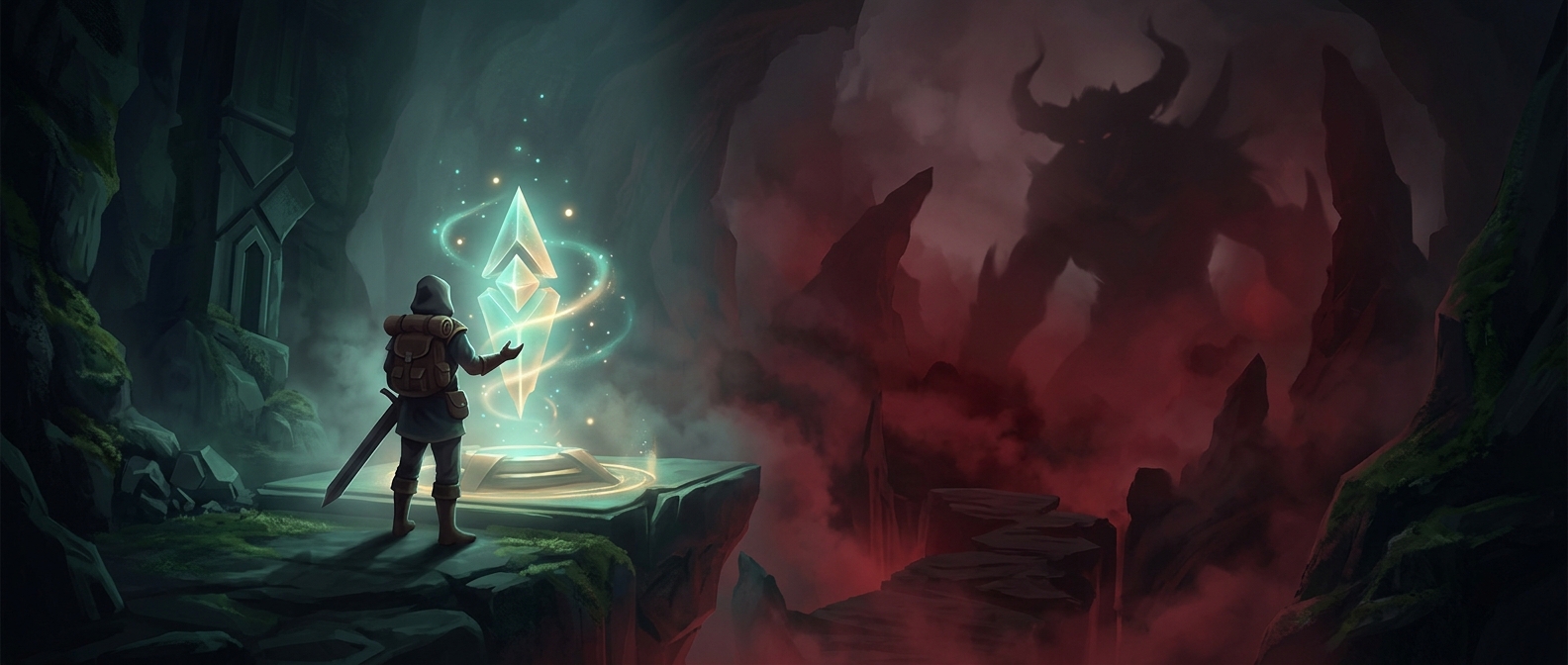
A glowing diary draws attention to the checkpoint, but its presence can carry two messages at once: something important lies ahead, and the game is giving the player a fair chance to get ready. The arena’s emptiness adds to the anticipation by leaving the threat conspicuously absent. Players enter expecting the space to change once the fight begins.
That small staging choice helps make a difficult encounter feel deliberate rather than arbitrary. Before the first attack, the game has already invited the player to save, gather supplies, and think ahead.