A console sold as a complete multimedia system
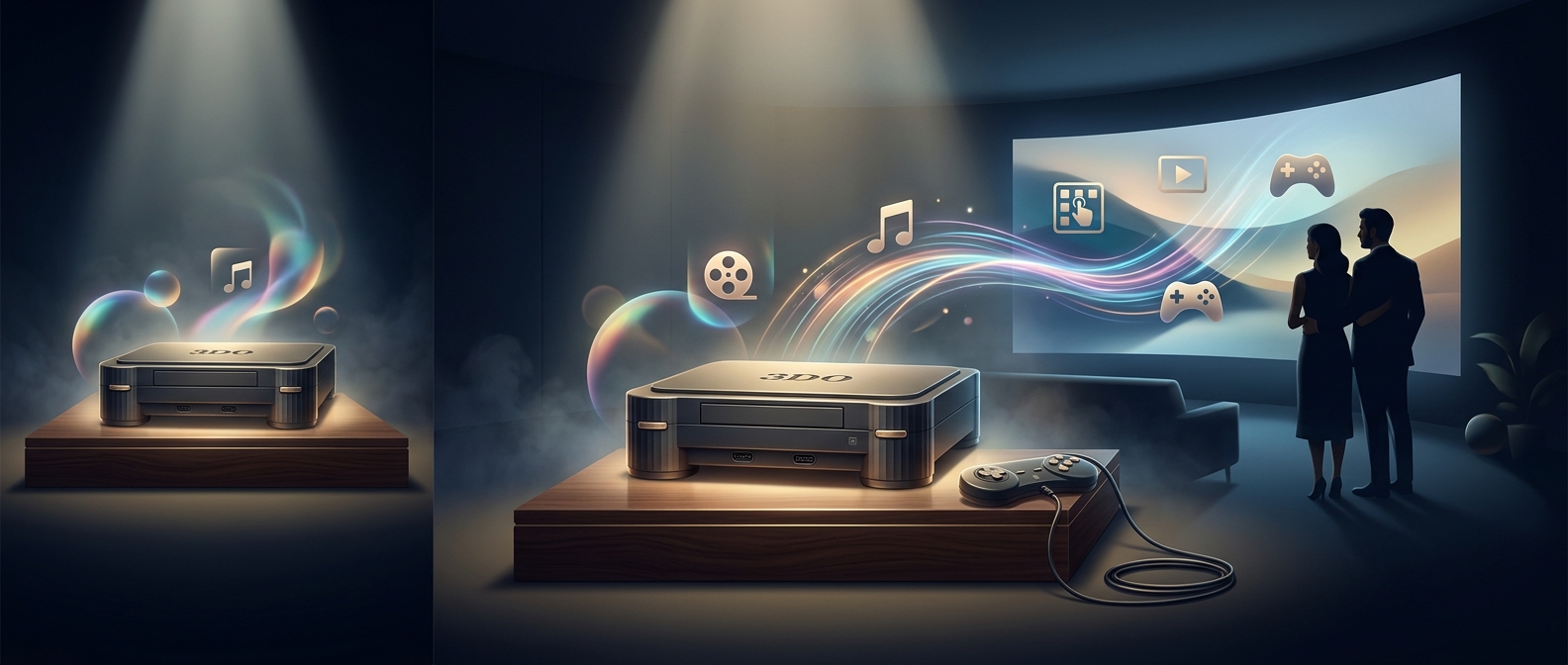
The 3DO’s makers wanted it to seem like more than another game console. Its CD-based hardware could play games and audio CDs, and the company promoted the platform as a powerful home-entertainment machine. That framing promised a broader future for the device—but also made it harder to explain why a household should pay so much for it.
A different business model put the cost up front
The 3DO Company designed the platform and licensed other companies to build the machines. Panasonic made the first model, the FZ-1. Unlike a console maker that can sell hardware cheaply and try to earn money later from games, each 3DO manufacturer had to make its own hardware business work. The system therefore arrived at a premium price—about $700 in the United States at launch.
That price reflected a real tradeoff: advanced hardware and CD capabilities were expensive, while the licensing approach left no single manufacturer positioned to absorb the cost as a deliberate way to build a large audience. To buyers, however, the distinction mattered less than the amount due at the store.
The pitch met the console aisle
Consumers were choosing among familiar, less expensive game systems, and a multimedia promise did not automatically make the 3DO’s games feel worth the difference. Its broad ambitions also asked shoppers to value capabilities they might not need. As a result, the system struggled to turn technical sophistication into mass-market appeal.
The lesson was built into the shopping decision: a device can offer more, yet lose if its extra capabilities do not feel worth paying for. The 3DO’s premium positioning made that calculation unavoidable before a buyer ever put a game in the machine.