A spinning weight made the controller shake
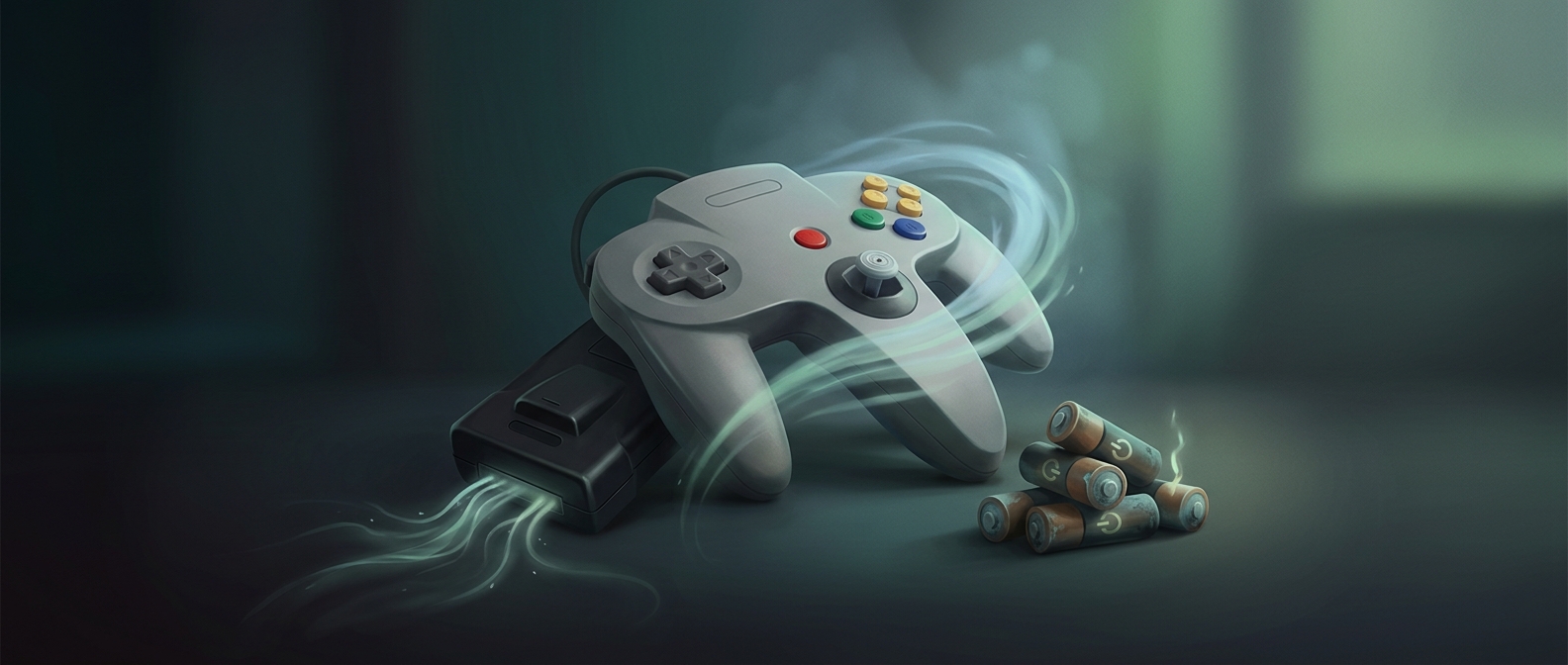
Inside the Nintendo 64 Rumble Pak, a small electric motor spun an off-center weight. Because that weight was heavier on one side, its rotation made the whole accessory vibrate. The controller passed the vibration into the player’s hands, turning a game event into a physical cue rather than something shown only on screen.
The game had to be designed to trigger it. A hit, collision, or other dramatic moment could send a signal to the Pak, which switched its motor on. The result was simple but expressive: a brief jolt could make an impact feel immediate, while longer vibration could signal ongoing danger or movement.
Feedback came with a power tradeoff
The motor needed more power than the controller’s ordinary buttons, so the Rumble Pak carried its own batteries. That made it an added piece of hardware to maintain—and another reason the accessory felt bulky. When the batteries ran down, the controller’s buttons and stick still worked; only the motor-driven feedback disappeared.
The design also occupied the controller’s slot for plug-in accessories, so players generally had to choose between rumble and another Pak, such as one used to store game data. The compromise was tangible: a little extra weight and battery upkeep bought a new kind of feedback, but it was optional rather than essential to controlling the game.