How a shell became spendable wealth
Cowries were useful as money because they were small, tough, easy to carry, and recognizable. Unlike food or cloth, they did not quickly spoil; unlike large metal objects, they could be counted and moved in bulk. A trader could take them to market and exchange a quantity for goods, while sellers could pass them on in later transactions.
But a shell was not automatically valuable everywhere. Its purchasing power depended on how many reached a particular place and how readily people there accepted them. Where cowries were scarce and trusted, they could serve as payment or as a way to store wealth. Where supplies grew, each shell could buy less. Their role therefore varied across regions and periods rather than forming one uniform currency system.
The trade route mattered as much as the shell
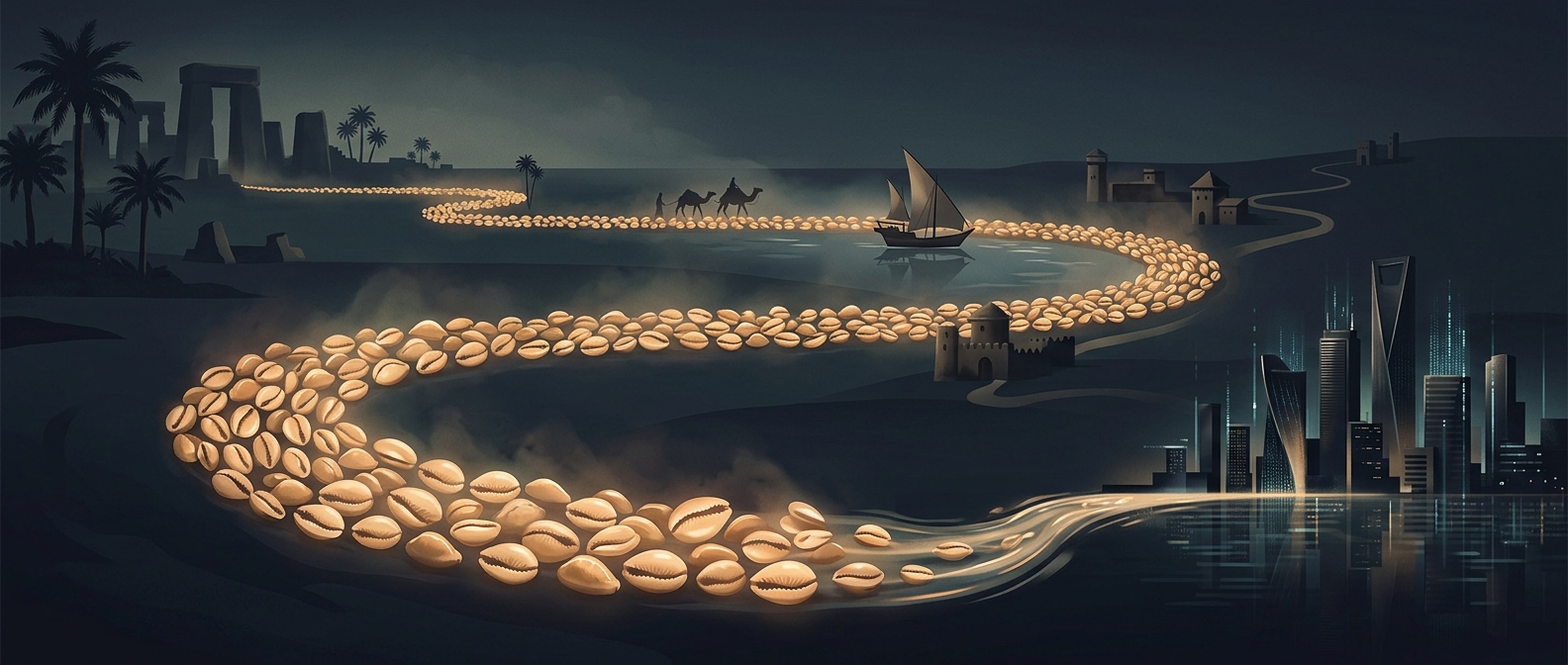
Cowries came from warm coastal waters, including the Indian Ocean, and traveled far inland through networks of merchants and exchange. Each handoff connected distant economies: a shell gathered near the sea could eventually be used in a market hundreds or thousands of miles away. That long journey made cowries evidence of trade links, not just convenient tokens.
In China, the association lasted in writing. The character 貝, based on a stylized shell, became a component in many characters related to money and valuables. The striking legacy is that an object once counted in trade remained embedded in the language used to describe wealth.