A flame effect built into the skyline
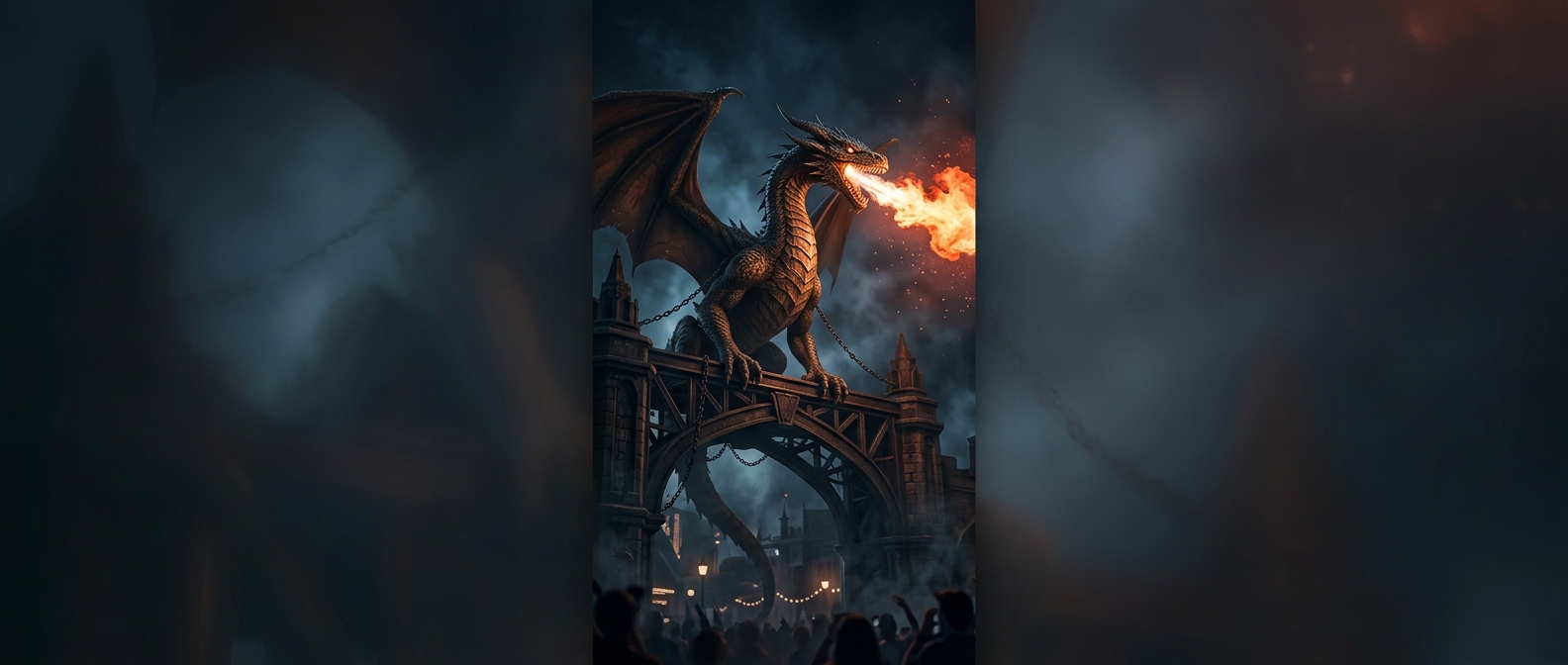
The dragon above Gringotts is more than a sculpted rooftop ornament: it is a pyrotechnic effect integrated into a fixed architectural setting. When the show cue is triggered, a controlled fuel release and ignition produce a brief, forceful flame from the dragon’s mouth. The burst is short by design; a sustained fire would create a very different—and much harder to manage—heat and fuel problem.
Making spectacle predictable
A flame effect has to work the same way repeatedly, with visitors gathered below and buildings close by. That means the show depends on coordinated controls: fuel must flow only for the intended moment, ignition must occur in sequence, and the flame’s direction must be planned around the structure and viewing area. The dragon’s elevated position also helps the effect read clearly from the crowded street without making the prop itself move.
The result is a striking mismatch of scale and duration: a fixed rooftop creature appears to unleash a dramatic blast, then returns to stillness. That contrast is what lets the effect become part of the streetscape—something visitors can encounter unexpectedly while walking through the wizarding area, rather than a performance that requires them to stop for a full show.