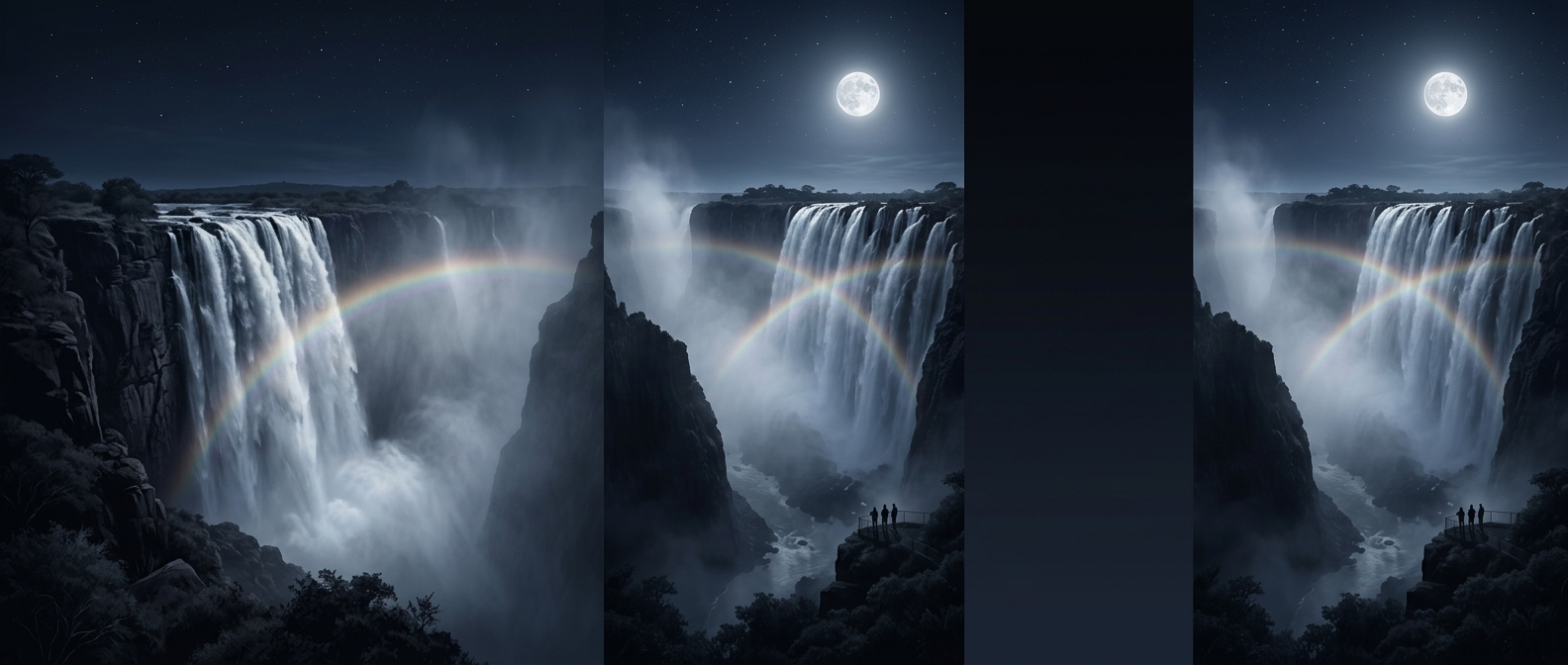
How Victoria Falls Gets a Rainbow After Dark
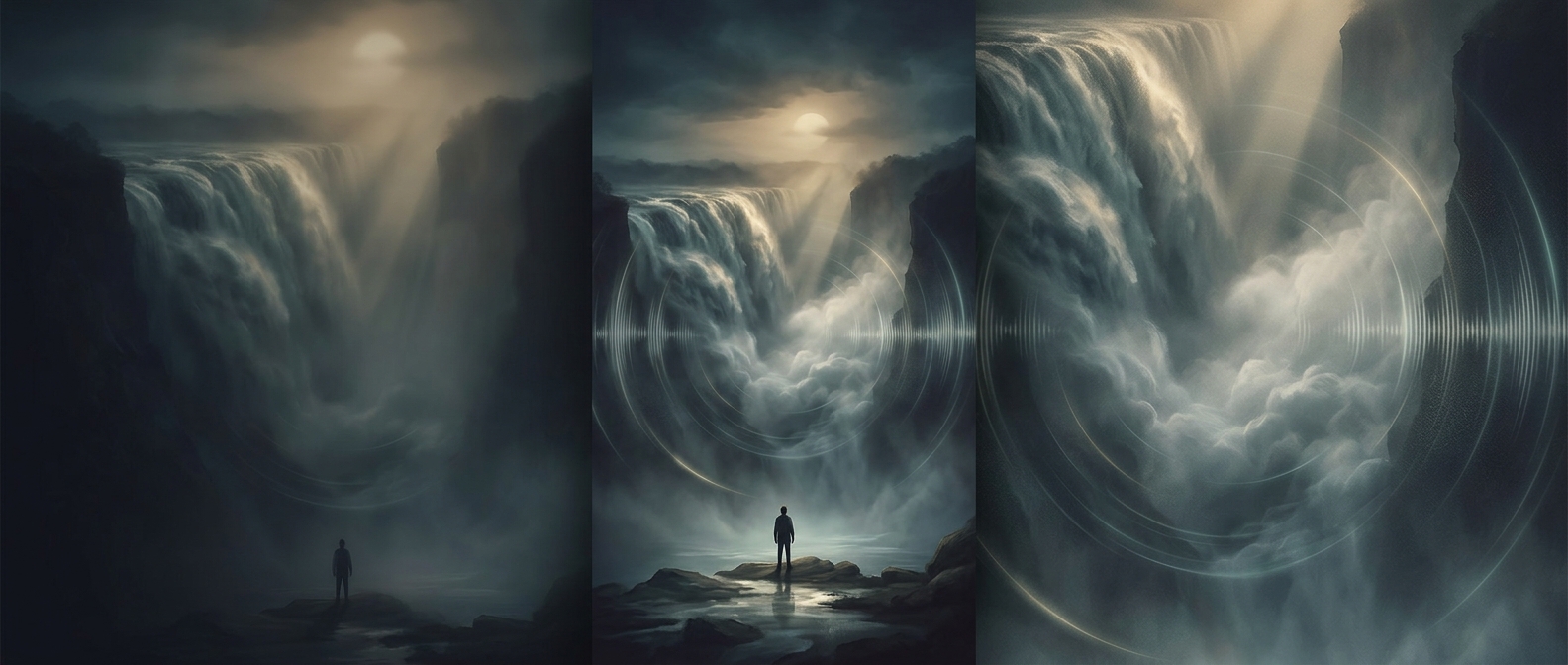
A moonbow begins with the same ingredients as a daytime rainbow: light, airborne water droplets, and a particular viewing angle. At Victoria Falls, the Zambezi River plunges into a gorge, throwing up clouds of spray. When the moon is full and high enough to illuminate that mist, some of its light enters droplets, bends, reflects inside them, and bends again as it leaves. The droplets send the light toward an observer at the right angle, producing an arc opposite the moon.
Why the Bow Looks Pale
Moonlight is sunlight reflected off the Moon, but it is far dimmer by the time it reaches the falls. The water droplets still separate the light into colors, yet the human eye has trouble distinguishing those colors in low light. So a moonbow often appears white or silvery to the naked eye, though a camera’s longer exposure may reveal faint color.
The display depends on more than a full Moon. There must be enough spray, a clear view of the Moon, and a dark sky; clouds or haze can weaken the light. The angle matters too, so the bow’s position shifts as the Moon moves across the sky.
A Brief Window in the Mist
The falls’ spray can make this nighttime geometry visible on a dramatic scale, but the conditions do not guarantee a bow on every full-moon night. When they align, the familiar rainbow pattern appears in an unusual setting: a pale arc suspended over a roaring river, lit not by the Sun but by the Moon.