Why the Mongol Rally has no fixed course
A conventional rally keeps competitors on a defined route, so organizers can manage checkpoints, timing, and safety around a known course. The Mongol Rally turns that structure inside out: teams choose how to get from the start to the finish, crossing countries and deciding which roads or rough tracks to take along the way. The challenge is not simply to drive far, but to make a workable plan as the route unfolds.
Navigation becomes part of the competition
A map can show a road, but not whether it is the sensible choice for a particular car, crew, or day. Drivers must weigh distance against road conditions, border crossings, fuel stops, and the possibility that a rough shortcut will cost more time than it saves. A route that looks efficient on a screen may become slow or impassable on the ground.
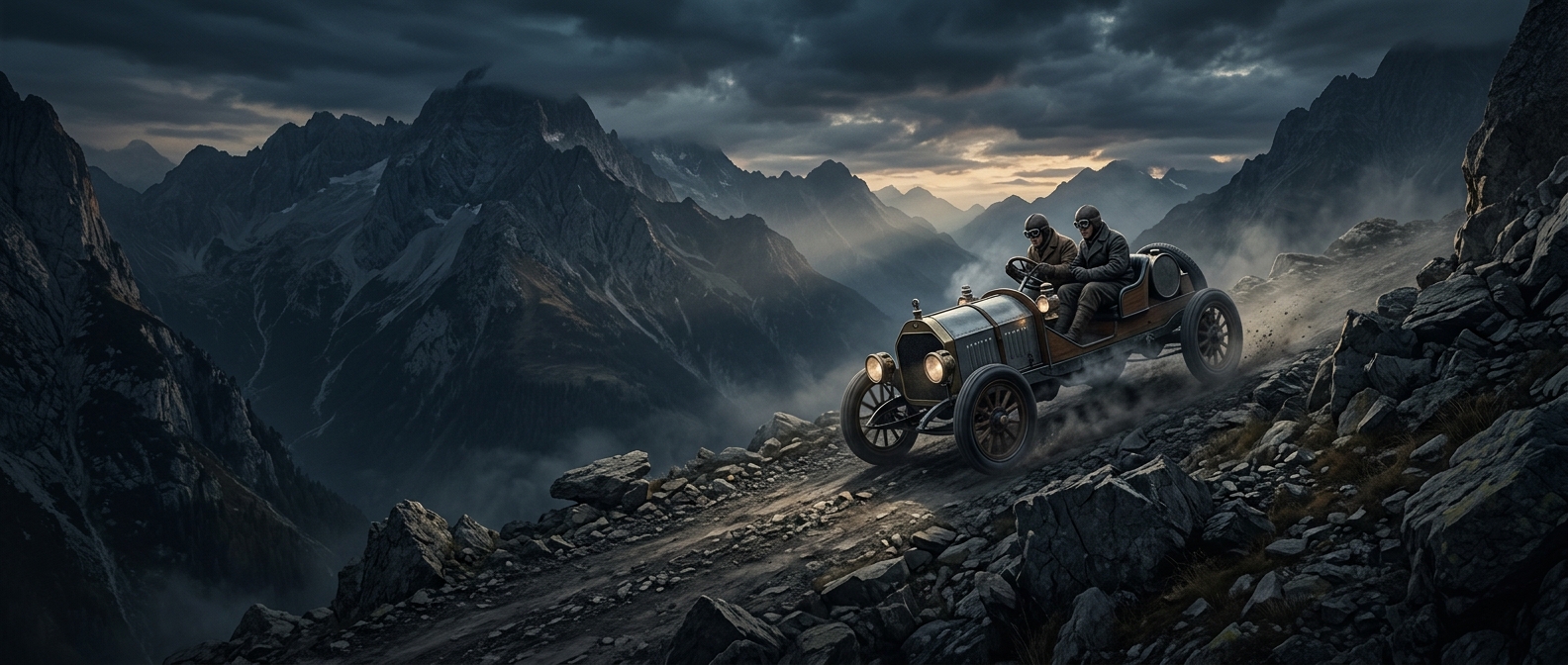
That uncertainty changes the role of the car. In a closed-course event, organizers choose the surface and competitors prepare for it. Here, teams have to judge what their vehicle can handle, then adapt when potholes, rough tracks, or delays upset the plan. The car is both transport and a limit on the route its crew can realistically choose.
The road itself keeps changing the plan
With no single course to follow, teams face different tradeoffs rather than a shared sequence of turns. One crew may favor a longer but more dependable road; another may attempt a shorter, rougher way through. Their decisions affect not only how quickly they travel, but how much strain they put on the vehicle and how much uncertainty they accept.
That is what makes the rally a navigation test as well as a driving one: progress depends on choosing a route, judging it against conditions, and revising the choice when the road—or the car—says otherwise.