Why a dirt road can change so quickly
On an unpaved road, the driving surface is exposed soil rather than a sealed layer of pavement. Heavy rain seeps into its tiny spaces, softening the ground and loosening fine particles. Where the soil contains enough clay, those particles bind with water into a dense, adhesive mud instead of draining away cleanly.
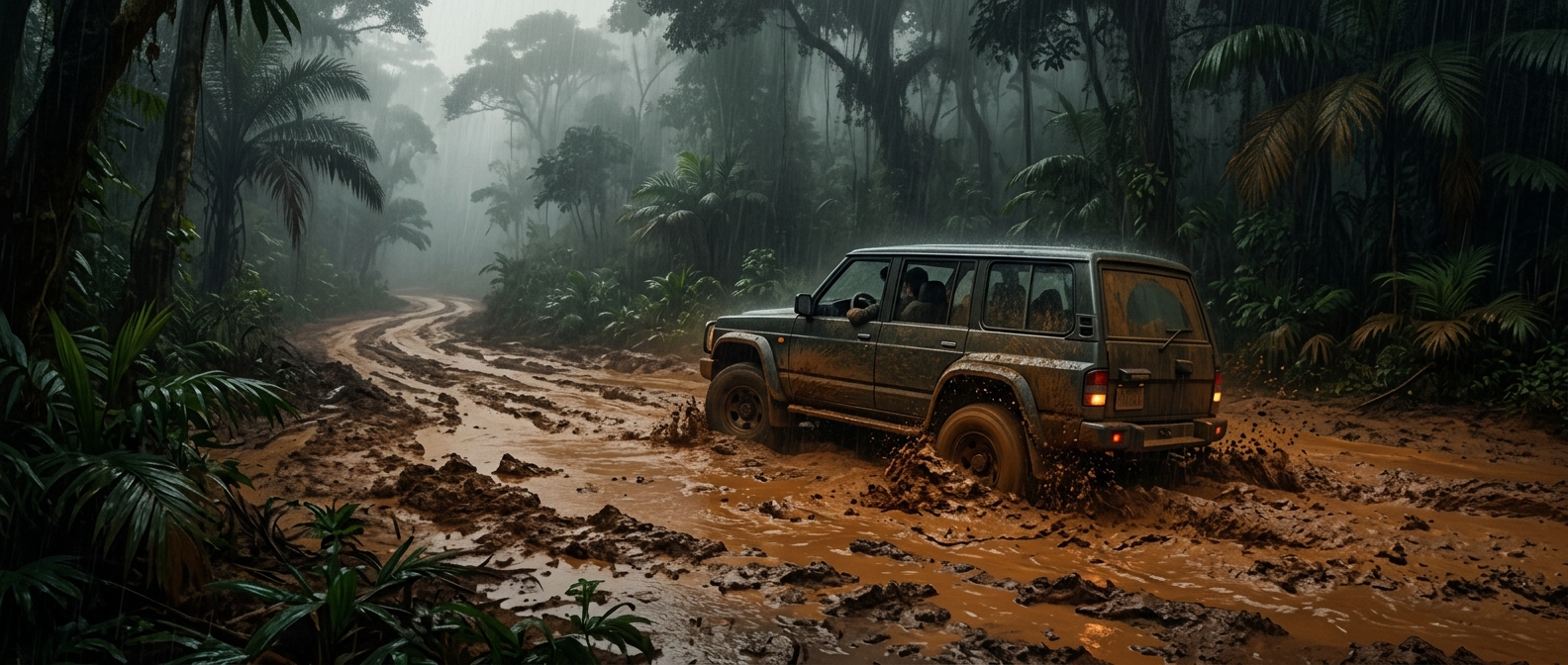
That shift affects traction—the grip between a tire and the ground. A tire that could roll over firm, dry soil may begin to slip on the wet surface. As it spins, it presses and churns the mud, deepening ruts and making the route rougher for the next vehicle. Water can also collect in low spots, hiding how soft the road has become.
The road can help trap a vehicle
Once wheels sink into a rut, the vehicle has to climb out through mud that offers little grip. More throttle may only spin the tires faster, polishing or digging up the surface rather than moving the vehicle forward. A road that looked passable at the start of a journey can therefore become difficult to cross after rain—or after several vehicles have churned it up.
For people traveling between rural communities, the change is more than a messy drive: it can slow access to homes, services, and supplies. The key detail is how quickly the surface loses its firmness. On a dirt road, rain does not merely make the route wet; it can turn the ground carrying the vehicle into the obstacle.