Why the silver bands matter at night
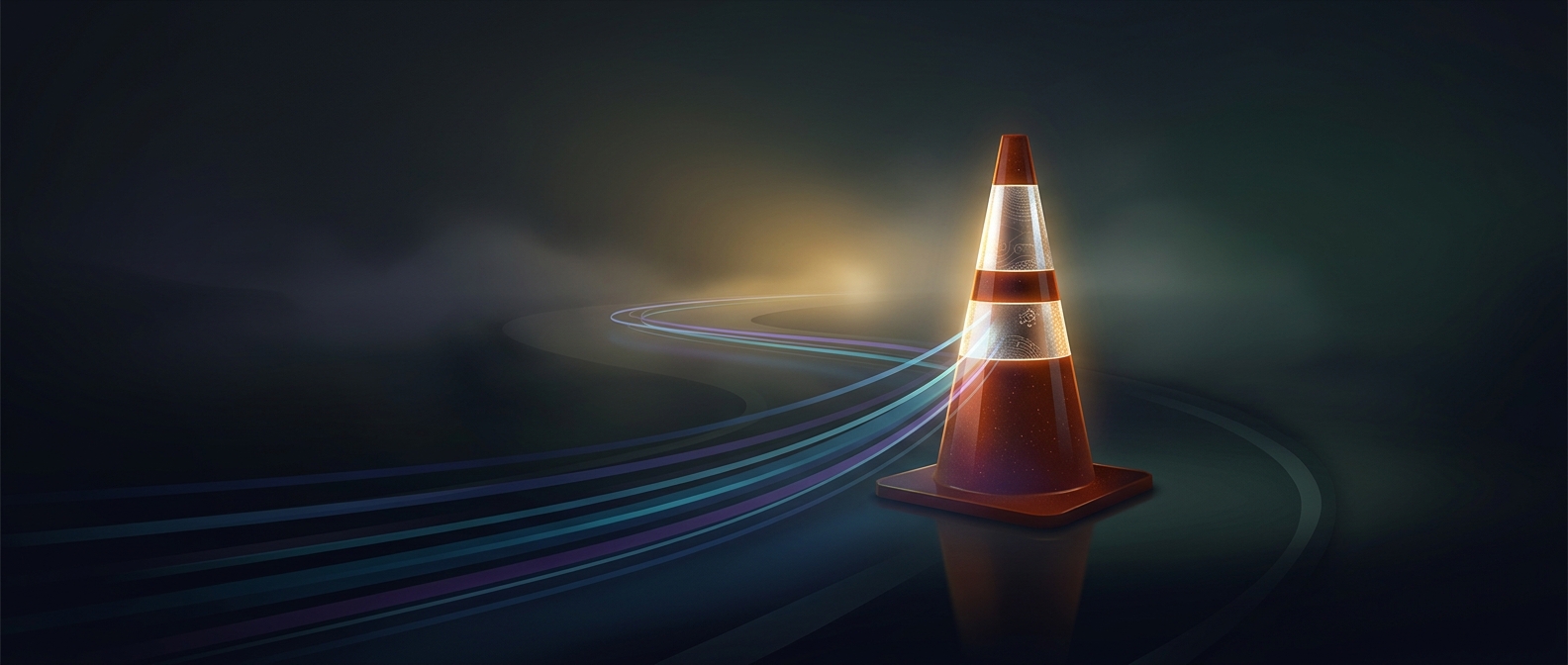
A cone’s bright orange body is easiest to notice in daylight, when surrounding light reaches it from many directions. At night, a driver may see little of that color unless the cone catches enough light. The silver bands solve a different problem from simply making the cone look bright: they help return a vehicle’s own light toward the driver.
A tiny optical return trip
Ordinary reflective surfaces scatter much of the light that hits them. Retroreflective material is designed to send light back close to the direction it came from. Depending on the tape’s construction, tiny glass beads or microscopic prisms redirect the incoming beam toward its source.
That return is useful because a car’s headlights and the driver’s eyes are close together compared with the distance to a cone. Light from the headlights can strike a band and travel back toward the front of the vehicle, where the driver can see it. The cone does not have to glow on its own; it borrows the light aimed at the road.
Visibility depends on the approach
The bands are most effective when a vehicle’s lights illuminate them and the driver looks from roughly the same direction. From far off to the side, less of the returned light may reach an observer. Their height also matters: placing reflective material on a low cone gives headlights a chance to catch it even when the orange body blends into a dark road or work area.
This is why a cone can remain conspicuous in a headlight beam without being brightly lit from every direction. Its reflective bands turn a passing car’s light into a directional signal, helping drivers pick out the obstacle before they reach it.