A Design Student Turned a Steady Hand Into the Game
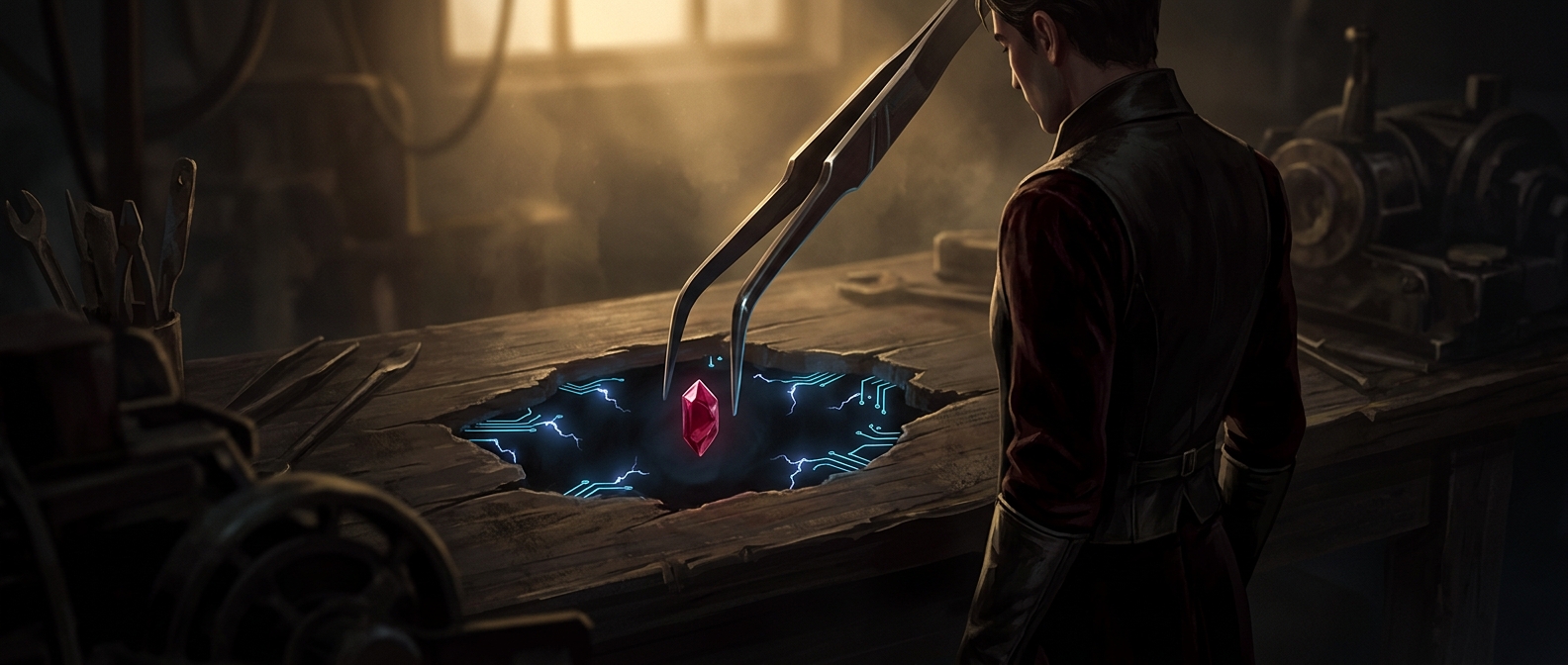
Operation began as a college design project, but its lasting appeal came from a compact engineering trick: make a simple task feel perilous. John Spinello’s 1964 game challenged players to lift small plastic pieces from a metal-lined opening without touching the sides. A contact completed an electrical circuit, triggering a buzzer and making the patient’s red nose light up.
That circuit transformed ordinary tweezers into a test of nerve. The player could see exactly what needed to be done, yet the narrow opening and the warning signal made every tiny hand movement count. The tension came not from complicated rules but from the possibility of an immediate, noisy mistake.
Why the Idea Worked on a Tabletop
The design made its own suspense. Players took turns, so each attempt became a small public performance: hold the tweezers steady, avoid the edge, and try to extract the piece. The buzzer turned an invisible electrical contact into instant feedback, while the illuminated nose made the consequence visible across the table.
It was also easy to understand at a glance. No elaborate story or long setup was needed; the board itself explained the challenge. That clarity helped make the game playable across ages and in short bursts, while the delicate movements kept even a familiar turn tense.
The Cost of Selling the Idea
Spinello sold the patent for $500 and gave up future royalties. The game later sold more than 40 million copies, a striking contrast between the modest one-time payment for the design and the scale of its commercial life.
Its enduring formula is still legible in the board: a visible target, a narrow margin for error, and a buzzer ready to expose the slightest slip. In Operation, the simplest move—picking something up—becomes the whole event.