A planetary flyby was a moving target
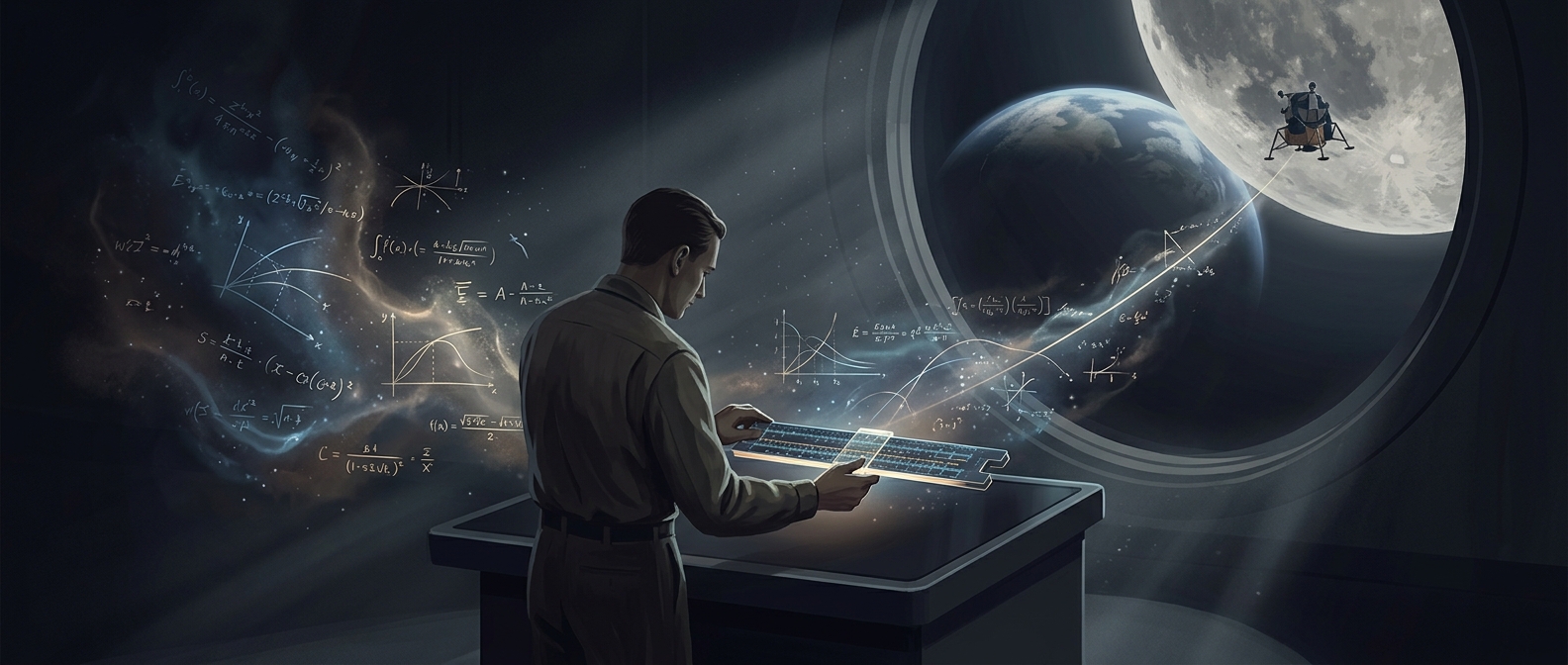
Voyager’s route was not a straight line drawn between planets. Each destination was moving around the Sun, and the probe had to arrive at the right place at the right time to pass close enough for the next maneuver. Mathematicians worked out those paths using equations and hand calculations, accounting for the pull of the Sun and planets as well as the probe’s speed and direction.
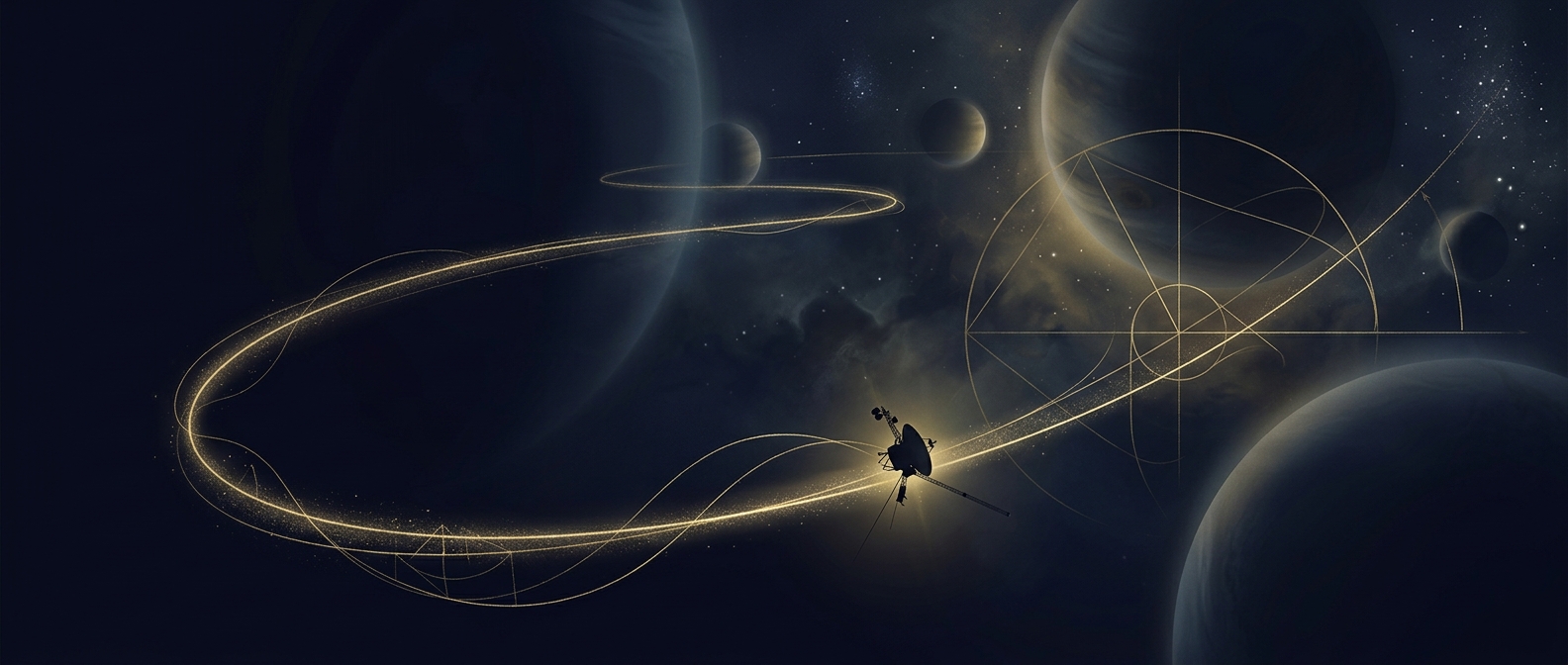
A useful route therefore depended on geometry as much as distance. The spacecraft had to approach a planet on a carefully chosen track: too far away, and its gravity would barely redirect it; too close, and the encounter could be unsafe or send it the wrong way.
How gravity supplied the next leg
During a flyby, a planet’s gravity bends a spacecraft’s path. Because the planet is moving in its orbit, the encounter can also change the probe’s speed relative to the Sun. The planet gives up or gains a minute amount of orbital energy in the exchange; the spacecraft can leave with a new heading and, in some encounters, more speed without carrying extra fuel for that acceleration.
That change made one encounter part of the solution to the next. Instead of treating each planet as an isolated destination, planners calculated a chain of arrivals and departures, with the geometry of one flyby setting up the following leg.
A route that had to work as a sequence
The calculations turned an ambitious interplanetary journey into a series of constrained decisions: where to aim, when to arrive, and how a planet’s motion could redirect the craft. A flyby was not merely a close look at a world; it was also a carefully planned turn in the route. That is how Voyager could travel across the solar system one planetary encounter at a time.