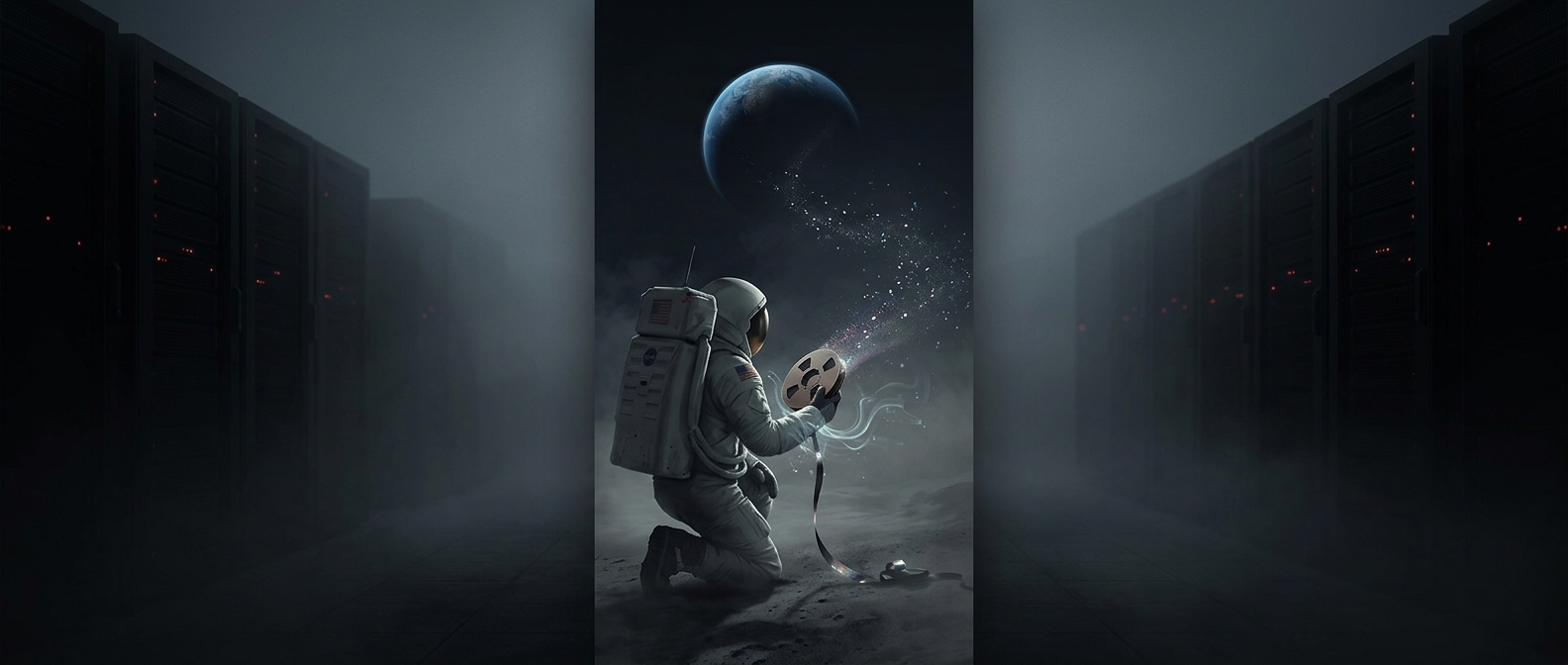
Why the moonwalk was recorded twice
Apollo 11’s television camera sent back pictures in a format designed to use the spacecraft’s limited communications bandwidth, not to match ordinary television. Its slow-scan images had a different frame rate and resolution from the broadcast standard used by American networks. To show the landing live, NASA converted the signal on Earth into a format television stations could transmit.
That conversion made the pictures watchable on home sets, but it also meant the broadcast version was not identical to the camera’s original signal. The raw slow-scan feed was recorded separately on large magnetic tapes, while broadcasters and other facilities made recordings of the converted transmission.
The copy survived; the source did not
The original tapes were part of a much larger body of data from the Apollo missions. Magnetic tape was expensive, and storing every recording required space and ongoing care. In the 1980s, NASA reused some tapes, overwriting the Apollo 11 slow-scan recordings before their historical importance was fully recognized.
Researchers later searched for the original signal, but the tapes could not be recovered. The familiar moonwalk footage comes from recordings made downstream of the conversion—copies of the television broadcast, not the pristine camera feed. Each step in that chain preserved the event while limiting the image quality viewers could see.
The loss did not erase evidence that the moonwalk happened; many other records and recordings remain. But it did remove the best surviving chance to reconstruct the scene from the original video signal. A decision made to save storage space left history dependent on the very broadcast copies created to bring the moonwalk into living rooms.