Why a Longer-Lived Filament Mattered
An incandescent bulb makes light by sending electric current through a thin filament until it becomes hot enough to glow. The catch is that the filament sits at extreme heat: if it burns through quickly, the bulb is little more than a brief demonstration. A useful lamp had to keep glowing for long stretches without constant replacement.
That made endurance a design problem, not just a matter of making a filament shine. The filament’s material and shape affected how much current it needed and how long it could withstand the heat. The air inside the bulb mattered, too: oxygen would make a hot filament burn away, so removing much of the air helped preserve it.
From a Bulb to a Lighting System
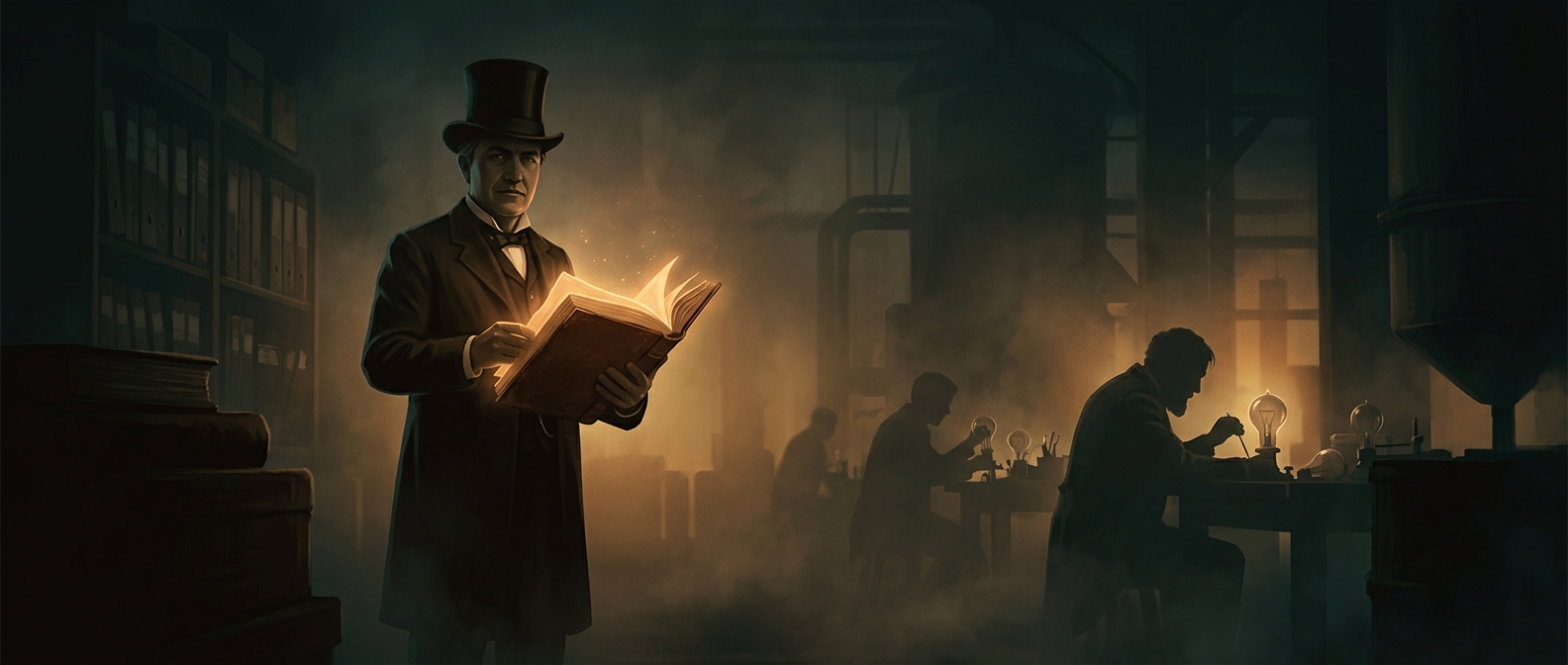
Edison’s work mattered because it helped turn a fragile experiment into something that could serve everyday use. But a durable bulb alone could not light a home. Electric power had to be generated and delivered; fixtures, wiring, and controls had to make that power practical indoors. These pieces developed together, so the significance of the bulb lies partly in how it fit into a larger system.
The history is less a single moment of invention than a chain of improvements, with earlier inventors establishing possibilities and later work addressing the obstacles to dependable use. That distinction changes the story: the breakthrough was not simply producing light with electricity, but making an electric lamp last long enough to become part of ordinary life.