A Sneeze Made Motion Pictures Easy to Understand
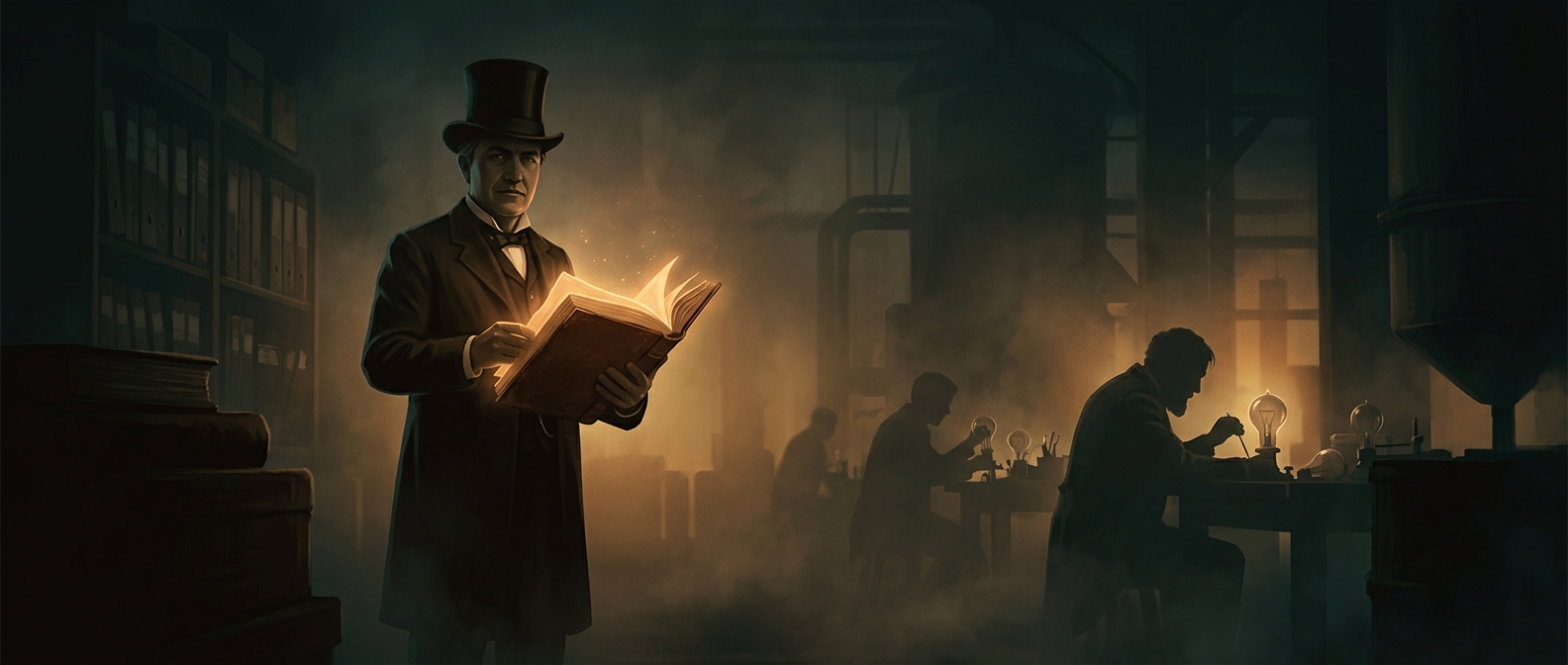
The brief film now known as Edison Kinetoscopic Record of a Sneeze shows Edison employee Fred Ott taking a pinch of snuff, reacting, and sneezing. William K. L. Dickson, who worked on Edison’s motion-picture experiments, filmed the action in 1894. Its subject was ordinary by design: a sneeze gave viewers a quick, unmistakable burst of movement to watch.
That mattered because motion pictures were still a new kind of attraction. A still photograph could preserve a pose, but a strip of photographs played in sequence could make a familiar action appear to unfold again. Ott’s face and sudden sneeze made that capability legible in seconds, without a story or explanation.
A Film Built for One Viewer
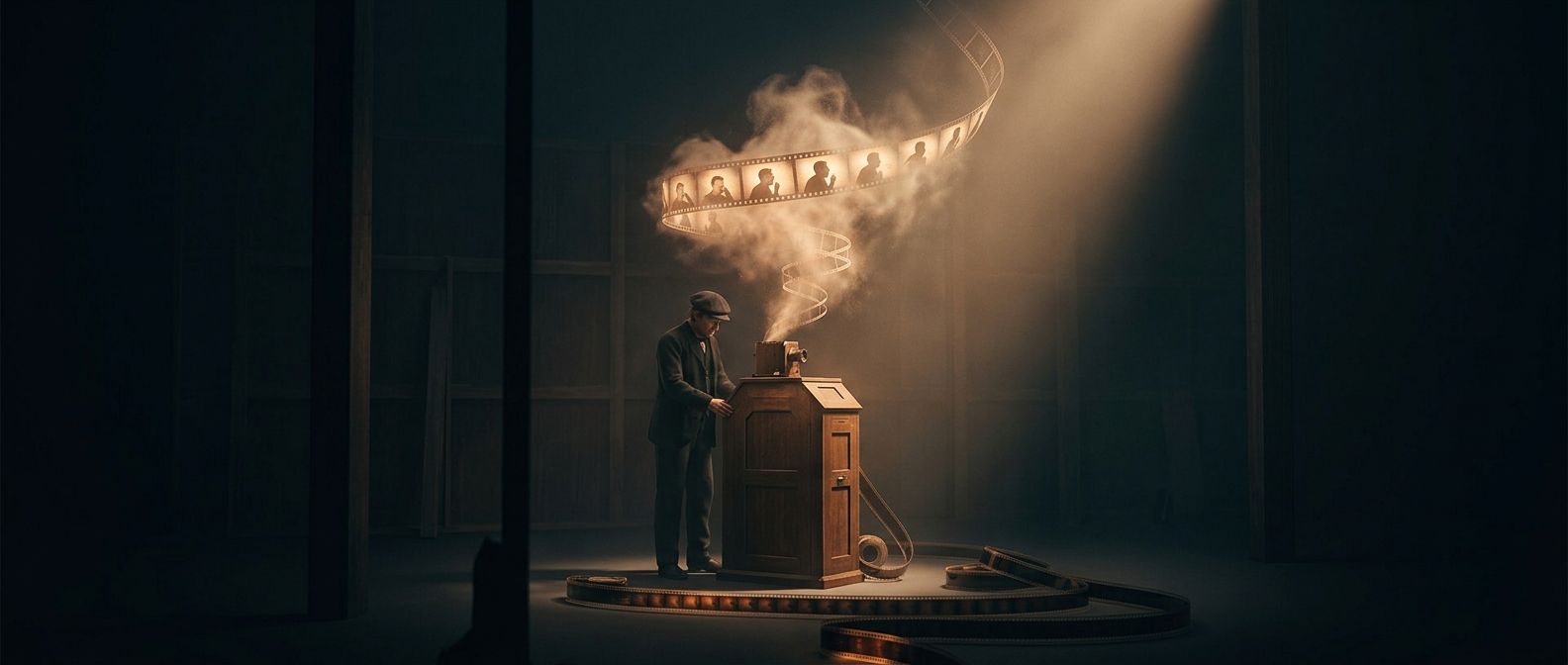
The clip was made for the Kinetoscope, a cabinet with a peephole. Inside, a loop of film moved past a light and viewing mechanism; one person at a time looked through the opening to see the images flicker into motion. It was not a projected movie for a seated audience. The machine turned watching into a private, coin-operated encounter with a short moving scene.
A five-second demonstration suited the device: a viewer could grasp the effect almost immediately, and the film could be shown repeatedly. The sneeze was both the content and the proof of the technology. It showed that the machine could capture a human gesture and replay it as movement.
Why This Small Film Survives
The surviving clip is often described as the oldest surviving film, though that label depends on what counts as a film and what survives. Its historical importance is not that it tells a grand story; it preserves an early motion-picture experiment at the moment when moving images were being presented as a new commercial spectacle. The first moviegoing wonder could be as simple—and as bodily—as watching someone sneeze.