Why Some Libraries Chained Books to Desks
Before books could be produced cheaply in large numbers, a collection might contain only a small number of valuable volumes. Making a book by hand took substantial time and materials, so losing even one could mean a serious loss to a library and its readers. In some institutions, the books were kept in the room where they were used rather than lent out.
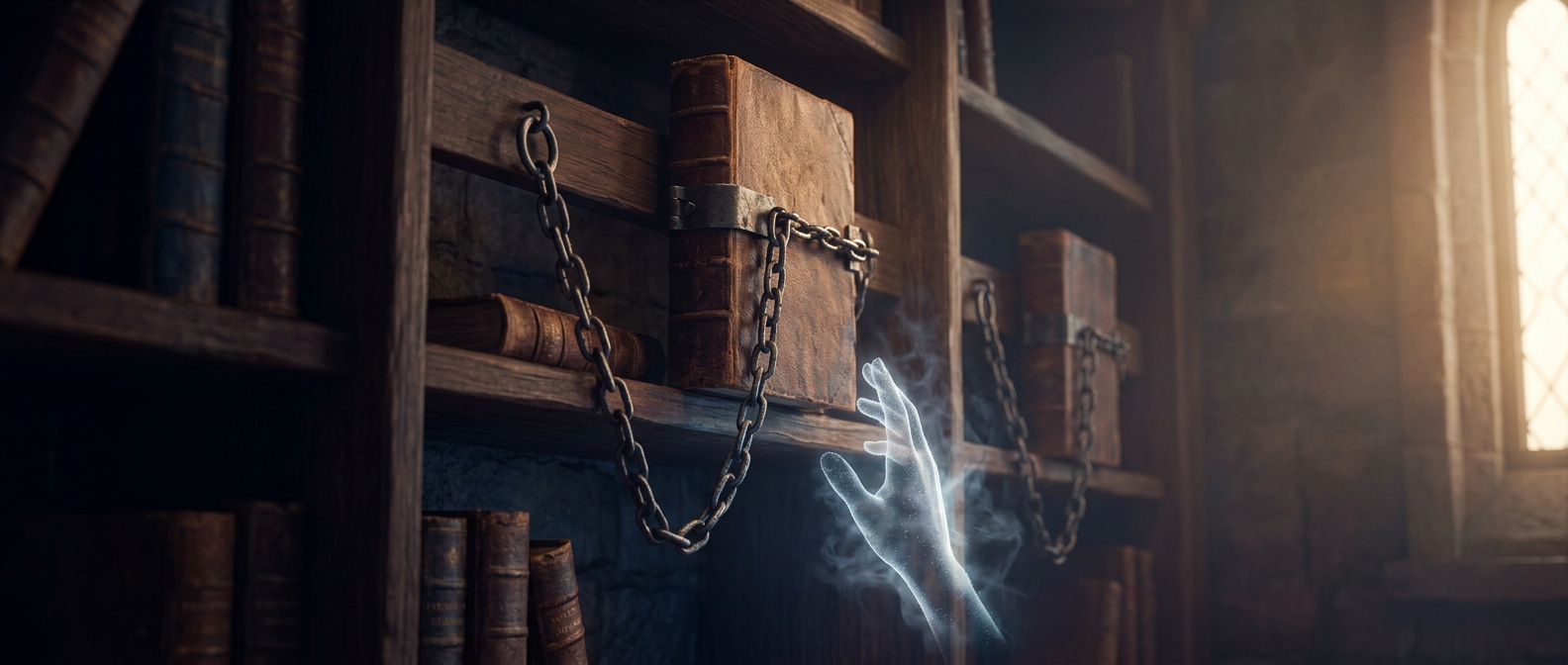
A chain made that arrangement practical: readers could open and consult a book at a desk, but could not carry it away. The chain was attached to the book’s binding and long enough to let someone handle the volume. It restricted where the book could go, not whether people could read it.
A Lock on Removal, Not on Knowledge
This system reflects a tradeoff between protecting a scarce collection and sharing it. Keeping books in a reading room let a library make its holdings available while reducing the chance of theft or loss. The arrangement also shaped the experience of reading: instead of taking a book home, a reader had to come to the collection and use it where it was kept.
Chaining was not a feature of every library or every book. It was one solution used where the value and vulnerability of a collection made lending risky. Its most striking detail is how directly the hardware expressed the rule: the book was available to readers, but it belonged to the room.