A retreat designed to leave a frightening clue
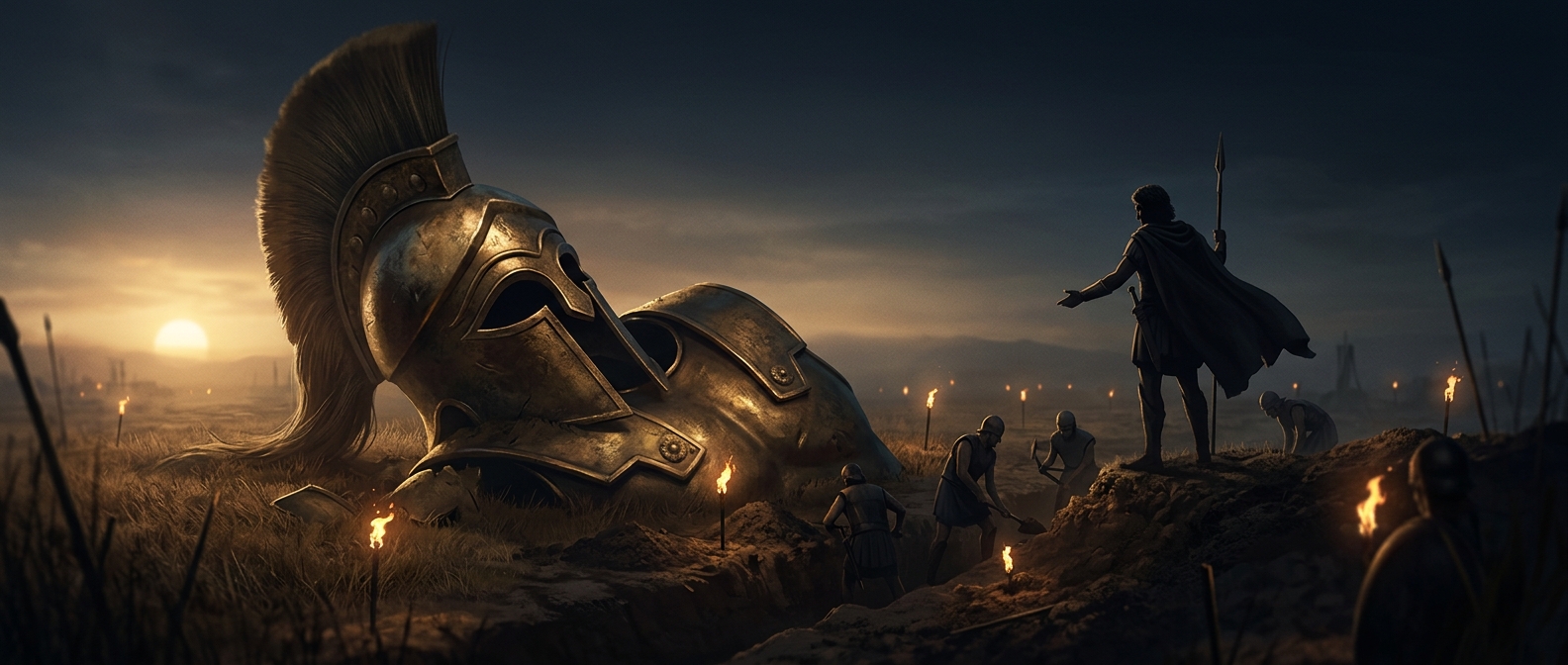
As Alexander’s army withdrew from India, the danger was not only the pursuit itself. The people following might expect to meet the Macedonians again, so the retreat could leave an impression that outlasted the soldiers. In the story, Alexander had oversized armor and weapons buried in the sand along the route.
The props were meant to be found, not carried away. A pursuer who uncovered equipment far too large for an ordinary person could infer that the departing army included giants. The deception turned a physical object into apparent evidence: the enemy supplied the monstrous explanation for itself.
Why the trick could work
A rumor about giants might sound fanciful on its own. Buried armor gave it something tangible to point to, making the story easier to imagine and repeat. The pursuers did not need to see a giant; they needed only to believe that encountering one was possible.
That made the scheme useful precisely because Alexander was leaving. The oversized gear could not stop a pursuit, but it might make the force ahead seem more formidable than it was. The striking part of the tale is that the army’s last act on the route was to leave behind a false sign of what its enemies feared most.